The Centro interdiparimentale di Ricerca sull’Adriatico e il Mediterraneo (CiRAM) and Italian Center for the Law of the Sea (ICLOS) will host a conference, entitled, Governance e sicurezza delle risorse energetiche offshore, 27 June 2025, in a hybrid format (University of Macerata (Italy)/Online (Teams)). For more information see here.
Author Archives: A. N. Honniball
ICJ: Judgment in Land and Maritime Delimitation and Sovereignty over Islands
On 19 May 2025 the ICJ delivered its Judgment in Land and Maritime Delimitation and Sovereignty over Islands (Gabon/Equatorial Guinea). Despite the name of the case, the “Court has not been asked therein to delimit the land and maritime boundary or determine sovereignty over the three islands, but only to determine whether the legal titles, treaties and international conventions invoked by the Parties have the force of law in their relations in so far as they concern the dispute between them” (Judgment, para 30). This is detailed in Article 1 of the Special Agreement (2016) which conferred jurisdiction on the ICJ to resolve the dispute.
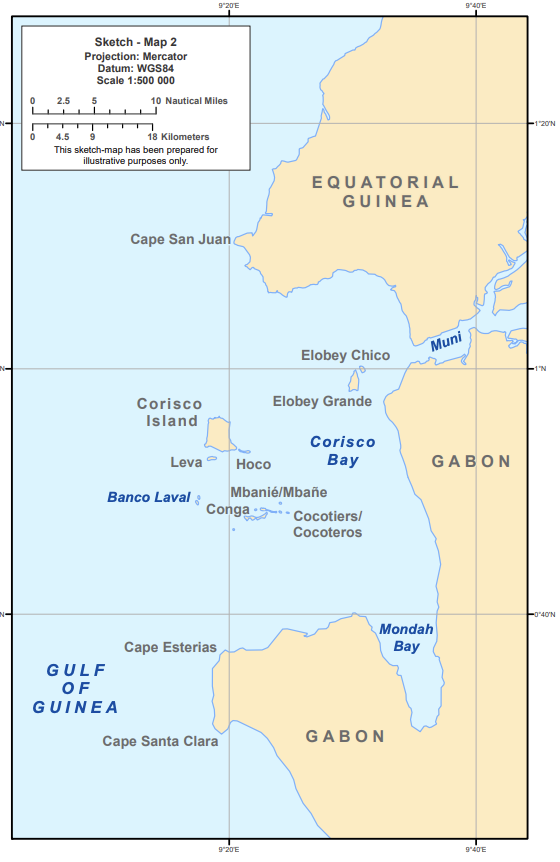
(Gabon/Equatorial Guinea), Judgment of 19 May 2025 (2025) Sketch Map 2
The operative paragraph of the Judgment provides:
For these reasons, The Court,
Land and Maritime Delimitation and Sovereignty over Islands (Gabon/Equatorial Guinea), Judgment of 19 May 2025 (2025) , para 213.
(1) By fourteen votes to one,
Finds that the document entitled “Convention delimiting the land and maritime frontiers of Equatorial Guinea and Gabon” (“Bata Convention”) invoked by the Gabonese Republic is not a treaty having the force of law in the relations between the Gabonese Republic and the Republic of Equatorial Guinea and does not constitute a legal title within the meaning of Article 1, paragraph 1, of the Special Agreement;
(2) Unanimously,
Finds that the legal titles invoked by the Gabonese Republic and the Republic of Equatorial Guinea that have the force of law in the relations between them in so far as they concern the delimitation of their common land boundary are the titles held on 17 August 1960 by the French Republic and on 12 October 1968 by the Kingdom of Spain on the basis of the Special Convention on the delimitation of French and Spanish possessions in West Africa, on the coasts of the Sahara and the Gulf of Guinea, signed in Paris on 27 June 1900, to which titles the Gabonese Republic and the Republic of Equatorial Guinea respectively succeeded;
(3) By thirteen votes to two,
Finds that, of the legal titles invoked by the Gabonese Republic and the Republic of Equatorial Guinea, the title that has the force of law in the relations between them in so far as it concerns sovereignty over the islands of Mbanié/Mbañe, Cocotiers/Cocoteros and Conga is the title held by the Kingdom of Spain on 12 October 1968, to which the Republic of Equatorial Guinea succeeded;
(4) Unanimously,
Finds that the Special Convention on the delimitation of French and Spanish possessions in West Africa, on the coasts of the Sahara and the Gulf of Guinea, signed in Paris on 27 June 1900, constitutes a legal title within the meaning of Article 1, paragraph 1, of the Special Agreement to the extent that it has established the terminus of the land boundary between the Gabonese Republic and the Republic of Equatorial Guinea, which shall be the starting-point of the maritime boundary delimiting their respective maritime areas;
(5) Unanimously,
Finds that the 1982 United Nations Convention on the Law of the Sea is an international convention that has the force of law in the relations between the Gabonese Republic and the Republic of Equatorial Guinea, within the meaning of Article 1, paragraph 1, of the Special Agreement, in so far as that Convention concerns the delimitation of their maritime boundary.
One Dissenting Opinion (Dissenting opinion of Judge ad hoc Pinto) and two Separate Opinions (Separate opinion of Judge Yusuf; Separate opinion of Judge Tladi) are appended to the Judgment, together with three Declarations (Declaration of Judge Xue; Declaration of Judge Aurescu; Declaration of Judge ad hoc Wolfrum). An area of differences among Judges was in approaching sovereignty over the islands of Mbanié/Mbañe, Cocotiers/Cocoteros and Conga, which Judge Xue notes the “disputed islands became attractive largely because of the subsequent development of the law of the sea and the discovery of maritime non-living resources” (Declaration of Judge Xue, para 20).
In response to pleadings on UNCLOS, the Judgment stated “Although UNCLOS may ‘concern’ the delimitation of the Parties’ common maritime boundary, it is not itself the source of a right to specific maritime areas. Thus, in the view of the Court, UNCLOS does not constitute a legal title within the meaning of Article 1 of the Special Agreement. However, it is an international convention which has the force of law in the relations between the Parties within the meaning of that Article” (Judgment, para 211).
Judges ad hoc Wolfrum and Pinto concurred with the Court’s discussion of UNCLOS, although the latter would not have included it within the operative paragraph of the Judgment (Dissenting opinion of Judge ad hoc Pinto, paras 12, 21). “As far as land territories are concerned, the Convention does not provide for rules or procedures to establish a legal title […] As far as maritime spaces are concerned, recourse to the rules governing the acquisition of land is not applicable in respect of maritime zones. Rights to maritime zones such as the territorial sea (sovereignty), exclusive economic zones and continental shelves (sovereign rights) are developed by recourse to the sovereignty over the relevant land” (Declaration of Judge ad hoc Wolfrum (para 10)). Wolfrum further notes, that the “Judgments of international courts and tribunals in respect of the adjudication of overlapping claims are declaratory in nature, and not constitutive” (Declaration of Judge ad hoc Wolfrum (para 10)).
For more information see the ICJ press release and summary of the Judgment.
Filed under Jurisprudence, Treaties
Mauritius/UK: Chagos Archipelago Agreement Signed
On 22 May 2025 the UK and Mauritius signed the Agreement between the Government of the United Kingdom of Great Britain and Northern Ireland and the Government of the Republic of Mauritius concerning the Chagos Archipelago including Diego Garcia (Chagos Archipelago Agreement), which will enter into force following completion of the respective domestic procedures and notification of the other Party (Art 18). The UK requires amended primary and secondary legislation, while it is estimated the required Mauritian Ministerial decisions will take less than 6 months (Explanatory Memorandum, pp. 11-12).
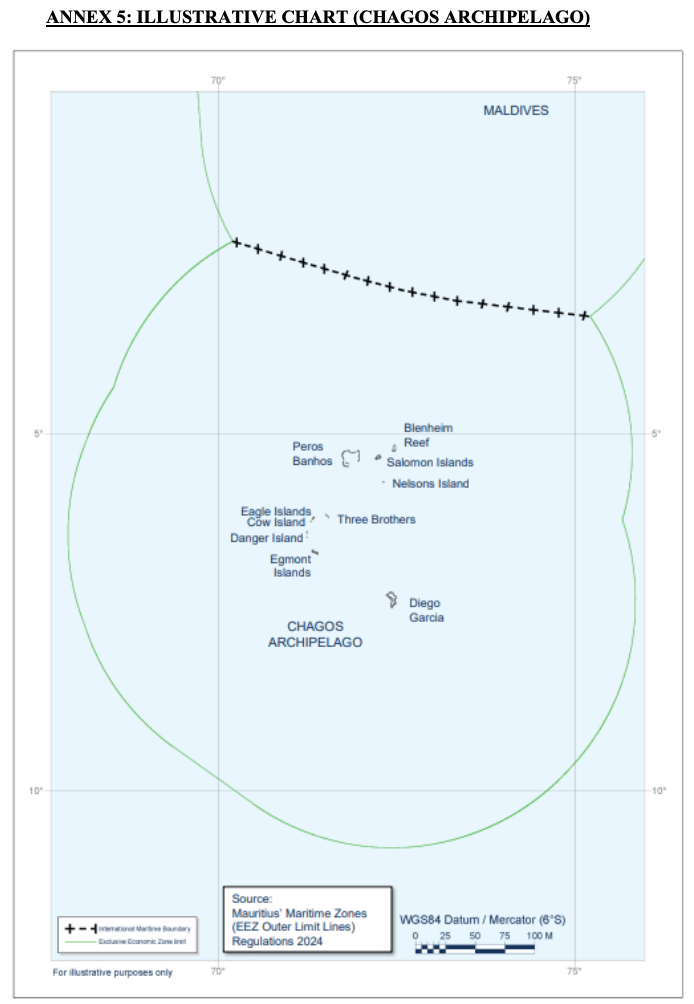
From a UK perspective, “The purpose of the treaty is to secure the long-term, secure and effective operation of the UK-United States of America (US) military base on Diego Garcia, which is critical for the UK’s national security; to ensure legal certainty over the operation of the Base while respecting partners’ interests; and to uphold the international rule of law” (Explanatory Memorandum, p.2; US State Department). The UK believed the sustainability of the UK operation of the Base was at significant risk, including most notably as a result of the decisions of international courts and tribunals, including the International Court of Justice, relating to the Chagos Archipelago (Chagos Archipelago Agreement, Preamble) and the foreseeability of a future binding decision upon the UK. “Sovereignty was also routinely challenged in the Indian Ocean Tuna Commission, which carried risk of legal challenge leading to an ICJ judgment” (Explanatory Memorandum, p. 3; see further IOTC Agreement, Art 23, which might e.g. be raised in disputes on ‘coastal State’ membership, Art 4). Tellingly, this matter is addressed in Article 8 and the Exchange of Letter on the Interpretation of Article 8 of the Chagos Archipelago Agreement (22 May 2025), which provides that upon entry into force, among others, the UK confirms its membership of the Indian Ocean Tuna Commission (IOTC) in respect of Chagos Archipelago transfers to Mauritius and the UK will not claim ‘Coastal State’ but ‘Distant Water Fishing Nation’ membership status at IOTC. The Explanatory Memorandum also made it clear that Mauritius made “frequent public commitments to continue pursuing its legal campaign to secure a binding judgment. The UK government of the day (and all subsequent governments) recognised that there were multiple pathways by which Mauritius could achieve this”.
From a Mauritius perspective, the Chagos Archipelago Agreement “recognises the sovereignty of Mauritius over the entirety of the Chagos Archipelago, including Diego Garcia […] [and] marked a significant step in the completion of the decolonisation process of Mauritius” (Prime Minister Navinchandra Ramgoolam’s Remarks; Chagos Archipelago Agreement, Preamble). Recognising the “wrongs of the past”, the Chagos Archipelago Agreement shall address the past treatment of Chagossians and their continuing welfare.
The Chagos Archipelago Agreement is designed as a comprehensive agreement in ‘full and final resolution of the differences’ related to the Chagos Archipelago and therefore addressed an array of ocean governance issues. A unique compulsory dispute settlement procedure by arbitration, which can only be triggered by the UK, is provided in Article 15(4)-(5) and Annex 4 concerning disputes on if a ground for termination exists and the dispute cannot be resolved by other means. A non-exhaustive selection of key provisions for ocean governance is provided below:
Article 1 Sovereignty
Chagos Archipelago Agreement (2025)
Mauritius is sovereign over the Chagos Archipelago in its entirety, including Diego Garcia.
Article 2 Authorisation in respect of Diego Garcia
1. As sovereign, Mauritius authorises the United Kingdom to exercise the rights and authorities of Mauritius with respect to Diego Garcia in accordance with the terms of this Agreement.
2. The authorisation under paragraph 1 shall comprise all rights and authorities that the United Kingdom requires for the long-term, secure and effective operation of the Base, including for the Defence and Security Requirements, Conditions and Procedures in Annex 1 and the Jurisdiction and Control Arrangements in Annex 2.
3. Mauritius retains title over the land and the territorial sea of Diego Garcia, including the seabed and subsoil, as well as all rights and authorities not authorised under paragraphs 1 and 2, including:[…]
f. sovereignty over natural resources, including fisheries;
g. conservation and protection of the environment, including the marine environment;
Article 3 Defence and Security
1. The Parties agree to the Defence and Security Requirements, Conditions and Procedures in Annex 1 […]
3. The Parties shall cooperate on matters relating to maritime security, including trafficking in narcotics, arms and persons, people smuggling and piracy.
Article 5 Environment
1. The United Kingdom shall exercise the rights and authorities under Article 2 in accordance with applicable international law on environmental protection, and with due regard to applicable Mauritian environmental laws.
2. The United Kingdom agrees to provide support and assistance to Mauritius in the establishment and management of its Marine Protected Area in the Chagos Archipelago, in accordance with terms to be agreed between the Parties by a separate written instrument.
3. The Parties shall cooperate on other matters relating to the protection of the environment, including in relation to oil and other spills, and illegal, unreported and unregulated fishing.
Article 8 International Organisations
1. The United Kingdom agrees to ensure its membership in international organisations is consistent with Article 1.
Article 12 Joint Commission
A Joint Commission to facilitate the implementation of this Agreement shall be established. The composition, functions and procedures of the Joint Commission are set out in Annex 3 [which provides for a composition of UK and Mauritius representatives, with the USA having observer status].
Article 19 Definitions
For the purposes of this Agreement: […]
“Chagos Archipelago” means the islands, including Diego Garcia, and maritime zones of the Chagos Archipelago, including the internal waters, territorial sea, archipelagic waters and the exclusive economic zone, and the airspace above and seabed and subsoil below [without prejudice to Mauritius’ claims in respect of the continental shelf].
“Diego Garcia” means the island of Diego Garcia and a twelve (12) nautical mile zone surrounding the island of Diego Garcia, and includes the airspace above and seabed and subsoil below.
Annex 1: Defence And Security Requirements, Conditions And Procedures
Diego Garcia
1. In accordance with this Agreement and with reference to Article 2(5) and Annex 2, in respect of Diego Garcia, Mauritius agrees the United Kingdom shall have:
a. unrestricted access, basing and overflight for United Kingdom and United States of America aircraft and vessels to enter into the sea and airspace of Diego Garcia;
b. unrestricted ability to: […]
v. authorise the installation, operation and repair of new and existing communication systems and electronic systems and associated cables; […]
viii. permit access, basing and overflight for non-United Kingdom and non-United States of America aircraft and vessels, upon notification to Mauritius; and
ix. manage, use and develop the land and surrounding waters and seabed for defence purposes. This excludes the construction of any artificial islands.
Chagos Archipelago beyond Diego Garcia
3. In accordance with this Agreement, in respect of the Chagos Archipelago beyond Diego Garcia, Mauritius agrees:
a. vessels and aircraft of the United Kingdom and the United States of America shall have unrestricted rights of overflight, navigation and undersea access. States operating with the United Kingdom or the United States of America shall also have such unrestricted rights, save in respect of overflight or undersea access, which require notification;
b. the United Kingdom shall have rights of access for maintenance and upgrades of equipment, following notification to Mauritius, after having advised Mauritius of the location of all such equipment; […]
f. between twelve (12) and twenty-four (24) nautical miles surrounding the island of Diego Garcia, Mauritius and the United Kingdom shall jointly decide on the construction or emplacement of any maritime installation, sensor, structure or artificial island.
Mauritian Security Review
4. Before approving or proceeding with a proposal for:
a. the construction or emplacement of any maritime installation, sensor, structure or artificial island in an area beyond the twenty-four (24) nautical miles surrounding the island of Diego Garcia; or
b. any proposal for development in the land territory of the Chagos Archipelago beyond Diego Garcia, Mauritius shall conduct a Security Review in accordance with paragraph 6 [which provides for information exchanges with the UK, as well as possible decision making by the Joint Commission. An emerging risks procedure is also found in para 7].
11. For the purposes of this Annex:
a. “access” refers to the grant of rights or permissions which would not otherwise exist in international law. Nothing in this Agreement modifies or affects any rights, including rights of overflight or navigation, which exist as a matter of international law;
b. “Chagos Archipelago beyond Diego Garcia” means any area within the Chagos Archipelago that is beyond Diego Garcia;
c. “unrestricted” means not requiring permission or notification, subject to the standing authorisations and notifications separately agreed between the Parties to meet the requirements of international or domestic Mauritian law or current practice.
Annex 2: Jurisdiction And Control Arrangements
Mauritian criminal jurisdiction
3. On Diego Garcia, Mauritius shall exercise all prescriptive, enforcement and adjudicative criminal jurisdiction conferred on it by its laws in relation to allegations against […]
b. all persons not connected to the operation of the Base, including persons involved in offences relating to unlicensed commercial fishing and the trafficking in arms or narcotics.
Cooperation in the exercise of criminal jurisdiction
8. In order to support the exercise of jurisdiction by Mauritius on Diego Garcia, the United Kingdom agrees to provide assistance to Mauritius in: […]
e. the prevention of unlicensed commercial fishing, and trafficking of arms, persons and narcotics and illegal migration.
Miscellaneous
15. Mauritius shall exercise criminal and civil jurisdiction in respect of activities such as irregular migration and unlicensed commercial fishing, provided such exercise of jurisdiction is in conformity with the requirements of this Agreement.
Finally, the signing of the Chagos Archipelago Agreement was accompanied by the signing of a new Strategic Partnership Framework. Among other items, it will address:
- Deepening cooperation on maritime security and irregular migration in areas such as “irregular migration, drugs trafficking, piracy, and illegal, unregulated and unreported fishing”. This will include “Cooperation agreements and capacity building to secure Mauritius’s Exclusive Economic Zone; Consideration of patrolling capability across the Chagos Archipelago to support a secure maritime domain; Cooperation to counter and manage irregular migration; and Provision of training and institutional partnerships to boost Mauritian maritime security capability and strengthen fisheries protection”.
- Cooperation in addressing climate change. This will include “Mitigation and adaptation projects to tackle the immediate effects of climate change including coral restoration, coastal erosion and indigenous species conservation; and Technical expertise to develop and manage the Chagos Archipelago Marine Protected Area, pursuant to the agreement on the exercise of sovereignty over the Chagos Archipelago”.
For further information, see previous reporting.
Filed under Jurisprudence, State Practice, Treaties
CoE: Adoption of Convention on the Protection of the Environment through Criminal Law
On 14 May 2025 the Committee of Ministers of the Council of Europe (CoE) adopted the Council of Europe Convention on the Protection of the Environment through Criminal Law. The date of opening for signature will be decided later (anticipated to be in 2025) and the Convention will enter into force following 10 Signatories expressing their consent to be bound, including at least eight Member States of the Council of Europe (Art 53).
The Convention builds upon numerous international treaties with extraterritorial application to the oceans, including –but not limited– to MARPOL, SOLAS, UNCLOS and the Hong Kong Convention. Indeed, the Convention provides:
Recognising that environmental crime has a negative impact on economies, public health, human safety, food security, livelihoods and habitats;
Council of Europe Convention on the Protection of the Environment through Criminal Law, Premable
[…]
Recognising that environmental crime increasingly has extraterritorial effects and takes the form of international trafficking, which, along with the acceleration of degradation phenomena (climate change, erosion of biodiversity, depletion of natural resources, destruction of habitats, etc.), prompts the need for general minimum standards in criminal law as part of a common and collaborative international framework;
The Convention seeks to effectively prevent and combat environmental crime, promote and enhance national and international co-operation against environmental crime and establish minimum rules to guide States in their national legislation (Art 1(1)). Reflecting the period in which the Committee of Experts was drafting the Convention, the Convention explicitly remains applicable in times of peace and in situations of armed conflict, wartime or occupation (Art 2(2)). The application of human rights at sea are evident in its provisions, including non-discrimination (Arts 4, 49, 51(1); see further ECHR, Art 14).
26 Articles address substantive crimes for which Parties shall take the necessary legislative or other measures for their prevention (Art 10). Parties shall also take effective, proportionate and dissuasive sanctions against offenders (Art 35). Substantive crimes shall include inciting or aiding said offences, as well as attempting to commit certain offences (Art 32). Offences with application in an ocean context include: unlawful pollution (Art 12); import or export of regulated chemical substances (Art 14); transport, import, export or disposal of radioactive material or substances (Art 15); import or export of mercury, mercury compounds and mixtures of mercury and mercury-added product (Art 16); import, export, use or release of ozone-depleting substances, or the import or export of products and equipment containing or relying on such substances (Art 17); import, export, use or release of fluorinated greenhouse gases, or the import of products and equipment containing or relying on such gases (Art 18); transport, shipment or disposal of waste (Art 19); operation or closure of an installation in which a dangerous activity is carried out (Art 20; including floating installations – Explanatory Report (paras 123-124); recycling of ships (Art 22); ship-source discharges (Art 23); mining (Art 26); killing, destruction, taking, possession and transboundary trade of protected wild fauna or flora (Arts 27 and 28(2)); deterioration of habitats within a protected site (Art 29) transporting, releasing or spreading invasive alien species (Art 30); and a ‘particularly serious offence’ (Art 31; Explanatory Report (para 172 including ‘ecocide’).
Parties must establish jurisdiction over the defined offences in an ocean context in a number of explicit cases:
- The coastal State for offences committed in its territory, including the internal waters and territorial sea and, for archipelagic States, the archipelagic waters (Art 33(1)(a)) (‘historic waters’ claims are on a case-by-case basis, but would usually fall within the ‘territory’ and thus obligations of the coastal State under this Convention);
- The flag State for offences committed on board a ship flying their flag (Art 33(1)(b));
- The State of registry for offences on board an aircraft registered under its laws (Art 33(1)(c));
- The State of nationality for offences committed by one of its nationals (regardless of the flag State or maritime zone in which the offence occured (Art 33(1)(d));
- Application of the ‘extradite or prosecute‘ principle (Art 33(3)).
Parties may consider to establish jurisdiction over offences committed against one of their nationals (passive personality principle; Art 33(2)). For more information see here.
Filed under State Practice, Treaties
2025 London International Boundary Conference
King’s College London and Volterra Fietta will co-host the 7th London International Boundary Conference, 12-13 June 2025, in a hybrid format (King’s College London/Online). For more information see here and here.
Filed under Events
PCA: Ruling in UK-Sandeel Fisheries Dispute
On 28 April 2025 an Arbitral Tribunal (Trade and Cooperation Agreement (TCA), Article 740) established in UK-Sandeel (The European Union v. the United Kingdom of Great Britain and Northern Ireland) issued its Ruling. The European Union challenged the UK’s sandeel fishing prohibition which is composed of two distinct measures (one measure taken by the Scottish Government in respect of Scottish waters and one measure taken by the UK Government in respect of English waters) but both being attributable to the UK as a Contracting Party to the Trade and Cooperation Agreement (Ruling, paras 418-427). In essence the EU challenged the two measures on the basis (a) the fisheries management measures were not based on ‘best available science’ (TCA, Art 496(2)) and (b) the fisheries management measures did not have regard to agreed principles, namely proportionality and non-discrimination (TCA, Art 494(3)(f)). When interpreting the TCA, the Arbitral Tribunal included UNCLOS, WTO Agreements, and fisheries instruments, in particular the FAO Code of Conduct, among the relevant rules of international law.
So long as they are consistent with the TCA, the Parties agreed that fisheries management measures, including fishing prohibitions which impair the rights of a Party, may be adopted to pursue legitimate objectives in respect of the marine environment. The Tribunal affirmed that the rights of other States imposes limits of the exercise of coastal State rights, but “that there is no obligation under UNCLOS to grant access to the surplus of the allowable catch to a particular State” (paras. 447-448). The TCA reaffirms that Parties granted access to the waters of another Party have access conditioned by compliance with the conservation and management measures adopted, and said Party must ensure compliance by its vessels (para 463). But, the TCA does not leave Parties with unfettered regulatory autonomy in respect of fisheries management. The Tribunal agreed that “the requirements laid down in Article 494, Article 496 and Annex 38 to the TCA are important limits to the exercise of regulatory autonomy to adopt fisheries management measures” (para. 467).
The Arbitration Tribunal found that both the English and the Scottish parts of the measure were based on best available scientific advice and that there was an objective connection between the scientific advice and the sandeel fishing prohibition in UK waters:
593. The Arbitration Tribunal therefore finds that the European Union has failed to demonstrate that the sandeel fishing prohibition in UK waters is inconsistent with the United Kingdom’s obligations under Article 496(1) and 496(2) of the TCA, read together with Article 494(3)(c) of the TCA.
On proportionality and non-discrimination, the Tribunal noted the principles must inform the decision-making process on fisheries management measures. “[C]onsideration will be informative but not determinative of the decision to adopt a measure” (para 605).
Proportionate measures “must be adopted ‘for the conservation of marine living resources and the management of fisheries resources’ and be [an] apt or appropriate [means] to secure or contribute to that objective'”, including a weighing and balancing of the measure’s environmental, economic and social costs and benefits (paras 623-624).
On the measure concerning English waters:
689. The failure to take into account the rights of the European Union under the TCA and their systemic importance in securing stability during the adjustment period compromised the weighing and balancing exercise such that the Arbitration Tribunal is of the view that the decision-maker did not have regard to the principle of applying a proportionate measure.
690. For the above reasons, the Arbitration Tribunal finds that the United Kingdom’s decision to close English waters to sandeel fishing was inconsistent with the requirement in Article 496(1), read together with Article 494(3)(f) of the TCA, to have regard to the principle of applying a proportionate measure for the conservation of marine living resources and the management of fisheries resources.
On the measure concerning Scottish waters:
725. Regard was had not only to the benefits of the sandeel prohibition in Scottish waters, but also to the economic costs to the UK and EU fishing and processing industries and the impairment of the rights of the European Union during the adjustment period. Furthermore, these considerations were applied in the actual weighing and balancing that was undertaken by the Scottish decisionmaker. Attention was paid to the TCA adjustment period, ending 30 June 2026, and the need to take measures to build the resilience of Scottish seabird populations due to recent significant declines. In this, the Scottish decision can be contrasted with that of the United Kingdom in respect of the sandeel fishing prohibition in English waters.
726. The Arbitration Tribunal, therefore, finds that the Scottish measure to close Scottish waters to sandeel fishing is not inconsistent with the requirement in Article 496(1), read together with Article 494(3)(f) of the TCA, to have regard to the principle of applying a proportionate measure. As explained above, the decision-maker had regard to the principle of applying a proportionate measure as it took into account the relevant considerations and applied these in a weighing and balancing exercise, thereby satisfying the requirement to “have regard to” the principle of applying a proportionate measure.
On non-discrimination, the Tribunal noted “the principle applies to the measure itself, its application and its consequences, and refers to both de jure and de facto discrimination. This requires consideration of whether the design, content and application of the measure reflects the principle of non-discrimination” (para 631). The EU claim concerned de facto discrimination. “De facto discrimination may occur where differential treatment is not based on a legitimate regulatory objective or where there is a lack of a clear nexus between the differential treatment and the regulatory objective” (para 730). The Tribunal found:
731. […] The differential impact on vessels of the United Kingdom and European Union is due to the quota shares set out in Annex 35 to the TCA.
732. The Arbitration Tribunal does not consider that a Party is required to take into account the TAC quota shares in deciding on a fisheries management measure. Rather, each measure should be decided on in light of its legitimate objectives and the requirement to have regard to applying the principle of non-discrimination […]
733. The Arbitration Tribunal considers that there is a clear nexus between the differential treatment and the legitimate objective, which is to close all UK waters to all UK and EU vessels in order to provide ecosystem benefits.
734. For the above reasons, the Arbitration Tribunal finds that the United Kingdom’s decision to close UK waters to sandeel fishing was not inconsistent with the requirement in Article 496, read together with Article 494(3)(f) of the TCA, to have regard to the principle of applying nondiscriminatory measures for the conservation of marine living resources and the management of fisheries resources.
On the alleged breach of the obligation to grant full access to fish sandeel pursuant to Annex 38 to the TCA:
743. The Arbitration Tribunal is of the view that the European Union has structured its claim of a breach of Article 2(1)(a) of Annex 38 as a purely consequential claim. The claim for a breach of Article 2(1)(a) of Annex 38 therefore stands or falls on the basis of the findings in respect of the claims under Article 496, read together with Article 494 of the TCA. In this sense “the consequential element is symmetrical”. Once a breach of Article 496(1), read together with Article 494, has been found, that is the end of the Arbitration Tribunal’s remit.
744. The Arbitration Tribunal therefore finds, on the basis of its reasoning in Section V.D.3 that the United Kingdom’s decision to close English waters to sandeel fishing was inconsistent with the requirements of Article 496(1), read together with Article 494(3)(f) of the TCA, to have regard to the principle of applying a proportionate measure for the conservation of marine living resources and the management of fisheries resources, and that in consequence, therefore, there has been a breach of Article 2(1)(a) of Annex 38 of the TCA.
For further information see previous reporting.
Filed under Jurisprudence, State Practice
CLCS: Recommendations approved regarding Brazilian, Cuban and Icelandic submissions
The Sixty-Third Session of the Commission on the Limits of the Continental Shelf (CLCS) was held, 17 February–21 March 2025, at United Nations Headquarters (New York, USA). As noted in the progress statement of the chair (UN Doc. CLCS/63/2), the CLCS, pursuant to Article 76(8) of UNCLOS, approved three sets of recommendations concerning three submissions on the limits of the continental shelf beyond 200 nautical miles from the respective baselines of three Coastal States:
- Cuba in respect of the eastern polygon in the Gulf of Mexico (recommendations approved: CLCS/63/2 para. 22).
- Brazil in respect of the Brazilian Equatorial Margin (partial revised submission) (recommendations approved: CLCS/63/2 para. 33).
- Iceland in respect of the western, southern and south-eastern parts of the Reykjanes Ridge (partial revised submission) (recommendations approved: CLCS/63/2 para. 39).
At the time of reporting, only the summary of the Recommendations of the Commission concerning the Brazilian Equatorial Margin is currently public.
Filed under International Organizations, State Practice
Conference: Marine and Environmental Law – Retrospect and Prospects
The Marine & Environmental Law Program (MELP) and Marine & Environmental Law Institute (MELAW) of Dalhousie University will host a conference, entitled, Marine and Environmental Law: Retrospect and Prospects, 20-21 May 2025, in a hybrid format (Halifax, Canada/Online). A call for engaged listeners has been issued, with a deadline for registration of 16 May 2025. For further information see here.
Call for Abstracts: Emerging Issues in Marine Environment and Law of the Sea
The Ocean Governance, Research and Development Project (University of Ghana) will host its second international ocean governance conference, themed, Emerging Issues in Marine Environment and the Law of the Sea, 2-4 September 2025. Abstracts are welcome until 10 June 2025.
USA: Executive Order on Offshore Minerals and Resources
On 24 April 2025, the President of the United States issued an Executive Order, entitled, Unleashing America’s Offshore Critical Minerals and Resources. The Order addresses policies directed at seabed mineral exploration and exploitation both within the U.S. continental shelf and in areas beyond national jurisdiction (the Area), as well as processing capacity in the United States or on United States-flagged vessels, and possible partnering with other States in exploiting the resources of their continental shelf/EEZ.
Of particular note for the law of the sea is the (a) possibility of a unilateral exploration and exploitation regime concerning the mineral resources of the Area (contra, Part XI of UNCLOS) and (b) the possibility of the unilateral definition and implementation of an international benefit-sharing mechanism (contra, the principle of the common heritage of humankind):
Sec. 3. Strategic Seabed Critical Mineral Access. Within 60 days of the date of this order:
Unleashing America’s Offshore Critical Minerals and Resources
(a) The Secretary of Commerce shall:
(i) acting through the Administrator of the National Oceanic and Atmospheric Administration, and in consultation with the Secretary of State and the Secretary of the Interior, acting through the Director of the Bureau of Ocean Energy Management, expedite the process for reviewing and issuing seabed mineral exploration licenses and commercial recovery permits in areas beyond national jurisdiction under the Deep Seabed Hard Mineral Resources Act (30 U.S.C. 1401 et seq.), consistent with applicable law. The expedited process, consistent with applicable law, should ensure efficiency, predictability, and competitiveness for American companies;
[…]
The Secretary of Commerce […] shall […] provide a joint report […] on the feasibility of an international benefit-sharing mechanism for seabed mineral resource extraction and development that occurs in areas beyond the national jurisdiction of any country.
On 25 April 2025 a Spokesperson for the Foreign Ministry of China stated China’s objections to both the proposed exploration and exploitation of mineral resources of the Area/beyond national jurisdiction, as well as the exploration and exploitation of mineral resources on the extended continental shelf of the U.S (the delimitation of which China does not recognise).
On 29 April 2025, The Metals Company (TMC) announced that its U.S. subsidiary, The Metals Company USA LLC (TMC USA), has submitted applications for a commercial recovery permit and two exploration licenses under the Deep Seabed Hard Mineral Resources Act (DSHMRA) and National Oceanic and Atmospheric Administration (NOAA) implementing regulations. This is an expedited timeline ahead of what was previously reported, which already raised preliminary discussions at the Council of the International Seabed Authority.
On 30 April 2025, the Secretary-General of the International Seabed Authority issued a Statement on the US Executive Order (for previous statements, see here), taking note of the order and raising specific concerns, including in respect of the ISA regime and the common heritage principle. The SG-ISA states her view that:
Its issuance is also surprising because for over 30 years the US has been a reliable observer and significant contributor to the negotiations of the International Seabed Authority, actively providing technical expertise to each stage of the development of the ISA regulatory framework.
Statement on the US Executive Order
[…]
[G]eneral principles of international law and customary international law proclaims the Area and its resources as the Common Heritage of Humankind. A direct corollary of this legal status is that no State may claim, acquire, or exercise sovereignty or sovereign rights over any part of the Area or its mineral resources. This includes a prohibition on appropriation and alienation by any State, or by any natural or juridical person.
The Convention and the 1994 Agreement further establishes the International Seabed Authority, clearly mandating that all activities related to mineral resources in the Area must be conducted under the Authority’s oversight to ensure sustainable use, equitable benefit-sharing, and environmental protection. Accordingly, exploration and exploitation activities in the Area must be carried out under the Authority’s control, that is, under a contract with the Authority and in accordance with the rules, regulations, and procedures it establishes; and no State has the right to unilaterally exploit the mineral resources of the Area outside the legal framework established by UNCLOS. It is common understanding that this prohibition is binding on all States, including those that have not ratified UNCLOS.
Filed under International Organizations, State Practice
IMO: Marine Environment Protection Committee approves IMO Net-Zero Framework and North-East Atlantic Ocean Emissions Control Area
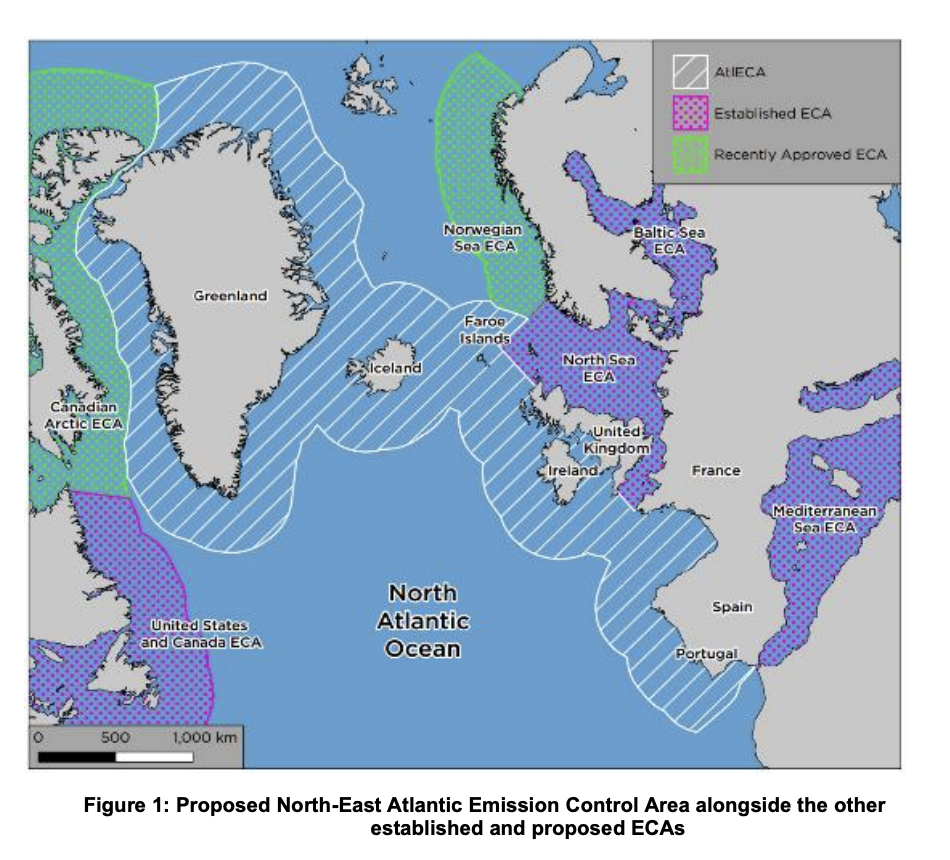
The 83rd Session of the IMO Marine Environment Protection Committee (MEPC) occurred 7–11 April 2025 at IMO Headquarters (London, UK). Among numerous agenda items and outcomes, significant and long awaited amendments to Annex VI of MARPOL, including the additions of a Chapter 5: Regulations on the IMO Net-Zero Framework, and the designation of the North-East Atlantic as an Emission Control Area (ECA) under MARPOL, Annex VI, Regs 13-14.
The Regulations of the IMO Net-Zero Framework would, subject to exceptions, apply to all ships of 5,000 gross tonnage and above (Reg 30), with the defined objective (Reg 31):
“1 The goal of this chapter is to reduce greenhouse gas (GHG) emissions from international shipping as soon as possible, delivering on the reduction targets set out in the 2023 IMO Strategy on Reduction of GHG Emissions from Ships, 67 effectively promoting the energy transition of shipping and providing the world fleet with a needed incentive while contributing to a level playing field and a just and equitable transition”.
IMO Secretariat, Circular Letter No.5005 (2025) p. 53.
As summarised by IMO Secretariat, the IMO Net- Zero Framework will principally provide:
“Global fuel standard: Ships must reduce, over time, their annual greenhouse gas fuel intensity (GFI) – that is, how much GHG is emitted for each unit of energy used. This is calculated using a well-to-wake approach.
Global economic measure: Ships emitting above GFI thresholds will have to acquire remedial units to balance its deficit emissions, while those using zero or near-zero GHG technologies will be eligible for financial rewards”.
Ships operating within the North-East Atlantic Emission Control Area (ECA) will be subject to Regulation 13 addressing particular requirements concerning Nitrogen oxides (NOx) and Regulation 14 addressing particular requirements concerning sulphur oxides (SOx) and particulate matter. The North-East Atlantic Emission Control Area will be the area described by the coordinates provided in para 7 of Appendix VII to Annex VI of MARPOL, summarised as:
“6. The North-East Atlantic Emission Control Area (NE Atlantic ECA) encompasses the Exclusive Economic Zones (EEZ) and territorial seas, extending up to 200 nautical miles from the baselines of Greenland, Iceland, the Faroes, Ireland, the mainlands of the United Kingdom, France, Spain and Portugal. This designation excludes the seas bounded by the North Sea area, as defined in regulation 1.14.6 of Annex V of the present Convention”.
IMO Secretariat, Circular Letter No.5005 (2025) p. 98.
The approved draft amendments to Annex VI of MARPOL anticipate being formally adopted at an extraordinary session of the Marine Environment Protection Committee (14-17 October 2025), which would foresee an entry into force 16 months later, under the tacit acceptance procedure, i.e. 17 February 2027. Two Particularly Sensitive Sea Areas (PSSAs) were, in principle, agreed for designation (“Reserva Nacional Dorsal de Nasca” (Nasca Ridge National Reserve) and “Reserva Nacional Mar Tropical de Grau” (Grau Tropical Sea National Reserve)), but Peru was invited to further develop the proposed associated protective measures for submission and approval consideration at the 84th MEPC Session.
Filed under International Organizations
HRC: The human right to a clean, healthy and sustainable environment – the ocean and human rights
On 3 April 2025, the UN Human Rights Council adopted with a vote a resolution, entitled, Human right to a clean, healthy and sustainable environment: ocean and human rights (A/HRC/58/L.26/Rev.1). Among other important statements and calls, the Resolution provides:
Affirming that respect for and the protection and fulfilment of the human right to a clean, healthy and sustainable environment contribute to addressing ocean degradation, and at the same time recognizing that maintaining a healthy and clean ocean contributes to the protection of a range of human rights,
HRC Resolution:Human right to a clean, healthy and sustainable environment: ocean and human rights
[…]
Emphasizing the importance of States taking decisive action to address plastic pollution throughout the full life cycle of plastic, including in the marine environment, and highlighting the specific and severe impacts of plastic pollution, climate change and biodiversity loss on the ocean, which jeopardize the realization of human rights, including the human right to a clean, healthy and sustainable environment, while underscoring the transboundary nature of plastic pollution and the need for enhanced global cooperation to effectively address this crisis,
[…]
Recognizing the guidance provided by the International Tribunal for the Law of the Sea in its advisory opinion in reply to the Request for an advisory opinion submitted by the Commission of Small Island States on climate change and international law rendered on 21 May 2024, on the obligation of States to protect the ocean from climate change drivers and impacts,
[…]
Noting with satisfaction that States have recognized that the ocean, seas and coastal areas form an integrated and essential component of the Earth’s ecosystem and are critical to ensure its sustainability, and that international law, including the United Nations Convention on the Law of the Sea and its implementing agreements, provides the legal framework for the conservation and sustainable use of the ocean and its resources, […]
5. Calls upon States:
(a) To respect, protect and fulfil human rights, including in all actions undertaken to address environmental challenges, including climate change, marine biodiversity loss, pollution and land degradation;
(b) To adopt and implement strong laws ensuring, among other things, the rights to participation, to access to information and to justice, including to an effective remedy, in environmental matters;
[…]
(g) To establish, maintain and strengthen effective legal and institutional frameworks to regulate the activities of public and private actors in order to prevent, reduce and remedy harm to biodiversity and ecosystems, taking into account human rights obligations and commitments relating to the enjoyment of a clean, healthy and sustainable environment;
(h) To implement, in all their activities, the precautionary principle or precautionary approach, as appropriate, for the effective protection of marine and coastal ecosystems;
[…]
6. Encourages States:
(a) To adopt ecosystem-based integrated, intersecting and holistic national and local policies and an effective legal framework that acknowledges the need to protect and restore the ocean for the enjoyment of the human right to a clean, healthy and sustainable environment;
[…]
(e) To cooperate with other States to advance the protection, conservation and remediation of the ocean and coastal areas, including through the implementation of international law and the incorporation of international human rights law obligations, standards and guidelines for ocean management;
[…]
(o) To ratify the Agreement under the United Nations Convention on the Law of the Sea on the Conservation and Sustainable Use of Marine Biological Diversity of Areas beyond National Jurisdiction;
[…]
11. Calls upon all States to conserve, protect and restore healthy ecosystems and biodiversity and to ensure their sustainable management and use by applying a human rights based approach that emphasizes participation, inclusion, transparency and accountability in the management of natural resources;
Filed under International Organizations
ISA: Secretary-General and Delegates Respond to TMC Announcement Concerning Seabed Mining Permits under US Regulation
On 27 March 2025, The Metals Company (TMC) released a press release which included the announcement:
“that its subsidiary The Metals Company USA LLC (“TMC USA”) has formally initiated a process with NOAA under the U.S. Department of Commerce to apply for exploration licenses and commercial recovery permits under existing U.S. legislation, the Deep Seabed Hard Mineral Resources Act of 1980 (DSHMRA)”
On 28 March 2025, ISA Secretary-General Leticia Carvalho issued a statement that brought the matter and the ISA-SG’s concerns to the attention of the members of the Council as a matter which may be of interest to the Council. The Council decided to discuss the announcement under ‘other matters’. The USA is not a Party to UNCLOS. The opinion of the ISA-SG stressed:
Any unilateral action would constitute a violation of international law and directly undermine the fundamental principles of multilateralism, the peaceful use of the oceans and the collective governance framework established under UNCLOS.
Statement by Madam Secretary-General of the International Seabed Authority, Leticia Carvalho (28 March 2025)
For over three decades, the absence of claims under any regime outside Part XI has demonstrated the international community’s strong confidence—including that of States not party to the Convention—in the system developed through the Authority.
As reported in Earth Negotiations Bulletin, numerous States expressed serious concerns about the reported intent of TMC USA. Numerous States emphasised that “the seabed, subsoil, and resources thereof in the Area are the common heritage of humankind and under the exclusive mandate of ISA” (Sierra Leone for the African Group, Argentina, The Bahamas, Belgium, Brazil, Cameroon, Chile, China, The Cook Islands, Costa Rica, Denmark, Fiji, Germany, Ghana, Greece, India, Indonesia, Italy, Jamaica, Japan, Lesotho, Mauritius, Mexico, The Netherlands, New Zealand, Norway, Poland, The Philippines, Portugal, The Russian Federation, Singapore, Spain, Switzerland, Trinidad And Tobago, The UK, and Zimbabwe). The common heritage principle, as applicable to the Area and its resources, is codified in Article 136 of UNCLOS, as well as relevant UN General Assembly Resolutions (Brazil, Greece and Mexico).
Numerous States also emphasised Article 137(1) of UNCLOS, which provides “No State shall claim or exercise sovereignty or sovereign rights over any part of the Area or its resources, nor shall any State or natural or juridical person appropriate any part thereof. No such claim or exercise of sovereignty or sovereign rights nor such appropriation shall be recognized” (Brazil, Greece, Mexico and others). “Germany and others noted Article 137 as customary international law”, while “France called for preserving the integrity and universality of the UNCLOS legal framework”.
Ireland, Jamaica, Singapore, and others rejected the TMC assertion that because the ISA has not yet adopted the Exploitation Regulations the ISA is somehow “in breach of its treaty obligations under UNCLOS and the 1994 Agreement”. Observers were critical of the timing of the TMC announcement and intentions perceived thereof.
Portugal: Law 36/2025 Establishing A Moratorium on Seabed Mining in Portugal’s Maritime Zones
On 31 March 2025 Portugal published Law 36/2025 (Diário da República n.º 63/2025, Série I de 2025-03-31) which seeks to establishes a moratorium on deep-sea mining in the maritime zones of Portugal until 2050 (Art 1). This is principally done through the addition of Article 11-A to Law 17/2014 (Diário da República n.º 71/2014, Série I de 2014-04-10), which concerns Portugal’s marine spatial planning and management:
Article 11-A
Law 36/2025, Article 3 (machine translation)
Moratorium
A moratorium on ocean floor mining in the national maritime space is hereby established, covering prospecting and exploration activities, until 1 January 2050
Of note, the external objectives of Portugal’s framework climate policy, as found in Article 15 of Law No. 98/2021 (Diário da República n.º 253/2021, Série I de 2021-12-31), is also amended with the addition of:
Article 15.
Law 36/2025, Article 4 (machine translation)
Climate foreign policy
1 – The Government adopts a global and integrated vision of the pursuit of climate objectives, respecting the limits of sustainable use of the planet’s natural resources and the development paths of each country, actively defending, in terms of foreign policy within the framework of climate diplomacy:
[…]
(g) The establishment of an international moratorium on deep-sea mining, as long as this is justified by the precautionary principle.
Filed under State Practice
G7: Foreign Ministers’ Declaration on Maritime Security and Prosperity
On 14 March 2025, the G7 Foreign Ministers (Canada, France, Germany, Italy, Japan, the United Kingdom, and the United States of America, and the High Representative of the European Union) issued a Declaration on Maritime Security and Prosperity. The Declaration covers a host of topics and practices of interest to the law of the sea, but select paragraphs include:
3. We recognize the role of the UN Convention on the Law of the Sea (UNCLOS) as the legal framework for governing all activities in the oceans and the seas.
[…]5. Attempts to Change the Status Quo by Force: We oppose unilateral attempts to change the status quo, in particular by force or coercion including in the East and South China Seas. We undertake to implement means through which to track systematically and report on attempts to change the status quo by force and by the establishment of new geographical facts, including through coercive and dangerous actions on the oceans and seas that might threaten regional and international peace and security. […]
6. Protecting Critical Maritime and Undersea Infrastructure: We are seized of the fact that vital energy and telecommunications infrastructure under the oceans and seas connects our economies and is vital to our prosperity. We recall the G7 Joint Statement on Cable Connectivity for Secure and Resilient Digital Communications Networks (2024) and the New York Joint Statement on the Security and Resilience of Undersea Cables in a Globally Digitalized World (2024). We share a growing concern that undersea communications cables, subsea interconnectors and other critical undersea infrastructure have been subject to critical damage through sabotage, poor seamanship or irresponsible behaviour which have resulted in potential internet or energy disruption in affected regions, delays in global data transmission, or compromised sensitive communications. We will enhance our cooperation with industry mitigate risks, reduce bottlenecks to operational tasks while strengthening repair capacities in order to improve the overall resilience of critical undersea and maritime infrastructure. In this respect, we welcome the EU Action Plan on Cable Security adopted in February 2025 by the European Commission and the High Representative of the Union for Foreign Affairs and Security Policy.
[…]10. Curtailing Unsafe and Illicit Shipping Practices: The rise of unsafe and illicit shipping practices, including fraudulent registration and registries, poses a significant threat to global trade and environmental sustainability. We are concerned that unsafe and illicit shipping imposes heavy costs on industry, governments and citizens […] We commit to strengthen our coordination, amongst the G7 and with other partners, to prevent the use of unregistered or fraudulently registered, uninsured and substandard vessels engaged in sanctions evasion, arms transfers, illegal fishing and illicit trade. We encourage relevant International Organizations to improve maritime domain awareness by expanding satellite-based vessel tracking and establishing comprehensive data records of the movement of individual ships and of ship-to-ship transfers, as a means of identifying and tracking illicit maritime activities. […]
11. Shadow Fleet Task Force: We invite members of the Nordic-Baltic 8 (Denmark, Estonia, Finland, Iceland, Latvia, Lithuania, Norway, Sweden), and possibly others, to join participating G7 members in a Shadow Fleet Task Force to enhance monitoring and detection and to otherwise constrain the use of shadow fleets engaged in illegal, unsafe or environmentally perilous activities, building on the work of others active in this area. The Task Force will constitute a response by the participating States to the call by the International Maritime Organization in its Resolution A.1192(33) of 6 December 2023 for Members States and all relevant stakeholders to promote actions to prevent illegal operations in the maritime sector by shadow fleets and their flag states, including illegal operations for the purposes of circumventing sanctions, evading compliance with safety or environmental regulations, avoiding insurance costs, or engaging in other illegal activities.
[…]13. Promoting Safe and Resilient Ports and Strategic Waterways: […] We will work with partners and with relevant International Organizations to encourage robust cybersecurity standards for port ICT infrastructure, to increase resilience against malicious cyber incidents on maritime logistical networks, to reduce monopolistic power over key supply chain nodes, to promote secure and transparent port ownership, to limit unsolicited or undue foreign influence over critical infrastructures and strategic waterways, and to otherwise encourage greater focus on such potential vulnerabilities.
14. Unexploded Ordnance (UXO) at sea poses a significant hazard to the marine environment, to the safety of fishermen and other users of the maritime space, and to various marine economic activities. We commit to enhancing diplomatic efforts and to exchanging best practices among national authorities, relevant international and regional organizations, and relevant industry sectors to accelerate the clean-up of UXO from the seas and ocean.
[…]17. This G7 Maritime Security and Prosperity Declaration provides a framework for cooperation with non-G7 Partners, including countries hosting major ports, large merchant fleets, or extensive flag registries as well as relevant regional and International Organizations, such as the International Maritime Organization and ASEAN. We would welcome robust cooperation with Partners to take forward the goals set out in this Declaration, consistent with the principles of sovereignty and territorial integrity, under the efforts of the G7 countries, including a free, open, prosperous and secure Indo-Pacific region, to build a free and open maritime order based on the rule of law, and of commitment to the sustainable development of the world’s maritime spaces.
On 17 March 2025, A Ministry of Foreign Affairs of China Spokesperson offered remarks on the Declaration on Maritime Security and Prosperity, in particular surrounding the paragraphs addressing the Taiwan Strait and the South China Sea.
Filed under State Practice
Vacancy: PhD Scholarship at the University of New South Wales
Law & Justice at the University of New South Wales (UNSW) Sydney is currently advertising a PhD candidate position, including scholarship, for a doctoral topic related to the Australian Research Council Discovery Project of Justine Nolan, Natalie Klein, and Shelley Marshall (RMIT University) on ‘Remedies for Victims of Modern Slavery in Indo-Pacific Fisheries’. Application are welcome until 31 March 2025. For more information and how to apply see here.
Norway: WWF v. Norway (Ministry of Energy), Judgment
On 13 February 2025 the Oslo District Court issued judgment in Stiftelsen WWF Verdens Naturfond v. Staten v/ Energidepartementet (Case No. 24-081980TVI-TOSL/04). The case concerned the validity of the Royal Decree of 12 April 2024 on the opening of an area on the Norwegian Continental Shelf for mineral activities (previously reported). WWF challenged whether the mandatory impact assessment prior to opening of new areas on the continental shelf for mineral activities met the substantive requirements under Section 2-2 of the Seabed Minerals Act, as interpreted by other domestic and international law, including Article 206 of UNCLOS and the precautionary principle. The Decree was also challenged for being based on materially incorrect facts. The Decree was not invalidated, although WWF have signalled they will appeal the decision. On law of the sea:
It has not been alleged that Norway has not fulfilled its reporting obligations under Article 205 of [UNCLOS], or that the obligation to assess the potential environmental impacts ‘as far as practicable’ extends beyond the obligation to conduct an impact assessment under Section 2-2 of the [Seabed Minerals Act].
WWF v. Ministry of Energy, Judgment p. 26 (machine translation)
Overall, the district court finds that Norwegian law interpreted in accordance with international and national law requires that both probable and possible, but not theoretical or constructed, environmental consequences of an opening decision must be ‘illuminated’ in an impact assessment prepared by the ministry before the government can decide on new areas opened for mineral activities [Section 2-2 of the Seabed Minerals Act]. International law requirements indicate that the verb ‘illuminate’ means that the probable and possible environmental consequences must both be identified, described and assessed.
The impact assessment is obliged to use all available knowledge and assessment methods. Depending on the circumstances, new scientific studies may also be necessary where the knowledge base falls short […] The international and EU law investigation requirement is also not absolute, but is limited by a reasonableness, materiality, probability and/or proportionality limitation that, in the end, is not found to deviate significantly in content from the domestic law requirements.
WWF v. Ministry of Energy, Judgment pp. 30-31 (machine translation)
Filed under Jurisprudence, State Practice
China: Letter on Continental States’ “Archipelago” Baselines
On 28 February 2025, the Permanent Representative of China to the United Nations addressed a Letter to the UN Secretary-General which appears to largely be in response to the Letter dated 5 December 2024 from the Permanent Representative of the United States of America to the United Nations addressed to the Secretary-General.
In short, the USA Letter of 5 December 2024 referred to the 2022 study, Limits in the Seas No. 150, as well as 2022 State Practice Supplement, to emphasis the primary US position that the baseline provisions of UNCLOS are ‘comprehensive’, regulating the drawing of all baselines, including those pertaining to “continental States’ outlying archipelagos”. In the alternative, the US affirms that if the drawing of baselines pertaining to “continental States’ outlying archipelagos” is not regulated by the baseline provisions of UNCLOS, but rather customary international law, then the relevant rules of customary law must be demonstrative through State practice and opinio juris. The USA refutes that there is sufficient evidence in State practice and opinio juris to establish a customary legal basis for non-archipelagic States to establish straight baselines around outlying island groups.
The China Letter of 28 February 2025 affirms, first that the UNCLOS provisions on baselines are non-exhaustive and the “question of continental States’ outlying archipelagos was deferred”, and second, that the “practice regarding continental States’ outlying archipelagos [is] long-established in international law”. China rejects the findings of the US State Department Study, and affirms China’s position that the existing straight baselines at Xisha Qundao/Paracel Islands are consistent with international law and that “China has yet to draw its territorial sea baselines for other archipelagos”. To constitute an ‘archipelago’ in general international law, China suggests the maritime features must “constitute a legal whole”, with the conditions being “constitutes an entity in geographic, economic and political terms, and has been regarded as an entity respectively throughout history” (see, similarities to Article 46(b) of UNCLOS which defines archipelago for the purposes of UNCLOS).
Note, it is the shared position of both States, evident in the letters, that only Archipelagic States may establish archipelagic baselines, as provided in Part IV of UNCLOS. Continental States are by definition not Archipelagic States (Article 46 of UNCLOS) and therefore may not establish archipelagic baselines as governed by UNCLOS (Article 47 of UNCLOS; South China Sea Award (2016) para 573). The differences concern whether there are (a) lawful baselines circumstances outside of UNCLOS, and (b) whether this includes straight baselines around ‘archipelagos’ by Non-Archipelagic States (on both, note South China Sea Award (2016) paras 575-576).
Filed under State Practice, Treaties
Viet Nam: Baselines in the Gulf of Bac Bo/Tonkin
On 21 February 2025, Viet Nam’s Ministry of Foreign Affairs announced the establishment of straight (Article 1; mainland territory) and normal (Article 2; Bach Long Vi Island) baselines in the Gulf of Tonkin. The Government of Viet Nam notes this practice was adopted in accordance with the 2012 Law of the Sea of Viet Nam. The Statement also defines the outer limit of Viet Nam’s territorial sea in the Gulf of Tonkin (Article 3), points 1-9 reflecting the territorial sea delimitation line with China, while point 10, according to the Statement, is “located within the waters of Viet Nam”. Consistent with the obligations of Viet Nam under Article 16 of UNCLOS, the list of geographical coordinates of points, specifying the geodetic datum, as well as a chart showing straight baselines and outer limits of the territorial sea, have been given due publicity and a copy deposited with the Secretary-General of the United Nations on 7 March 2025.
Filed under State Practice
IMLI 2025 Course on Peaceful Dispute Settlement and Maritime Delimitation
The IMO International Maritime Law Institute (IMLI) is hosting the 2025 edition of its Course on Peaceful Settlement of Maritime Disputes and Delimitation of Maritime Boundaries. The Course seeks to provide a comprehensive introduction to, and an analysis of, various international maritime dispute settlement mechanisms as well as the boundary-making process and the alternative arrangements available to States, including provisional measures. Applications are open until 4 April 2025. More information is available here.
Filed under Courses
EU: Action Plan on Cable Security
On 21 February 2025, the European Commission and High Representative of the Union for Foreign Affairs and Security Policy presented a Joint Communication to the European Parliament and the Council, entitled, EU Action Plan on Cable Security, with the objective of strengthening the security and resilience of submarine cables. Actions across the target areas will be of interest to ocean governance, including, for example deterrence measures against ‘shadow fleet’ vessels or other ‘vessels of interest’ and launching “a reflection at international level on how to make full use of the International Law of the Sea Framework to enhance the security of submarine cables”, including the possible establishment of “a common understanding of relevant provisions of the International law of the sea enabling Member States, as coastal and flag States, to more effectively protect critical infrastructure and take action in relation to the shadow fleet of vessels and any vessels of interests operating on the high seas. In particular, the legal framework for interception or boarding of vessels representing risks for the EU should be carefully assessed, in full compliance with United Nation Conventions on the Law of the Sea (UNCLOS)” (p. 16).
Filed under State Practice
Conference: Humanising the Maritime Industry
I Exist Too will host its 2025 forum, themed, Humanising the Maritime Industry, 7-8 May 2025, at Urban Valley Resort & Spa (Malta). For more information see here.
Filed under Events
Vacancy: PhD Scholarship at the University of New South Wales
Law & Justice at the University of New South Wales (UNSW) Sydney is currently advertising a PhD candidate position, including scholarship, entitled, Protection of Human Rights at Sea. Application are welcome until 31 March 2025. For more information and how to apply see here.
Filed under Vacancies
Call for Abstracts: Reconstructing the Advisory Function of International Courts and Tribunals
The ESIL Interest Group on International Courts and Tribunals will host a workshop, entitled, Reconstructing the Advisory Function of International Courts and Tribunals?, 11 September 2025, in-person (Berlin), prior to the ESIL 2025 Annual Meeting. Abstracts are welcome until 28 March 2025. For more information see here.
Daniel Vignes Prize (5th Edition)
The International Association for the Law of the Sea (AssIDMer) welcomes applications for its Prix Daniel Vignes (5th Edition), “a prize for the best article published in a journal or a collective work, to disseminate knowledge of the international law of the sea”. The deadline for applications is 15 June 2025. The prize will be officially awarded during the AssIDMer Conference, The Sustainable Management of Fisheries and Marine Biodiversity, 11-12 September 2025, held in Procida (Italy). The call is available here.
Filed under Calls, Competitions
Call for Papers: The Impact of Technology on Maritime Security
The NATO Maritime Security Centre of Excellence (MARSEC COE) will host its 5th Maritime Security Conference, themed, The Impact of Technology on Maritime Security, 24-25 June 2025, at MARSEC COE (Istanbul, Türkiye). Abstracts are welcome until 11 April 2025. For more information see here.
BBNJ Agreement: Exceptions on Non-Retroactivity Utilised
On 4 February 2025 Spain ratified the Agreement under the United Nations Convention on the Law of the Sea on the conservation and sustainable use of marine biological diversity of areas beyond national jurisdiction (BBNJ Agreement). This was shortly followed thereafter by France ratifying the BBNJ Agreement on 5 February 2025. Both States submitted declarations upon ratification. These declarations are consistent with the previously reported EU law, whereby the exception to retroactive effect, as set in Article 10(1) of BBNJ Agreement, will be employed upon signature or ratification of the BBNJ Agreement. Relevant provisions of the BBNJ Agreement will therefore, for France and Spain, apply only to activities with respect to marine genetic resources and digital sequence information on marine genetic resources of areas beyond national jurisdiction collected or generated after the entry into force of the BBNJ Agreement for France and Spain, respectively. Other interesting points are also included in the declaration of France.
Filed under State Practice, Treaties
Call for Abstracts: Advancing the Blue Economy through Gender Equality
The World Maritime University (WMU) will host an international conference, themed, Advancing the Blue Economy through Gender Equality, 19-21 May 2025, at WMU (Malmö, Sweden). Abstracts are welcome until 15 February 2025. For more information see here.
GMU Academy on Seabed Governance
Gujarat Maritime University (GMU) will host the GMU Academy on Seabed Governance, 1-6 March 2025, online. Fees are waived for foreign participants. For more information see here.
Filed under Courses
Call for Papers: Permacrisis at sea
On the occasion of the 2025 ESIL Research Forum, the ESIL Interest Group on the Law of the Sea will convene a workshop, entitled, Permacrisis at sea: navigating oceans dualities, 18 March 2025, online. Abstracts are welcome until 16 February 2025. For more information see here.
Call for Abstracts: Strengthening the Role of International Law in Asia
The Diplomatic Academy of Viet Nam will host the 10th Biennial Conference of the Asian Society of International Law (AsianSIL), themed, Strengthening the Role of International Law in Asia, 9-10 October 2025, in Ha Noi (Viet Nam). Non-exhaustive suggested topics include the 2023 BBNJ Agreement; The contribution of ITLOS to the development of international law; and Safety and freedom of navigation at sea: implications for Asia-Pacific region. Abstracts are welcome until 15 March 2025. For more information see here.
ITLOS: The “Zheng He” Case, Order of 3 February 2025
On 3 February 2025 the President of ITLOS, in respect of The “Zheng He” Case (Luxembourg v. Mexico), issued Order 2025/1 of 3 February 2025. The Order extends the time limit for the submission of the Memorial of Luxembourg and the Counter-Memorial of Mexico, respectively. Of note, the Order responds to requests from both parties to the dispute following the entry “into a phase of bilateral negotiations” (Order 2025/1 of 3 February 2025, para 3). For more information, see the previously reported incidental provisional measure proceedings.
Filed under Jurisprudence, State Practice
Training School: Sustainable Marine Governance in the Mediterranean
UNEP-MAP and MEPIELAN Centre, in cooperation with EPLO, will host a training school, entitled, Sustainable Marine Governance in The Mediterranean, 5 – 10 May 2025, online. Applicants are welcome until 4 April 2025. For more information see here.
Filed under Courses
IFLOS Summer Academy 2025
The International Foundation for the Law of the Sea (IFLOS) shall host the 2025 Session of the IFLOS Summer Academy, 13 July – 8 August 2025, at the International Tribunal for the Law of the Sea (Hamburg, Germany). Applications are welcome 1 February – 31 March 2025. For more information, see here. A limited number of scholarships and travel grants are available to help participants access this unique learning experience.
Filed under Courses
Symposium: Les ports face au défi du changement climatique
The Center of International Law (Centre de droit international) of Université Jean Moulin Lyon 3 will host a symposium, entitled, Les ports face au défi du changement climatique, 4 February 2025, at Université Jean Moulin Lyon 3 (Lyon, France). For more information and registration see here.
Filed under Events
MLC: 2022 Amendments Enter into Force
On 23 December 2024, the Amendments of 2022 to the Code of the Maritime Labour Convention entered into force at the international level. The amendments “aim at further improving working and living conditions at sea and address some of the key challenges faced by seafarers during the COVID-19 pandemic”. Amendments address the international standards concerning (1) recruitment and placement, (2) repatriation, (3) accommodation and recreational facilities, including social connectivity, (4) food and catering, (5) medical care on board ship and ashore, (6) health and safety protection and accident prevention, and (7) evidence of financial security.
Filed under Treaties
ILO/ISA: Cooperation Framework Agreement on Protection of Human Life and Workers’ Rights
On 19 December 2024 the International Labour Organization (ILO) and the International Seabed Authority (ISA) signed the Agreement between the International Labour Organization and the International Seabed Authority, a cooperation framework agreement (Art 1) to address the protection of human life and workers’ rights in seabed-related activities:
Article 2: Scope of Cooperation
2.1. In pursuing their cooperation within the framework of this Agreement, the Parties shall:
2.1.1. Consult, where appropriate and practical, on matters of mutual interest with a view to promoting or enhancing a better understanding and coordination of their respective activities, responsibilities and mandates. The date and form of such joint consultations will be agreed between the Parties.
2.1.2. Collaborate to the extent possible on areas of common concern and interest, which include, but are not limited to, decent and sustainable work, the safety of life at sea, and the protection of human life and the rights of workers, including seafarers and other persons involved in activities in the Area.
2.1.3. Cooperate, where appropriate and practical, in undertaking joint research, technical meetings, trainings and other collaborative initiatives, within the scope of each Party’s respective mandate.
The Agreement has been endorsed by the ISA Council and the ILO’s Governing Body and entered into force 19 December 2024 (Art 7(1)). For more information see here.
Filed under International Organizations, Treaties
Workshop: Maritime Boundary Delimitation
The Centre for International Law (CIL) of the National University of Singapore (NUS) and the Australian National Centre for Ocean Resources and Security (ANCORS) of the University of Wollongong shall host the 2025 edition of their workshop, Maritime Boundary Delimitation, 24-26 February 2025 at NUS (Singapore). For more information see here.
Filed under Courses
WCPFC: Adopts Legally Binding Conservation & Management Measure on Fishing Labour Conditions
The Western Central Pacific Fisheries Commission (WCPFC), at its 21st Regular Session of the Commission (28 November to 3 December 2024), continued its leadership among regional fisheries management organisations (RFMOs) by adopting (para 63) the world’s first legally binding conservation and management measure (CMM) addressing labour conditions for crew members onboard authorized fishing vessels: CMM 2024-04 for Labour Standards, which will enter into force 1 January 2028 (para 19, although Members, Participating Territories and Cooperating Non-Members are encouraged to implement measures as soon as possible).
CMM 2024-04 for Labour Standards addresses the crew’s (‘persons of any age on board a fishing vessel’) working conditions, as well as the flag State’s responsibilities in the event of a death, serious injury or illness, crew missing or presumed fallen overboard, or reasonable grounds to believe (a) a crew member’s health and safety is endangered or (b) a crew member has been subjected to forced or compulsory labour and other mistreatment. Port State responsibilities are triggered when the port State is notified by either disembarked crew or the flag State of alleged/possible forced or compulsory labour and other mistreatment (paras 13-14). The State of Nationality, among others, is expected to cooperate and provide support in relation to cases of forced or compulsory labour and other mistreatment on fishing vessels, such as collecting evidence ‘where possible’ (para 15).
This follows initial steps of adopting non-binding resolutions at numerous RFMOs on the path to binding labour standards at the regional level, including WCPFC Resolution 2018-01 On Labour Standards for Crew on Fishing Vessels; NAFO Resolution (1/23) Non-Binding Resolution relating to Core Principles on Labour Standards in NAFO Fisheries; ICCAT Resolution 2023-20 on Core Principles on Labor Standards in ICCAT Fisheries; and 2024 NPFC Resolution on Core Principles on Labor Standards in NPFC Fisheries.
For further information, see the WCPFC’s Provisional Meeting Outcomes and Attachments for the 21st Commission Session, including further actions to incorporate climate change considerations into fisheries conservation and management.
Filed under State Practice
Conference: Life, liberty, and health at sea
SOAS, BIICL, and Basel University will organise a hybrid conference, entitled, Life, liberty, and health at sea, 24 January 2025 at SOAS (London, UK)/Online. This is the public opening event of the COST Action ‘BlueRights’ (CA23103). For more information and registration see here.
Filed under Events
INC on Plastic Pollution: Fifth Session Adjourned
Consistent with the mandate established under para 1 of UNEP Resolution 5/14, the fifth session of the Intergovernmental Negotiating Committee to develop an international legally binding instrument on plastic pollution, including in the marine environment (INC-5) was held 25 November – 1 December 2024, with the ambition of conclude negotiations and finalize the text of an international legally binding instrument on plastic pollution, including in the marine environment, by the end of 2024.
While progress was made, a finalised text was not achieved and so the session has been suspended and negotiations scheduled to continue in 2025. Some representatives expression concern and disappointment at the limited progress made and some identified reasons for the lack of progress in their opinion (INC-5 Draft Report, paras. 55-59). The session adjourned “with agreement on a ‘Chair’s Text’ that will serve as the starting point for negotiations at a resumed session in 2025″.
Filed under International Organizations, State Practice
UNGA: Adoption of UN Convention Against Cybercrime
On 24 December 2024 the United Nations General Assembly (UNGA) adopted (by Resolution without a vote) the United Nations Convention against Cybercrime; Strengthening International Cooperation for Combating Certain Crimes Committed by Means of Information and Communications Technology Systems and for the Sharing of Evidence in Electronic Form of Serious Crimes (UN Convention Against Cybercrime) (UN Doc. A/79/460 para 2 and Annex). The UN Convention Against Cybercrime shall be open to all States for signature in Hanoi in 2025 and thereafter at United Nations Headquarters in New York until 31 December 2026 (Art 64(1)).
Jurisdictional responsibilities under the UN Convention Against Cybercrime will extend to ocean governance, include responsibilities to adopt any measures necessary to establish jurisdiction over offences “committed on board a vessel that is flying the flag of that State Party or an aircraft that is registered under the laws of that State Party at the time when the offence is committed” (Art 22(1)(b)). Additional discretionary prescriptive jurisdiction under Art 22(2) may also have application to offences committed at sea. Likewise, “Each State Party shall make the commission of an offence established in accordance with this Convention liable to effective, proportionate and dissuasive sanctions that take into account the gravity of the offence” (Art 21).
A wide range of offences are found in Arts 7-19. Furthermore, one should note Art 4(1) may be of interest concerning other UN treaties that create offenses for identified acts at sea as shared offenses (‘maritime terrorism’) or transnational organized crimes:
“In giving effect to other applicable United Nations conventions and protocols to which they are Parties, States Parties shall ensure that criminal offences established in accordance with such conventions and protocols are also considered criminal offences under domestic law when committed through the use of information and communications technology systems“.
One may also note the preamble references the Parties being “concerned that the use of information and communications technology systems can have a considerable impact on the scale, speed and scope of criminal offences, including offences related to terrorism and transnational organized crime, such as trafficking in persons, the smuggling of migrants, the illicit manufacturing of and trafficking in firearms, their parts, components and ammunition, drug trafficking and trafficking in cultural property”.
The Ad Hoc Committee shall continue its work with a view to negotiating a draft protocol supplementary to the Convention, addressing, inter alia, additional criminal offences as appropriate (UN Doc. A/79/460 para 5).
Filed under International Organizations, Treaties
UNGA: 2024 Resolutions Adopted on Law of the Sea & Sustainable Fisheries
On 12 December 2024, the United Nations General Assembly (UNGA) adopted its annual Resolution on Oceans and the law of the sea (currently A/79/L.37) with a vote (152-1-2) and Resolution on Sustainable fisheries, including through the 1995 Agreement for the Implementation of the Provisions of the United Nations Convention on the Law of the Sea of 10 December 1982 relating to the Conservation and Management of Straddling Fish Stocks and Highly Migratory Fish Stocks, and related instruments (currently A/79/L.38) without a vote. For further information see reporting of the debate.
Note, paragraph 59 and Annex of the 2024 Resolution: Oceans and the Law of the Sea includes an amendment to the Terms of Reference for the International Tribunal for the Law of the Sea Trust Fund, a mechanism which seeks to assist States in the settlement of disputes through the International Tribunal for the Law of the Sea. The former ‘panel of experts’ tasked with reviewing and making recommendations concerning any application for assistance from the Fund has been replaced with an ‘independent panel’. Key differences include: (1) the composition of the panel (from ‘three persons of the highest professional standing’ selected by the Secretary-General, to ‘the Chairs of the United Nations regional groups for the month on which the panel is convened’) and (2) a now discretionary process (from ‘will establish’ to ‘may engage’ a panel).
Filed under International Organizations
2025 Rhodes Academy of Oceans Law and Policy
The 2025 session of the Rhodes Academy of Oceans Law and Policy has been scheduled for 22 June – 11 July 2025. The deadline to submit an application is 22 April 2025. For more information, fees and application documents please see here. The Academy has a small number of extremely competitive scholarships available that are offered based on high academic merit and financial need. An International Cable Protection Committee Writing Award is also usually offered, the winner of which is awarded a full scholarship to the Rhodes Academy.
Filed under Courses
ITLOS – Nippon Foundation Capacity Building and Training Programme 2025-2026
The ITLOS-Nippon Foundation Capacity-Building and Training Programme on Dispute Settlement under UNCLOS, July 2025 – March 2026, to be held at ITLOS (Hamburg, Germany), is welcoming applications until 6 March 2025. For more information see the flyer and website.
Programme TIDM–Nippon Foundation de renforcement des capacités et de formation 2025-2026
Les personnes intéressées au Programme TIDM-Nippon Foundation de renforcement des capacités et de formation en matière de règlement des différends relatifs à la Convention des Nations Unies sur le droit de la mer, qui se tiendra au TIDM (Hambourg, Allemagne) de juillet 2025 à mars 2026, sont invitées à soumettre leur candidature jusqu’au 6 mars 2025. Pour de plus amples informations, veuillez consulter la brochure et le site Internet.
Filed under Courses
Short Course: Law of the Sea
The British Institute of International and Comparative Law will host the next edition of their short course, entitled, Law of the Sea, 4-5 December 2024, in a hybrid format (London/Online). For more information see here.
Filed under Courses
PCA: EU v. UK Arbitral Tribunal Established
As previously reported, on 25 October 2024 the EU had initiated arbitral proceedings against the UK concerning the –as characterised by the EU– “sandeel fisheries prohibition”. On 18 November 2024, the Arbitration Tribunal (Trade and Cooperation Agreement, Article 740) was established and the case added to the PCA’s list of cases in which it is acting as registry: The European Union v. The United Kingdom of Great Britain and Northern Ireland (PCA Case No. 2024-45).
To-date, documents available in the Sandeel Fisheries Prohibition Arbitration (EU v. UK) include the EU Request for the Establishment of the Arbitration Tribunal.
Filed under Jurisprudence, State Practice
Netherlands: NORI v. Greenpeace and Phoenix – Appeal Judgment
On 12 November 2024 the Amsterdam Court of Appeal issued judgment in appeal summary proceedings concerning the previously reported preliminary relief in Nauru Ocean Resources Inc (NORI) v. Stichting Greenpeace Council and Stichting Phoenix (ECLI:NL:GHAMS:2024:3127). In confirming the judgment under appeal and rejecting an incidental appeal two matters of principal interest to the law of the sea were addressed.
First, in rejecting an incidental appeal by Greenpeace concerning NORI being inadmissible as only representing the interest of its parent company (The Metals Company (TMC)), the court confirmed “NORI, as a contractual party of [International Seabed Authority] ISA in the contract from which the research on the seabed by COCO in [the NORI-D Contract Area of the Clarion Clipperton Zone] arises, has a legally respectable interest in the claims” (para. 4.4).
Second, in rejecting NORI’s appeal on the dismissal of its second claim in the first instance, that Greenpeace “be prohibited from being within a radius of 500 metres around the COCO for a period of six months after service of the judgment and from taking or facilitating unlawful and obstructive actions there, as long as the COCO is located in the Clarion Clipperton Zone” (para 4.1), the court found that the claim is “inadmissible because there is no urgent interest in it” (para 4.5). The deployment of the COCO to the Clarion Clipperton Zone in the foreseeable future was currently a “purely hypothetical situation”, as was the “need for clarity about the admissibility of any future protest actions by Greenpeace with a view to the budget and planning of new deployment of the COCO” (para 4.5).
However, the court also made several interesting observations on protests at sea when discussing the second claim, affirming the application of both the law of the sea and human rights law, but distinguishing the legal aspects raised by protests in the vicinity of a foreign vessel from those conducted on board a vessel flying a flag of a contracting party to a relevant human rights treaty:
Claim II amounts to a general ban on Greenpeace et al. from carrying out a protest action within a radius of 500 metres from the COCO (as the court understands: in [place], although this is not stated in the conclusion on appeal) for a period of six months (after service of the judgment). As the court assumes, NORI is referring to an action such as that carried out by Greenpeace at the end of 2023 on the high seas against deep-sea mining, with the ARCTIC SUNRISE, canoes and motorised rubber dinghies in close proximity to the COCO and with action on board the COCO.
It is rightly not disputed that the question of whether a protest action on the high seas on board the COCO sailing under the Danish flag, as a result of which Danish law applies on board, must be answered on the basis of Article 10 and/or 11 of the European Convention on Human Rights (ECHR).
With regard to a protest action by the ARCTIC SUNRISE, the canoes and the motorised rubber dinghies on the high seas in the vicinity of (but not on board) the COCO, this question must be answered on the basis of the relevant rules of maritime law. Protest actions at sea are considered to be a lawful use of the sea linked to the freedom of navigation as referred to in Article 87, paragraph 1, introductory phrase and (a), of the United Nations Convention on the Law of the Sea (UNCLOS) (cf. ARCTIC SUNRISE Arbitration, PCA case no. 2014-02, Award on the Merits, 14 August 2015, par. 227). The right to protest on the high seas derives from the internationally recognised freedoms of expression and association, as laid down, inter alia, in the International Covenant on Civil and Political Rights (ICCPR) and the ECHR. Whether a protest on the high seas is permissible depends on the facts and circumstances of the specific case. The right to protest on the high seas is limited by the relevant maritime law, which serves, among other things, the safety and freedom of use of the sea and from which it follows that only peaceful protest actions are permitted (Article 88 UNCLOS). The precise content of the maritime law that is (potentially) relevant here – including the question of whether the Convention for the Suppression of Unlawful Acts against the Safety of Maritime Navigation (SUA Convention) is relevant in this context – can be left undiscussed.
NORI v. Greenpeace & Phoenix (Gerechtshof Amsterdam, 200.337.542/01), para 4.5
For further context, see the Greenpeace and TMC responses following judgment.
Filed under Jurisprudence
Nordic Council: Recommendation on Deep Seabed Mining Moratorium
On 31 October 2024, the Nordic Council adopted a Recommendation on Moratorium on Deep Seabed Mining (Recommendation 23/2024). It provides that “The Nordic Council recommends that the Nordic governments introduce a moratorium against deep-sea mining in international waters as long as the environmental, social and economic consequences are not clearly investigated”.
Filed under Non-State Actors
AOSIS: Declaration on Sea Level Rise and Statehood
Building on the previously reported Alliance of Small Island States (AOSIS) Leaders’ Declaration 2021, which, notwithstanding any physical changes connected to climate change-related sea-level rise, addressed the fixing of baselines and maritime zones, on 23 September 2024 the Heads of State and Government of AOSIS adopted the AOSIS Leaders Declaration on Sea Level Rise and Statehood. Among other pronouncements, the Declaration provides:
AOSIS Leaders Declaration on Sea Level Rise and Statehood
- Declare that international law is premised on a principle of continuity of statehood, consistent with broad state practice over the past century,
- Affirm that consistent with the principles of equity, fairness and sovereign equality of states, statehood cannot be challenged under any circumstances of climate change related sea-level rise,
- Declare that the statehood and sovereignty of SIDS and our membership in the United Nations, its specialized agencies and other intergovernmental organizations will continue, and the rights and duties inherent thereto will be maintained, notwithstanding the impacts of climate change related sea-level rise,
Filed under State Practice
 De Maribus