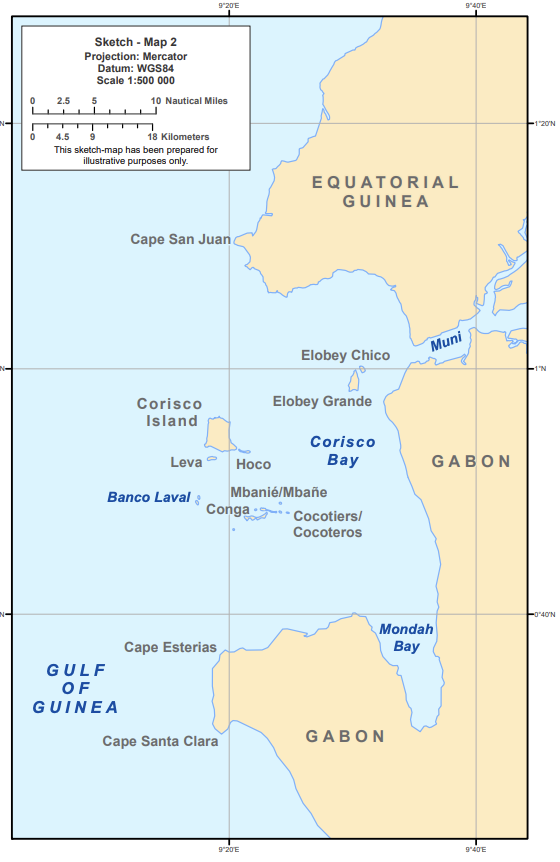
On 19 May 2025 the ICJ delivered its Judgment in Land and Maritime Delimitation and Sovereignty over Islands (Gabon/Equatorial Guinea). Despite the name of the case, the “Court has not been asked therein to delimit the land and maritime boundary or determine sovereignty over the three islands, but only to determine whether the legal titles, treaties and international conventions invoked by the Parties have the force of law in their relations in so far as they concern the dispute between them” (Judgment, para 30). This is detailed in Article 1 of the Special Agreement (2016) which conferred jurisdiction on the ICJ to resolve the dispute.
For these reasons, The Court, (1) By fourteen votes to one, Finds that the document entitled “Convention delimiting the land and maritime frontiers of Equatorial Guinea and Gabon” (“Bata Convention”) invoked by the Gabonese Republic is not a treaty having the force of law in the relations between the Gabonese Republic and the Republic of Equatorial Guinea and does not constitute a legal title within the meaning of Article 1, paragraph 1, of the Special Agreement; (2) Unanimously, Finds that the legal titles invoked by the Gabonese Republic and the Republic of Equatorial Guinea that have the force of law in the relations between them in so far as they concern the delimitation of their common land boundary are the titles held on 17 August 1960 by the French Republic and on 12 October 1968 by the Kingdom of Spain on the basis of the Special Convention on the delimitation of French and Spanish possessions in West Africa, on the coasts of the Sahara and the Gulf of Guinea, signed in Paris on 27 June 1900, to which titles the Gabonese Republic and the Republic of Equatorial Guinea respectively succeeded; (3) By thirteen votes to two, Finds that, of the legal titles invoked by the Gabonese Republic and the Republic of Equatorial Guinea, the title that has the force of law in the relations between them in so far as it concerns sovereignty over the islands of Mbanié/Mbañe, Cocotiers/Cocoteros and Conga is the title held by the Kingdom of Spain on 12 October 1968, to which the Republic of Equatorial Guinea succeeded; (4) Unanimously, Finds that the Special Convention on the delimitation of French and Spanish possessions in West Africa, on the coasts of the Sahara and the Gulf of Guinea, signed in Paris on 27 June 1900, constitutes a legal title within the meaning of Article 1, paragraph 1, of the Special Agreement to the extent that it has established the terminus of the land boundary between the Gabonese Republic and the Republic of Equatorial Guinea, which shall be the starting-point of the maritime boundary delimiting their respective maritime areas; (5) Unanimously, Finds that the 1982 United Nations Convention on the Law of the Sea is an international convention that has the force of law in the relations between the Gabonese Republic and the Republic of Equatorial Guinea, within the meaning of Article 1, paragraph 1, of the Special Agreement, in so far as that Convention concerns the delimitation of their maritime boundary.
In response to pleadings on UNCLOS, the Judgment stated “Although UNCLOS may ‘concern’ the delimitation of the Parties’ common maritime boundary, it is not itself the source of a right to specific maritime areas. Thus, in the view of the Court, UNCLOS does not constitute a legal title within the meaning of Article 1 of the Special Agreement. However, it is an international convention which has the force of law in the relations between the Parties within the meaning of that Article” (Judgment, para 211).
Judges ad hoc Wolfrum and Pinto concurred with the Court’s discussion of UNCLOS, although the latter would not have included it within the operative paragraph of the Judgment (Dissenting opinion of Judge ad hoc Pinto, paras 12, 21). “As far as land territories are concerned, the Convention does not provide for rules or procedures to establish a legal title […] As far as maritime spaces are concerned, recourse to the rules governing the acquisition of land is not applicable in respect of maritime zones. Rights to maritime zones such as the territorial sea (sovereignty), exclusive economic zones and continental shelves (sovereign rights) are developed by recourse to the sovereignty over the relevant land” (Declaration of Judge ad hoc Wolfrum (para 10)). Wolfrum further notes, that the “Judgments of international courts and tribunals in respect of the adjudication of overlapping claims are declaratory in nature, and not constitutive” (Declaration of Judge ad hoc Wolfrum (para 10)).
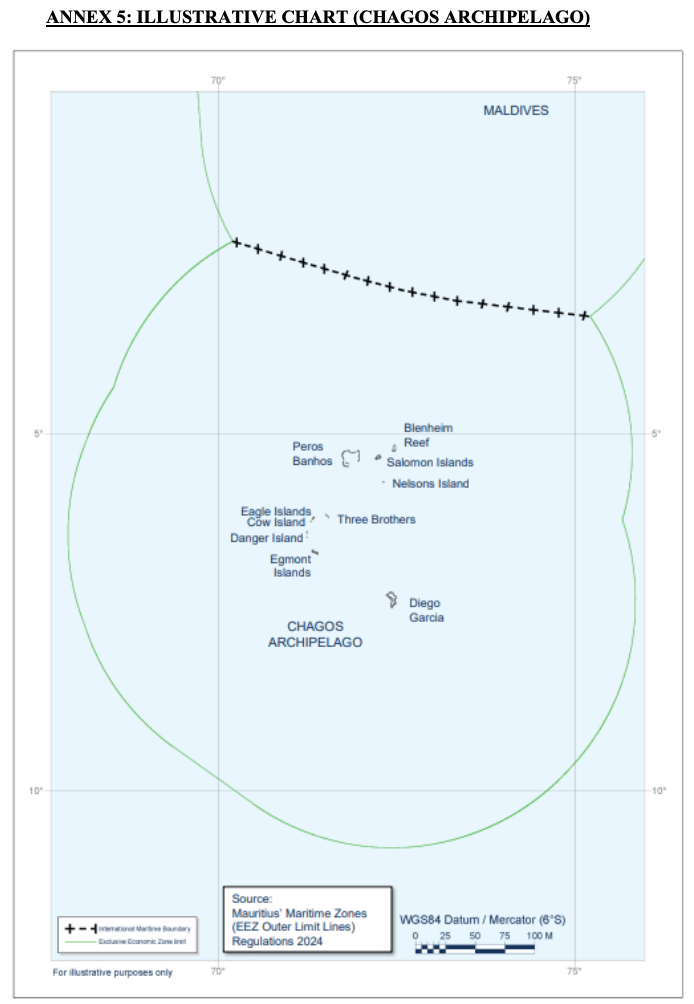
On 22 May 2025 the UK and Mauritius signed the Agreement between the Government of the United Kingdom of Great Britain and Northern Ireland and the Government of the Republic of Mauritius concerning the Chagos Archipelago including Diego Garcia (Chagos Archipelago Agreement), which will enter into force following completion of the respective domestic procedures and notification of the other Party (Art 18). The UK requires amended primary and secondary legislation, while it is estimated the required Mauritian Ministerial decisions will take less than 6 months (Explanatory Memorandum, pp. 11-12).
From a UK perspective, “The purpose of the treaty is to secure the long-term, secure and effective operation of the UK-United States of America (US) military base on Diego Garcia, which is critical for the UK’s national security; to ensure legal certainty over the operation of the Base while respecting partners’ interests; and to uphold the international rule of law” (Explanatory Memorandum, p.2; US State Department). The UK believed the sustainability of the UK operation of the Base was at significant risk, including most notably as a result of the decisions of international courts and tribunals, including the International Court of Justice, relating to the Chagos Archipelago (Chagos Archipelago Agreement, Preamble) and the foreseeability of a future binding decision upon the UK. “Sovereignty was also routinely challenged in the Indian Ocean Tuna Commission, which carried risk of legal challenge leading to an ICJ judgment” (Explanatory Memorandum, p. 3; see furtherIOTC Agreement, Art 23, which might e.g. be raised in disputes on ‘coastal State’ membership, Art 4). Tellingly, this matter is addressed in Article 8 and the Exchange of Letter on the Interpretation of Article 8 of the Chagos Archipelago Agreement (22 May 2025), which provides that upon entry into force, among others, the UK confirms its membership of the Indian Ocean Tuna Commission (IOTC) in respect of Chagos Archipelago transfers to Mauritius and the UK will not claim ‘Coastal State’ but ‘Distant Water Fishing Nation’ membership status at IOTC. The Explanatory Memorandum also made it clear that Mauritius made “frequent public commitments to continue pursuing its legal campaign to secure a binding judgment. The UK government of the day (and all subsequent governments) recognised that there were multiple pathways bywhich Mauritius could achieve this”.
From a Mauritius perspective, the Chagos Archipelago Agreement “recognises the sovereignty of Mauritius over the entirety of the Chagos Archipelago, including Diego Garcia […] [and] marked a significant step in the completion of the decolonisation process of Mauritius” (Prime Minister Navinchandra Ramgoolam’s Remarks; Chagos Archipelago Agreement, Preamble). Recognising the “wrongs of the past”, the Chagos Archipelago Agreement shall address the past treatment of Chagossians and their continuing welfare.
The Chagos Archipelago Agreement is designed as a comprehensive agreement in ‘full and final resolution of the differences’ related to the Chagos Archipelago and therefore addressed an array of ocean governance issues. A unique compulsory dispute settlement procedure by arbitration, which can only be triggered by the UK, is provided in Article 15(4)-(5) and Annex 4 concerning disputes on if a ground for termination exists and the dispute cannot be resolved by other means. A non-exhaustive selection of key provisions for ocean governance is provided below:
Article 1 Sovereignty Mauritius is sovereign over the Chagos Archipelago in its entirety, including Diego Garcia.
Article 2 Authorisation in respect of Diego Garcia 1. As sovereign, Mauritius authorises the United Kingdom to exercise the rights and authorities of Mauritius with respect to Diego Garcia in accordance with the terms of this Agreement. 2. The authorisation under paragraph 1 shall comprise all rights and authorities that the United Kingdom requires for the long-term, secure and effective operation of the Base, including for the Defence and Security Requirements, Conditions and Procedures in Annex 1 and the Jurisdiction and Control Arrangements in Annex 2. 3. Mauritius retains title over the land and the territorial sea of Diego Garcia, including the seabed and subsoil, as well as all rights and authorities not authorised under paragraphs 1 and 2, including:[…] f. sovereignty over natural resources, including fisheries; g. conservation and protection of the environment, including the marine environment;
Article 3 Defence and Security 1. The Parties agree to the Defence and Security Requirements, Conditions and Procedures in Annex 1 […] 3. The Parties shall cooperate on matters relating to maritime security, including trafficking in narcotics, arms and persons, people smuggling and piracy.
Article 5 Environment 1. The United Kingdom shall exercise the rights and authorities under Article 2 in accordance with applicable international law on environmental protection, and with due regard to applicable Mauritian environmental laws. 2. The United Kingdom agrees to provide support and assistance to Mauritius in the establishment and management of its Marine Protected Area in the Chagos Archipelago, in accordance with terms to be agreed between the Parties by a separate written instrument. 3. The Parties shall cooperate on other matters relating to the protection of the environment, including in relation to oil and other spills, and illegal, unreported and unregulated fishing.
Article 8 International Organisations 1. The United Kingdom agrees to ensure its membership in international organisations is consistent with Article 1.
Article 12 Joint Commission A Joint Commission to facilitate the implementation of this Agreement shall be established. The composition, functions and procedures of the Joint Commission are set out in Annex 3 [which provides for a composition of UK and Mauritius representatives, with the USA having observer status].
Article 19 Definitions For the purposes of this Agreement: […] “Chagos Archipelago” means the islands, including Diego Garcia, and maritime zones of the Chagos Archipelago, including the internal waters, territorial sea, archipelagic waters and the exclusive economic zone, and the airspace above and seabed and subsoil below [without prejudice to Mauritius’ claims in respect of the continental shelf]. “Diego Garcia” means the island of Diego Garcia and a twelve (12) nautical mile zone surrounding the island of Diego Garcia, and includes the airspace above and seabed and subsoil below.
Annex 1: Defence And Security Requirements, Conditions And Procedures Diego Garcia 1. In accordance with this Agreement and with reference to Article 2(5) and Annex 2, in respect of Diego Garcia, Mauritius agrees the United Kingdom shall have: a. unrestricted access, basing and overflightfor United Kingdom and United States of America aircraft and vessels to enter into the sea and airspace of Diego Garcia; b. unrestricted ability to: […] v. authorise the installation, operation and repair of new and existing communication systems and electronic systems and associated cables; […] viii. permit access, basing and overflight for non-United Kingdom and non-United States of America aircraft and vessels, upon notification to Mauritius; and ix. manage, use and develop the land and surrounding waters and seabed for defence purposes. This excludes the construction of any artificial islands.
Chagos Archipelago beyond Diego Garcia 3. In accordance with this Agreement, in respect of the Chagos Archipelago beyond Diego Garcia, Mauritius agrees: a. vessels and aircraft of the United Kingdom and the United States of America shall have unrestricted rights of overflight, navigation and undersea access. States operating with the United Kingdom or the United States of America shall also have such unrestricted rights, save in respect of overflight or undersea access, which require notification; b. the United Kingdom shall have rights ofaccess for maintenance and upgrades of equipment, following notification to Mauritius, after having advised Mauritius of the location of all such equipment; […] f. between twelve (12) and twenty-four (24) nautical miles surrounding the island of Diego Garcia, Mauritius and the United Kingdom shall jointly decide on the construction or emplacement of any maritime installation, sensor, structure or artificial island.
Mauritian Security Review 4. Before approving or proceeding with a proposal for: a. the construction or emplacement of any maritime installation, sensor, structure or artificial island in an area beyond the twenty-four (24) nautical miles surrounding the island of Diego Garcia; or b. any proposal for development in the land territory of the Chagos Archipelago beyond Diego Garcia, Mauritius shall conduct a Security Review in accordance with paragraph 6 [which provides for information exchanges with the UK, as well as possible decision making by the Joint Commission. An emerging risks procedure is also found in para 7].
11. For the purposes of this Annex: a. “access” refers to the grant of rights or permissions which would not otherwise exist in international law. Nothing in this Agreement modifies or affects any rights, including rights of overflight or navigation, which exist as a matter of international law; b. “Chagos Archipelago beyond Diego Garcia” means any area within the Chagos Archipelago that is beyond Diego Garcia; c. “unrestricted” means not requiring permission or notification, subject to the standing authorisations and notifications separately agreed between the Parties to meet the requirements of international or domestic Mauritian law or current practice.
Annex 2: Jurisdiction And Control Arrangements Mauritian criminal jurisdiction 3. On Diego Garcia, Mauritius shall exercise all prescriptive, enforcement and adjudicative criminal jurisdiction conferred on it by its laws in relation to allegations against […] b. all persons not connected to the operation of the Base, including persons involved in offences relating to unlicensed commercial fishing and the trafficking in arms or narcotics.
Cooperation in the exercise of criminal jurisdiction 8. In order to support the exercise of jurisdiction by Mauritius on Diego Garcia, the United Kingdom agrees to provide assistance to Mauritius in: […] e. the prevention of unlicensed commercial fishing, and trafficking of arms, persons and narcotics and illegal migration.
Miscellaneous 15. Mauritius shall exercise criminal and civil jurisdiction in respect of activities such as irregular migration and unlicensed commercial fishing, provided such exercise of jurisdiction is in conformity with the requirements of this Agreement.
Finally, the signing of the Chagos Archipelago Agreement was accompanied by the signing of a new Strategic Partnership Framework. Among other items, it will address:
Deepening cooperation on maritime security and irregular migration in areas such as “irregular migration, drugs trafficking, piracy, and illegal, unregulated and unreported fishing”. This will include “Cooperation agreements and capacity building to secure Mauritius’s Exclusive Economic Zone; Consideration of patrolling capability across the Chagos Archipelago to support a secure maritime domain; Cooperation to counter and manage irregular migration; and Provision of training and institutional partnerships to boost Mauritian maritime security capability and strengthen fisheries protection”.
Cooperation in addressing climate change. This will include “Mitigation and adaptation projects to tackle the immediate effects of climate change including coral restoration, coastal erosion and indigenous species conservation; and Technical expertise to develop and manage the Chagos Archipelago Marine Protected Area, pursuant to the agreement on the exercise of sovereignty over the Chagos Archipelago”.
On 14 May 2025 the Committee of Ministers of the Council of Europe (CoE) adopted the Council of Europe Convention on the Protection of the Environment through Criminal Law. The date of opening for signature will be decided later (anticipated to be in 2025) and the Convention will enter into force following 10 Signatories expressing their consent to be bound, including at least eight Member States of the Council of Europe (Art 53).
The Convention builds upon numerous international treaties with extraterritorial application to the oceans, including –but not limited– to MARPOL, SOLAS, UNCLOS and the Hong Kong Convention. Indeed, the Convention provides:
Recognising that environmental crime has a negative impact on economies, public health, human safety, food security, livelihoods and habitats; […] Recognising that environmental crime increasingly has extraterritorial effects and takes the form of international trafficking, which, along with the acceleration of degradation phenomena (climate change, erosion of biodiversity, depletion of natural resources, destruction of habitats, etc.), prompts the need for general minimum standards in criminal law as part of a common and collaborative international framework;
The Convention seeks to effectively prevent and combat environmental crime, promote and enhance national and international co-operation against environmental crime and establish minimum rules to guide States in their national legislation (Art 1(1)). Reflecting the period in which the Committee of Experts was drafting the Convention, the Convention explicitly remains applicable in times of peace and in situations of armed conflict, wartime or occupation (Art 2(2)). The application of human rights at sea are evident in its provisions, including non-discrimination (Arts 4, 49, 51(1); see further ECHR, Art 14).
26 Articles address substantive crimes for which Parties shall take the necessary legislative or other measures for their prevention (Art 10). Parties shall also take effective, proportionate and dissuasive sanctions against offenders (Art 35). Substantive crimes shall include inciting or aiding said offences, as well as attempting to commit certain offences (Art 32). Offences with application in an ocean context include: unlawful pollution (Art 12); import or export of regulated chemical substances (Art 14); transport, import, export or disposal of radioactive material or substances (Art 15); import or export of mercury, mercury compounds and mixtures of mercury and mercury-added product (Art 16); import, export, use or release of ozone-depleting substances, or the import or export of products and equipment containing or relying on such substances (Art 17); import, export, use or release of fluorinated greenhouse gases, or the import of products and equipment containing or relying on such gases (Art 18); transport, shipment or disposal of waste (Art 19); operation or closure of an installation in which a dangerous activity is carried out (Art 20; including floating installations – Explanatory Report (paras 123-124); recycling of ships (Art 22); ship-source discharges (Art 23); mining (Art 26); killing, destruction, taking, possession and transboundary trade of protected wild fauna or flora (Arts 27 and 28(2)); deterioration of habitats within a protected site (Art 29) transporting, releasing or spreading invasive alien species (Art 30); and a ‘particularly serious offence’ (Art 31; Explanatory Report (para 172 including ‘ecocide’).
Parties must establish jurisdiction over the defined offences in an ocean context in a number of explicit cases:
The coastal State for offences committed in its territory, including the internal waters and territorial sea and, for archipelagic States, the archipelagic waters (Art 33(1)(a)) (‘historic waters’ claims are on a case-by-case basis, but would usually fall within the ‘territory’ and thus obligations of the coastal State under this Convention);
The flag State for offences committed on board a ship flying their flag (Art 33(1)(b));
The State of registry for offences on board an aircraft registered under its laws (Art 33(1)(c));
The State of nationality for offences committed by one of its nationals (regardless of the flag State or maritime zone in which the offence occured (Art 33(1)(d));
Application of the ‘extradite or prosecute‘ principle (Art 33(3)).
Parties may consider to establish jurisdiction over offences committed against one of their nationals (passive personality principle; Art 33(2)). For more information see here.
On 28 February 2025, the Permanent Representative of China to the United Nations addressed a Letter to the UN Secretary-General which appears to largely be in response to the Letter dated 5 December 2024 from the Permanent Representative of the United States of America to the United Nations addressed to the Secretary-General.
In short, the USA Letter of 5 December 2024 referred to the 2022 study, Limits in the Seas No. 150, as well as 2022 State Practice Supplement, to emphasis the primary US position that the baseline provisions of UNCLOS are ‘comprehensive’, regulating the drawing of all baselines, including those pertaining to “continental States’ outlying archipelagos”. In the alternative, the US affirms that if the drawing of baselines pertaining to “continental States’ outlying archipelagos” is not regulated by the baseline provisions of UNCLOS, but rather customary international law, then the relevant rules of customary law must be demonstrative through State practice and opinio juris. The USA refutes that there is sufficient evidence in State practice and opinio juris to establish a customary legal basis for non-archipelagic States to establish straight baselines around outlying island groups.
The China Letter of 28 February 2025 affirms, first that the UNCLOS provisions on baselines are non-exhaustive and the “question of continental States’ outlying archipelagos was deferred”, and second, that the “practice regarding continental States’ outlying archipelagos [is] long-established in international law”. China rejects the findings of the US State Department Study, and affirms China’s position that the existing straight baselines at Xisha Qundao/Paracel Islands are consistent with international law and that “China has yet to draw its territorial sea baselines for other archipelagos”. To constitute an ‘archipelago’ in general international law, China suggests the maritime features must “constitute a legal whole”, with the conditions being “constitutes an entity in geographic, economic and political terms, and has been regarded as an entity respectively throughout history” (see, similarities to Article 46(b) of UNCLOS which defines archipelago for the purposes of UNCLOS).
Note, it is the shared position of both States, evident in the letters, that only Archipelagic States may establish archipelagic baselines, as provided in Part IV of UNCLOS. Continental States are by definition not Archipelagic States (Article 46 of UNCLOS) and therefore may not establish archipelagic baselines as governed by UNCLOS (Article 47 of UNCLOS; South China Sea Award (2016) para 573). The differences concern whether there are (a) lawful baselines circumstances outside of UNCLOS, and (b) whether this includes straight baselines around ‘archipelagos’ by Non-Archipelagic States (on both, note South China Sea Award (2016) paras 575-576).
On 4 February 2025 Spain ratified the Agreement under the United Nations Convention on the Law of the Sea on the conservation and sustainable use of marine biological diversity of areas beyond national jurisdiction (BBNJ Agreement). This was shortly followed thereafter by France ratifying the BBNJ Agreement on 5 February 2025. Both States submitted declarations upon ratification. These declarations are consistent with the previously reported EU law, whereby the exception to retroactive effect, as set in Article 10(1) of BBNJ Agreement, will be employed upon signature or ratification of the BBNJ Agreement. Relevant provisions of the BBNJ Agreement will therefore, for France and Spain, apply only to activities with respect to marine genetic resources and digital sequence information on marine genetic resources of areas beyond national jurisdiction collected or generated after the entry into force of the BBNJ Agreement for France and Spain, respectively. Other interesting points are also included in the declaration of France.
On 23 December 2024, the Amendments of 2022 to the Code of the Maritime Labour Convention entered into force at the international level. The amendments “aim at further improving working and living conditions at sea and address some of the key challenges faced by seafarers during the COVID-19 pandemic”. Amendments address the international standards concerning (1) recruitment and placement, (2) repatriation, (3) accommodation and recreational facilities, including social connectivity, (4) food and catering, (5) medical care on board ship and ashore, (6) health and safety protection and accident prevention, and (7) evidence of financial security.
Article 2: Scope of Cooperation 2.1. In pursuing their cooperation within the framework of this Agreement, the Parties shall: 2.1.1. Consult, where appropriate and practical, on matters of mutual interest with a view to promoting or enhancing a better understanding and coordination of their respective activities, responsibilities and mandates. The date and form of such joint consultations will be agreed between the Parties. 2.1.2. Collaborate to the extent possible on areas of common concern and interest, which include, but are not limited to, decent and sustainable work, the safety of life at sea, and the protection of human life and the rights of workers, including seafarers and other persons involved in activities in the Area. 2.1.3. Cooperate, where appropriate and practical, in undertaking joint research, technical meetings, trainings and other collaborative initiatives, within the scope of each Party’s respective mandate.
The Agreement has been endorsed by the ISA Council and the ILO’s Governing Body and entered into force 19 December 2024 (Art 7(1)). For more information see here.
On 24 December 2024 the United Nations General Assembly (UNGA) adopted (by Resolution without a vote) the United Nations Convention against Cybercrime; Strengthening International Cooperation for Combating Certain Crimes Committed by Means of Information and Communications Technology Systems and for the Sharing of Evidence in Electronic Form of Serious Crimes (UN Convention Against Cybercrime) (UN Doc. A/79/460 para 2 and Annex). The UN Convention Against Cybercrime shall be open to all States for signature in Hanoi in 2025 and thereafter at United Nations Headquarters in New York until 31 December 2026 (Art 64(1)).
Jurisdictional responsibilities under the UN Convention Against Cybercrime will extend to ocean governance, include responsibilities to adopt any measures necessary to establish jurisdiction over offences “committed on board a vessel that is flying the flag of that State Party or an aircraft that is registered under the laws of that State Party at the time when the offence is committed” (Art 22(1)(b)). Additional discretionary prescriptive jurisdiction under Art 22(2) may also have application to offences committed at sea. Likewise, “Each State Party shall make the commission of an offence established in accordance with this Convention liable to effective, proportionate and dissuasive sanctions that take into account the gravity of the offence” (Art 21).
A wide range of offences are found in Arts 7-19. Furthermore, one should note Art 4(1) may be of interest concerning other UN treaties that create offenses for identified acts at sea as shared offenses (‘maritime terrorism’) or transnational organized crimes:
“In giving effect to other applicable United Nations conventions and protocols to which they are Parties, States Parties shall ensure that criminal offences established in accordance with such conventions and protocols are also considered criminal offences under domestic law when committed through the use of information and communications technology systems“.
One may also note the preamble references the Parties being “concerned that the use of information and communications technology systems can have a considerable impact on the scale, speed and scope of criminal offences, including offences related to terrorism and transnational organized crime, such as trafficking in persons, the smuggling of migrants, the illicit manufacturing of and trafficking in firearms, their parts, components and ammunition, drug trafficking and trafficking in cultural property”.
The Ad Hoc Committee shall continue its work with a view to negotiating a draft protocol supplementary to the Convention, addressing, inter alia, additional criminal offences as appropriate (UN Doc. A/79/460 para 5).
UK agreement that Mauritius is sovereign over the Chagos Archipelago, including Diego Garcia;
Commitment to ensure the long-term, secure and effective operation of the UK/USA military base on Diego Garcia, including agreement “for an initial period of 99 years, the United Kingdom will be authorised to exercise with respect to Diego Garcia the sovereign rights and authorities of Mauritius required to ensure the continued operation of the base well into the next century”;
Mauritius is free to implement a programme of resettlement on the islands of the Chagos Archipelago (other than Diego Garcia);
UK will capitalise a new trust fund and provide other separate support for the benefit of Chagossians;
The Joint Statement signals further economic, security and environmental partnership between the UK and Mauritius, including on “environmental protection, maritime security, combating illegal fishing, irregular migration and drug and people trafficking within the Chagos Archipelago”. Concrete examples listed include:
Indexed annual payments by the UK for the duration of the agreement;
Establishment of an infrastructure partnership underpinned by UK grant funding;
The establishment of a Mauritian Marine Protected Area.
For further information see the respective UK (2) and Mauritius press releases. The Joint Statement notes the support and assistance provided by the USA & India, who both welcomed the political agreement.
On 24 September 2024, Singapore and the Maldives deposited their instruments of ratification to the Agreement under the United Nations Convention on the Law of the Sea on the Conservation and Sustainable Use of Marine Biological Diversity of Areas beyond National Jurisdiction (BBNJ Agreement; not in force), bringing the Parties to a total of 10. The BBNJ Agreement shall enter into force 120 days after the date of deposit of the sixtieth instrument of ratification, approval, acceptance or accession (BBNJ Agreement, Art 68(1)). The addition of Singapore and the Maldives also adds, respectively, the first Southeast Asian and South Asian State to the geographical representation of the existing Parties (which currently also includes: East Africa, Europe, Oceania, the Caribbean, South America and Central America).
Council Decision (EU) 2024/1830 approved, on behalf of the European Union, the Agreement under the United Nations Convention on the Law of the Sea on the conservation and sustainable use of marine biological diversity of areas beyond national jurisdiction (BBNJ Agreement), completing the internal process to allow the EU to formally deposit its instrument of approval (not yet occurred). The instrument of approval (BBNJ Agreement, Art 66) will be accompanied by a Declaration of Competence (BBNJ Agreement, Art 67(2)) and an Exception (BBNJ Agreement, Arts 70, 10(1)). Declaration 2024/1832 provides what will be in the Declaration of Competence of the European Union concerning the BBNJ Agreement. Declaration 2024/1833 provides what will be in an authorised exception submitted by the European Union concerning BBNJ Agreement. The declared exception provides:
The European Union declares the exception of the retroactive effects as set out in the second sentence of Article 10(1), therefore the provisions of this Agreement shall apply for the Union only to activities with respect to marine genetic resources and digital sequence information on marine genetic resources of areas beyond national jurisdiction collected and generated after the entry into force of this Agreement for the Union.
Other Parties (all others to-date) without a declared exception upon signature or ratification consent to apply relevant BBNJ Agreement provisions with retroactive effect: “The application of the provisions of this Agreement shall extend to the utilization of marine genetic resources and digital sequence information on marine genetic resources of areas beyond national jurisdiction collected or generated before entry into force” (BBNJ Agreement, Art 10(1)). Consistent with Articles 67 and 10, the Declaration of Competence and Article 10-based Exception must be submitted in writing when signing, ratifying, approving, accepting or acceding to the BBNJ Agreement. “The conclusion of the Agreement by the Union is without prejudice to the Member States’ competence as regards the ratification, approval or acceptance of the Agreement” (Council Decision (EU) 2024/1830, recital 9) and “The Union and its Member States aim to ratify the Agreement prior to the United Nations Ocean Conference that will take place in 2025” (Council Decision (EU) 2024/1830, recital 4).
On 17 June 2021, Resolution MEPC.329(76) was adopted and included amendments to Annex I of the 1973 International Convention for the Prevention of Pollution from Ships as modified by the 1978 Protocol (MARPOL). The amendments concerned a prohibition on the use and carriage for use as fuel of heavy fuel oil by ships in Arctic waters. The prohibition came into effect on 1 July 2024, subject to certain functional exemptions (MARPOL Annex I, Regulation 43A(1)), construction standard-based extensions (Regulation 43A(2); 1 July 2029) and an optional temporary waiver right for Arctic coastal States limited to ships flying their flag while operating in their maritime zones (Regulation 43A(4)-(5); 1 July 2029).
From 24-26 June 2024, the Preparatory Commission for the Entry into Force of the Agreement under the United Nations Convention on the Law of the Sea on the Conservation and Sustainable Use of Marine Biological Diversity of Areas beyond National Jurisdiction and the Convening of the First Meeting of the Conference of the Parties to the Agreement (PrepCom) convened its first organizational session at UNHQ (New York, USA) to, among others, elect Co-Chairs and Bureau Members, adopt a programme of work, and schedule PrepCom’s future meetings. Information on the establishment and participation in the PrepCom was previously reported.
Janine Coye-Felson (Belize) and Adam McCarthy (Australia) were elected Co-Chairs of the PrepCom. 15 Vice-Chairs to the Bureau of the PrepCom were elected, including: Mauritius, Sierra Leone and South Africa (African); Japan, Philippines, and Singapore (Asia-Pacific); Latvia, Poland, and Romania (Eastern Europe); Antigua and Barbuda, Brazil, and Chile (Latin America and the Caribbean); Canada, Belgium, and Germany (Western European and Others). Note, the three members of the Bureau of the Asia-Pacific Group will rotate among nine States: Singapore, Japan and the Philippines (PrepCom organizational meeting); Tonga, China and Indonesia (PrepCom first substantive meeting); and Fiji, the Republic of Korea and Viet Nam (PrepCom second substantive meeting).
Discussion on the programme of work were based on a Note produced by the Secretariat (UN Doc A/AC.296/2024/3), which highlighted matters to be addressed by the first meeting of the Conference of the Parties to BBNJA, as according to the BBNJA (Section II), as well as matters requiring ‘early’ addressing to enable “the timely and effective implementation of the Agreement” (Section III). A final list of three clusters reportedly address: Governance Issues; Issues pertaining to the operation of the CHM; and Financial rules, and financial resources and mechanism (see IISD Earth Negotiations Bulletin (2024) p. 5, for an overview of cluster items).
Scheduling future PrepCom meetings, 14-25 April 2025 and 18-29 August 2025 were agreed, pending the approval of the UN General Assembly and reserving additional meetings to be determined at a later stage. Intersessional work is foreseen, with discussions ongoing.
On 24 April 2024 the UN General Assembly (UNGA) adopted Resolution 78/272 ‘Agreement under the United Nations Convention on the Law of the Sea on the Conservation and Sustainable Use of Marine Biological Diversity of Areas beyond National Jurisdiction’ (currently available as UN Doc A/78/L.41) with a vote (164-2-2; Russia and Syria voting against, Togo and Angola abstaining). Singapore led consultations on the text, which establishes a Preparatory Commission to prepare for the entry into force of the BBNJ Agreement and the convening of the first meeting of the Conference of the Parties to the BBNJ Agreement.
3. Decides to establish a preparatory commission, which shall meet at United Nations Headquarters unless otherwise decided, on dates to be determined, to prepare for the entry into force of the Agreement and to prepare for the convening of the first meeting of the Conference of the Parties to the Agreement, at the conclusion of which the commission will cease to exist; […] 11. Further decides that the commission shall hold a three-day organizational meeting in the first half of 2024 with full conference services, including documentation, to discuss organizational matters, including the election of the Co-Chairs and a Bureau of the commission consisting of up to 15 members with up to 3 members from each regional group and taking into account gender balance, the dates of the meetings of the commission and the programme of work of the commission;
UNGA Resolution 78/272
In a Letter dated 30 June 2023, the President of the Intergovernmental Conference that developed the text of the BBNJ Agreement had previously highlighted “the desire expressed by several delegations that efforts be undertaken with a view to supporting the early entry into force of the Agreement as well as its early implementation, including through a preparatory process such as a preparatory commission” (UN Doc A/77/945, p. 2). The Statement of Singapore on the introduction of the draft resolution provides further useful information on the inspiration and objectives of key elements in the resolution.
The Preparatory Commission is open to all UN Member States, members of the specialized agencies and Parties to UNCLOS (para. 4), with a broad invitation to other qualified entities, organizations and bodies to attend as observers (paras 5-6). The voluntary trust fund for the BBNJ Intergovernmental Conference is extended to the Preparatory Commission to assist developing countries attend meetings.
On decision-making of the Preparatory Commission:
8. Further decides that, after 20 September 2025 or the date of entry into force of the Agreement, whichever comes earlier, the taking of decisions by the commission shall only be by States and regional economic integration organizations that have signed the Agreement or have ratified, approved, accepted or acceded to the Agreement;
9. Decides that the commission will take decisions on any recommendations to the Conference of Parties to the Agreement at the final meeting of the commission;
UNGA Resolution 78/272
A proposed amendment by Russia to remove references to past and future milestones in the BBNJ Agreement, as well as the BBNJ Agreement’s addition as a sub-item to the provisional agenda of the seventy-ninth session of UNGA, was not adopted (UN Doc. A/78/L.43). A proposed amendment by Russia to include a strict sunset clause on the existence of the preparatory commission, as at the latest 20 September 2025, was also not adopted (UN Doc. A/78/L.43; contrast UN Doc. A/78/L.41 para 3 (as adopted)).
On 18 March 2024 the Permanent Representative of the Russian Federation to the International Seabed Authority stated its position on the question of delineating the outer continental shelf limits of Non-Parties to the United Nations Convention on the Law of the Sea, more specifically the previously reported practice of the USA concerning its announcement of outer limits. The Russian statement objects to the US announcement of outer continental shelf limits without the USA first obtaining recommendations from the Commission on the Limits of the Continental Shelf, upon which final and binding boundaries can be established (UNCLOS, Art 76(8)). Russia also raises concerns regarding application of Article 82 of UNCLOS concerning the payments or contributions in kind with respect to the exploitation of the extended continental shelf. The statement concludes:
[T]he Russian Federation declares that it does not recognise the outer limits of the continental shelf that were unilaterally established by the United States.
The USA’s position on possible submission to the Commission on the Limits of the Continental Shelf, as detailed in the Executive Summary (2023) is:
The United States has prepared a package of data and documents on its continental shelf limits for submission to the Commission on the Limits of the Continental Shelf […] The United States will file its submission package with the Commission upon accession to the Convention. The United States is also open to filing its submission package with the Commission as a non-Party to the Convention.
As provided for under the Exchange of Letters (25 January 2022) and following realignment (2) of the flight information regions, the 2022 Expanded Framework Agreements simultaneously entered into force (2) on 21 March 2024, namely the 2022 Agreement on the Realignment of the Boundary between the Jakarta Flight Information Region and the Singapore Flight Information Region, the 2022 Treaty for the Extradition of Fugitives, and the 2007 Defence Cooperation Agreement.
On 22 January 2024 Palau became the first state or regional economic integration organization to ratify the Agreement under the United Nations Convention on the Law of the Sea on the Conservation and Sustainable Use of Marine Biological Diversity of Areas beyond National Jurisdiction (BBNJ Agreement). This follows the reported completion of the domestic process approving its ratification on 12 December 2023 (House Joint Resolution No. 11-59-12S).
In related news, on 16 January 2024 the Senate and Senate Foreign Relations Committee of Chile approved the BBNJ Agreement, completing the domestic process. Ratification of the BBNJ Agreement by Chile will occur when the instrument of ratification is deposited with the Secretary-General of the United Nations (BBNJ Agreement, Article 66).
The BBNJ Agreement is not yet in force. In accordance with Article 68(1) of the BBNJ Agreement, the BBNJ Agreement “will enter into force 120 days after the date of deposit of the sixtieth instrument of ratification, approval, acceptance or accession”.
Following previously circulated drafts (WTO Doc. RD/TN/RL/174 (4 September 2023); WTO Doc RD/TN/RL/184 1 December 2023), on 21 December 2023 the chair of the fisheries subsidies negotiations, Ambassador Einar Gunnarsson (Iceland), circulated a draft consolidated chair text, entitled, Draft Disciplines on Subsidies Contributing to Overcapacity And Overfishing, and Related Elements (WTO Doc TN/RL/W/277) and explanatory note (WTO Doc TN/RL/W/277/Add.1). On 15 January 2024, WTO members agreed to use this text as the basis for negotiations, with a target to transmit a clean text to the 13th Ministerial Conference (MC13) for consideration, 26-29 February 2024.
On 19 December 2023 the US released the geographic coordinates defining the outer limits of the U.S. continental shelf in areas beyond 200 nautical miles from the coast, which, according to the USA, are determined “in accordance with customary international law, as reflected in the relevant provisions of the 1982 United Nations Convention on the Law of the Sea, and the Scientific and Technical Guidelines of the Commission on the Limits of the Continental Shelf”. The Executive Summary (2023) provides further details. Overlapping claims with the extended continental shelf areas of Canada, The Bahamas, and Japan require delimitation. Relevant delimitation agreements have been reached with Cuba, Mexico, and Russia, on which see the related announcement on 18 December 2023, whereby the President transmitted to the Senate for consideration the 2017 Treaty between the United States of America and the Republic of Cuba on the Delimitation of the Continental Shelf in the Eastern Gulf of Mexico beyond 200 Nautical Miles and the 2017 Treaty between the Government of the United States of America and the Government of the United Mexican States on the Delimitation of the Maritime Boundary in the Eastern Gulf of Mexico (both not yet in force; not yet public but will be accessible here). For further information see the dedicate webpage on the US extended continental shelf claim.
The 52nd Pacific Islands Leaders Forum (6-10 November 2023, Cook Islands) adopted the 52nd Pacific Islands Forum Communique (9 November 2023) and a number of annexed instruments which touch upon numerous law of the sea issues:
Leaders endorsed the Pacific Regional Framework on Climate Mobility (9 November 2023) which “firmly acknowledges Forum Members’ fundamental priority to ‘stay in place’ in our ancestral homes, including through land reclamation, and is a global first that aims to provide practical guidance to governments planning for and managing climate mobility, while also respecting Members’ national laws and policies” [para 21]:
We will preserve our formal ties to home and, recalling our Declaration on Preserving Maritime Zones in the Face of Climate Change-Related Sea-Level Rise, continue to exercise sovereignty and sovereign rights over maritime zones and resources. The Framework acknowledges and will preserve our right to stay at home and deepen collective responsibility and accountability for the stewardship of the Blue Pacific Continent. We will ensure protection against statelessness and respect associated rights [Pacific Regional Framework on Climate Mobility (9 November 2023) para 16].
Affirm that international law supports a presumption of continuity of statehood and does not contemplate its demise in the context of climate change-related sea-level rise,
Declare that the statehood and sovereignty of Members of the Pacific Islands Forum will continue, and the rights and duties inherent thereto will be maintained, notwithstanding the impact of climate change-related sea-level rise,
Leaders stronglyencouraged the participation of all Forum Members in the International Court of Justice Advisory Opinion on Climate Change proceedings and noted the Secretariat has made an official request for permission to make a submission [para 27].
Leaders reaffirmed fisheries as a standing agenda item, and their commitment to sustainably management and development [para 30].
Leaders encouraged the Forum WTO members to ratify the Fisheries Subsidies Agreement and conclude the second wave of negotiations by the thirteenth WTO Ministerial Conference (MC13), including issuance of the Forum Statement on WTO Fisheries Subsidies (9 November 2023) in preparation thereof [para 37]:
Leaders noted that 84% harmful fishing subsidies go to capacity enhancing programs that fuel overcapacity and overfishing, which lead to the continuing decline in global fish stocks.
Leaders therefore reiterated their call in 2022 for all Forum WTO Members to work together to advance the negotiations and to aim to conclude the second wave of the negotiations towards comprehensive disciplines that include subsidies to overcapacity and overfishing with appropriate and effective special and differential treatment by MC13 in February 2024 [Forum Statement on WTO Fisheries Subsidies (9 November 2023) p 1].
Leaders recognised the sovereignty of Members to determine their own national positions on the discharge by Japan of over a million tonnes of Advanced Liquid Processing System (ALPS) treated nuclear wastewater into the Pacific Ocean [para 44].
Leaders noted the release of the ALPS treated nuclear wastewater into the Pacific Ocean on 24 August 2023 and continuing over the next 30 years, and recommended and encouraged Japan to: (a) embed the Fukushima issue as a standing item of the [Pacific Leaders Meeting] PALM agenda; and (b) establish political dialogue annually to ascertain safety issues based on international safety standards and ongoing independent monitoring by the IAEA [para 50].
The 52nd PIF Leaders Statement on the Fukushima ALPS-Treated Nuclear Wastewater Issue (9 November 2023) reaffirms PIF Leaders “are committed to embedding nuclear related discharge as a standing item on the PIF agenda and relevant Pacific partner summits, including PALM, and to a political dialogue annually to consider safety issues based on international safety standards and ongoing independent monitoring by the IAEA”.
Leaders promoted full compliance by the Parties to the provisions of the Rarotonga Treaty, and reiterated the invitation to remaining non-Party Forum Members to accede to the Treaty, and urged the United States to ratify the Treaty Protocols [paras 53-54].
Leaders noted the update provided by Australia in relation to the Trilateral Security Pact between Australia, the United Kingdom and the United States (AUKUS), and welcomed the transparency of Australia’s efforts, and commitment to compliance with international law [para 56].
Leaders encouraged Members to sign onto the BBNJ Agreement, noting that some Members are undertaking necessary national approval processes. Leaders endorsed the proposed way forward to provide coordinated regional support on Members’ implementation of the BBNJ Agreement, through the [Office of the Pacific Ocean Commissioner] OPOC [para 58].
Leaders encouraged Members to join the High Level Ambition Coalition to End Plastic Pollution, and continued support and involvement in the ongoing plastics treaty negotiations [para 59].
Leaders acknowledged the significant interest in deep sea minerals among specific Members and recognised and respected the diversity of positions amongst Members on deep sea minerals development and sovereign decision-making [para 68].
Leaders acknowledged commitments by development partners to support all countries in the region to achieve primary submarine cable connectivity and secure options for redundancy [para 74].
67 States and 1 Regional Economic Integration Organization have signed the BBNJ Agreement on the first day, 20 September 2023, including:
States: Antigua and Barbuda; Australia; Austria; Bangladesh; Belgium; Bolivia (Plurinational State of); Bulgaria; Cabo Verde; Chile; China; Colombia; Congo; Costa Rica; Croatia; Cuba; Cyprus; Denmark; Dominican Republic; Estonia; Fiji; Finland; France; Gabon; Germany; Ghana; Honduras; Iceland; Indonesia; Ireland; Lao People’s Democratic Republic; Latvia; Lithuania; Luxembourg; Malawi; Malta; Marshall Islands; Mauritius; Mexico; Micronesia (Federated States of); Monaco; Nepal; Netherlands (Kingdom of the); New Zealand; Norway; Palau; Panama; Philippines; Portugal; Romania; Samoa; Seychelles; Sierra Leone; Singapore; Slovakia; Slovenia; Solomon Islands; Spain; St. Lucia; St. Vincent and the Grenadines; State of Palestine; Sweden; Timor-Leste; Tuvalu; United Kingdom of Great Britain and Northern Ireland; United Republic of Tanzania; United States of America; and Viet Nam.
Regional Economic Integration Organizations: European Union.
The United Kingdom of Great Britain and Northern Ireland attached declarations to its signature (will be available here). For more information see here and here.
Adopted by the General Assembly on 7 December 2022 (see UN General Assembly resolution 77/100) , the United Nations Convention on the International Effects of Judicial Sales of Ships, also known as the “Beijing Convention on the Judicial Sale of Ships”, was signed by 15 countries in the opening of the signature process on 5 September 2023 (see Status here and UN press release here).
The treaty establishes a harmonized regime for giving international effect to judicial sales, while preserving domestic law governing the procedure of judicial sales and the circumstances in which judicial sales confer clean title. By ensuring legal certainty as to the title that the purchaser acquires in the ship as it navigates internationally, the Convention is designed to maximize the price that the ship is able to attract in the market and the proceeds available for distribution among creditors, and to promote international trade. An Explanatory Note prepared by the UNCITRAL Secretariat may be found here.
The Hong Kong International Convention for the Safe and Environmentally Sound Recycling of Ships is set to enter into force after Bangladesh and Liberia became Contracting States to the Convention. The treaty was set to enter into force 24 months after the following required criteria have been met: not less than 15 States; not less than 40% of the world’s merchant shipping by gross tonnage; and ship recycling capacity of not less than 3% of the gross tonnage of the combined merchant shipping of those States. These conditions have now been met and the Hong Kong Convention will enter into force on 26 June 2025. See further in IMO press release.
On 19 June 2023 the further resumed fifth session of the intergovernmental conference adopted by consensuswithout a vote the Agreement under the United Nations Convention on the Law of the Sea on the conservation and sustainable use of marine biological diversity of areas beyond national jurisdiction (currently available as UN Doc A/CONF.232/2023/4). The Coordinator of the previously reported Open-Ended Informal Working Group on Technical Edits and Language Harmonization reported on their work. In general, statements made by representatives of States and regional economic integration organizations appear positive, with a number signalling their intent to sign the BBNJ Agreement on 20 September 2023, and ratify soon thereafter (e.g. Singapore and the Pacific Islands Forum Members). However, the Russian Federation representative “distanced himself from the consensus on the agreement’s text, adding: ‘This instrument is unacceptable. The matter of our participation in it cannot be considered'”. The Representative of Venezuela stressed that its joining of consensus should not be interpreted as a modification of its position on UNCLOS, to which it is not a party.
The next steps are found in Article 65 of the BBNJ Agreement, which now provides:
This Agreement shall be open for signature by all States and regional economic integration organizations from 20 September 2023 and shall remain open for signature at United Nations Headquarters in New York until 20 September 2025.
Ratification, approval or acceptance by States and regional economic integration organizations is addressed in Article 66 of the BBNJ Agreement. Accession by States and regional economic integration organizations after 20 September 2025 is addressed in Article 66 of the BBNJ Agreement. Entry into force and provisional application are addressed in in Articles 68-69 of the BBNJ Agreement.
The further resumed fifth session of the IGC is being held 19-20 June 2023. On 20 June 2023 the general exchange of views will continue (UN Doc A/CONF.232/2023/L.4)
On 8 June 2023 the respective Ministers of Foreign Affairs of Indonesia and Malaysia signed the Treaty between Malaysia and the Republic of Indonesia Relating to the Delimitation of the Territorial Seas of the Two Countries in the Southernmost Part of the Straits of Melaka (signed 8 June 2023, not yet in force) and Treaty between Malaysia and the Republic of Indonesia Relating to the Delimitation of the Territorial Seas of the Two Countries in the Sulawesi Sea (signed 8 June 2023, not yet in force). While the texts of the agreements have not yet been released, the titles indicate further partial delimitation of the territorial seas as between the two opposite (SOM Treaty) and adjacent (Sulawesi Sea Treaty) states. The accompanying Joint Statement By The Honourable Prime Minister Of Malaysia And His Excellency President Of The Republic Of Indonesia (8 June 2023) affirms that the agreements follow “almost two decades of negotiations on maritime boundaries delimitation” and that the parties will seek the simultaneous entry into force of both treaties. In respect of the Sulawesi Sea Treaty, remaining land boundary ‘issues’ which could be of interest to maritime delimitation include in respect of the maritime feature of Pulau Sebatik, such as “the intertidal area in the east of Pulau Sebatik” and “the gap from the low water line to Point M”. The parties seek to resolve the remaining land boundary issues within one year (June 2024). Finally, “the two Leaders also agreed to task their maritime boundary negotiation teams to commence as soon as possible negotiations on all the remaining and outstanding maritime boundaries between both countries simultaneously”.
On 22 May 2023, the United States and Papua New Guinea concluded, among others, an Agreement Concerning Counter Illicit Transnational Maritime Activity Operations, which “addresses a range of maritime threats including illegal, unreported, and unregulated (IUU) fishing, drug trafficking, migrant smuggling, and illicit transport of weapons of mass destruction (WMD)”. The text is not yet public, but the press release notes the inclusion of shiprider arrangements, maritime interdiction mechanisms and maritime domain awareness, among others. Other similar bilateral agreements on maritime interdiction, law enforcement and shipriders have been concluded previously, including similar titles, such as, USA/Nauru (2011), USA/Senegal (2011), USA/Tuvalu (2011), USA/Samoa (2012), USA/Micronesia (2014) and USA/Seychelles (2021).
On 18 April 2023 the United Nations General Assembly adopted (without a vote) UNGA Decision 77/556 (currently available as UN Doc. A/77/L.62), convening a further resumed fifth session of the intergovernmental conference on an international legally binding instrument under the United Nations Convention on the Law of the Sea on the conservation and sustainable use of marine biological diversity of areas beyond national jurisdiction (BBNJ Agreement). The further resumed fifth session of the IGC will convene with a view to adopting the finalised BBNJ Agreement (advanced unedited version (March 2023)), with tentative dates of 19–20 June 2023. In the meantime, an open-ended informal working group is established to ensure the uniformity of terminology throughout the text of the draft BBNJ Agreement and to harmonise the versions in the six official languages of the UN. See previous reporting here.
On 4 March 2023, the Intergovernmental Conference on Marine Biodiversity of Areas Beyond National Jurisdiction (BBNJ), successfully concluded negotiations on a new international agreement under the United Nations Convention on the Law of the Sea (UNCLOS) on the conservation and sustainable use of marine biodiversity of areas beyond national jurisdiction. The BBNJ Agreement is the culmination of discussions that began in 2004 under the auspices of the United Nations to enhance the international legal regime concerning the conservation and sustainable use of biological diversity in the oceans beyond the exclusive economic zones and continental shelves of states. The BBNJ Agreement covers access to and use of marine genetic resources; the adoption of conservation and sustainable use measures and the conduct of environmental impact assessments in the maritime areas beyond national jurisdiction; and capacity-building and the transfer of marine technology. The draft (advanced, unedited, pending paragraph renumbering) may be found here.
On 11 October 2022, the Republic of Lebanon and the State of Israel reached a draft Exchange of Letters Establishing a Permanent Maritime Boundary to delineate their territorial sea and EEZ maritime boundary, with the USA formally acting as a mediator and facilitator between the Parties since 29 September 2020. Pending finalisation, Section 1 would define the maritime boundary as agreed between the Parties for all points seaward of the easternmost point of the maritime boundary line. Section 2 addresses exploration and exploitation of an area refereed to as “the Prospect”.
In order not to prejudice the status of the land boundary, the maritime boundary landward of the easternmost point of the MBL is expected to be delimited in the context of, or in a timely manner after, the Parties’ demarcation of the land boundary. Until such time this area is delimited, the Parties agree that the status quo near the shore, including along and as defined by the current buoy line, remains the same, notwithstanding the differing legal positions of the Parties in this area, which remains undelimited.
On 22 July 2022 Ukraine, the Republic of Türkiye, and the Russian Federation signed the Initiative on the safe export of foodstuffs and fertilizers, including ammonia, from Ukrainian ports (Black Sea Grain Initiative). The United Nations, represented by the UN Secretary-General, also signed as a witness. The text of the Black Sea Grain Initiative does not appear to be public, but as the Procedure for Merchant Vessels (August 2022) para. 3 details, the “purpose of this Initiative is to facilitate the safe navigation for the export of foodstuffs and fertilizers, including ammonia from the Ports of Odesa, Chernomorsk (Chornomorsk) and Yuzhny (Pivdennyi) (the Ukrainian ports)”. Within their scope of application, the rules of procedure apply as conditions of port entry or departure for said ports. On 27 July 2022 a Joint Coordination Centre (JCC) was officially inaugurated in Istanbul, comprising representatives of Ukraine, the Russian Federation, Türkiye and the United Nations to facilitate the implementation of the Black Sea Grain Initiative. The JCC “will monitor the movement of commercial vessels to ensure compliance with the initiative; focus on exporting bulk commercial grain and related food commodities only; ensure the on-site control and monitoring of cargo from Ukrainian ports; and report on shipments facilitated through the initiative”. As of 11 August 2022, it appears that 12 vessels have thereby departed Ukrainian ports under the Black Sea Grain Initiative following the unlawful use of force by Russia (UNGA Resolution ES-11/1 Aggression against Ukraine) and the impact of the conflict on grain and agricultural exports. According to a Russian Statement, the Black Sea Grain Initiative will run for 120 days, with options to renew by 120 days with the agreement of all parties.
Concurrently, on 22 July 2022 Russia and the United Nations signed the Memorandum of Understanding between the Russian Federation and the United Nations on promoting the access of Russian food products and fertilizers to world markets. According to a Russian Statement, the MoU on Russian exports of agricultural products will remain valid for 3 years.
Accompanying the previously reported Further Revised Draft Text of A BBNJ Agreement, the President of the Intergovernmental Conference (IGC) invited delegations to submit by 25 July 2022 textual proposals for consideration at the fifth session. The secretariat (DOLAS) was requested to produce a compilation of proposals received by that deadline (A/CONF.232/2022/5, para 12). On 1 August 2022 DOLAS released an article-by-article compilation (A/CONF.232/2022/INF.5), entitled, Textual proposals submitted by delegations by 25 July 2022, for consideration at the fifth session of the Intergovernmental conference on an international legally binding instrument under the United Nations Convention on the Law of the Sea on the conservation and sustainable use of marine biological diversity of areas beyond national jurisdiction (the Conference), in response to the invitation by the President of the Conference in her Note of 1 June 2022 (A/CONF.232/2022/5).
On 5 July 2021 The Netherlands and Dominican Republic signed the Agreement between the Kingdom of the Netherlands and the Dominican Republic concerning Maritime Delimitation in Santo Domingo (Dominican Republic) concerning their maritime entitlements in the Caribbean region. According to the Ministry of Foreign Affairs of the Dominican Republic (MIREX) [unofficial translation] “the delimitation of all maritime zones was drawn on the basis of the equidistance and will be the geodesic line formed by the points identified by their geographical coordinates expressed in the reference system World geodetic system of 1984”.
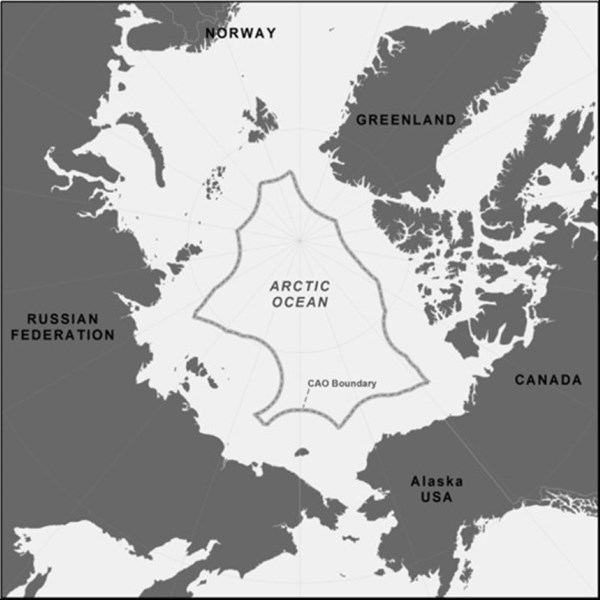
On 25 June 2021, the Agreement to prevent Unregulated High Seas Fisheries in the Central Arctic Ocean enters into force. This is the first multilateral agreement of its kind to take a legally binding, precautionary approach to protect an area from commercial fishing before such fishing has begun. There are currently no commercial fisheries in the Arctic high seas, with most of the region covered by ice year-round. However, with an ever-increasing ice-free area in the summer, commercial fishing may be possible in the foreseeable future. The Agreement to Prevent Unregulated High Seas Fisheries in the Central Arctic Ocean aims to manage potential fishing in the high seas of this region. More information on this treaty is available here (EU) and here (USA); the text of the treaty may be found here. Previous De Maribus reporting is here.
On 22 April 2021 the Regional Agreement on Access to Information, Public Participation and Justice in Environmental Matters in Latin America and the Caribbean entered into force (as per Article 22(1)). According to Article 2 “The objective of the present Agreement is to guarantee the full and effective implementation in Latin America and the Caribbean of the rights of access to environmental information, public participation in the environmental decision-making process and access to justice in environmental matters, and the creation and strengthening of capacities and cooperation, contributing to the protection of the right of every person of present and future generations to live in a healthy environment and to sustainable development”. There are currently 12 Contracting Parties.
On 25 March 2021, pursuant to the Statute of the International Tribunal for the Law of the Sea, Article 16, the International Tribunal for the Law of the Sea (ITLOS) has amended the Rules of the Tribunal (2020 Edition), namely Articles 4-7, 11-13, 16, 19, 31, 36, 39, 42, 45, 76 and 136 (entered into force, 25 March 2021). ITLOS/Press 314 confirms the Rules were amended “with a view to rendering them gender inclusive”. Therefore, references to “he” are now preceded by “she or”, and references to “him” or “his” are now preceded by “her or”. Where possible, “he” is replaced by an office title, such as the President (Article 45) or the Registrar (Article 136). ITLOS does not however have competence to amend the references to he/his/him in the Statute (Article 41, amendments).
The Amendments of 2018 to the Code of the Maritime Labour Convention, adopted 5 June 2018, entered into force 26 December 2020 (see further the status of acceptance by parties). The amendments provide that parties shall require that a seafarer’s employment agreement (SEA) shall continue to have effect while a seafarer is held captive on or off the ship as a result of acts of piracy or armed robbery against ships (ARAS), including the continued benefit of wages and other entitlements under the SEA. Piracy is defined in the MLC Amendments of 2018 by reference to the UNCLOS definition of piracy (see Articles 101-103 of UNCLOS). The definition of ARAS in the MLC Amendments of 2018 follows the previous precedents found in IMO documents (IMO Assembly Resolution A.1025(26), Annex, Paragraph 2.2) and regional treaties (Article 1(2) of Regional Cooperation Agreement on Combating Piracy and Armed Robbery against Ships in Asia).
Pursuant to the Statute of the International Tribunal for the Law of the Sea, Article 16, the International Tribunal for the Law of the Sea (ITLOS) has amended the Rules of the Tribunal (2018 Edition), on the 25 September 2020, namely the addition of Articles 41(7), 74(2), 112(5), 124(3) and 135(1bis) (entered into force, 25 September 2020). In doing so, the Tribunal vests itself with the competence to decide, as an exceptional measure, for public health, security or other compelling reasons, to hold hearings and meetings entirely or in part by video link.
On 25 June 2020 the International Court of Justice (ICJ) amended the Rules of Court, adding a new Article 59(2) and amending Article 94(2):
Article 59
1. The hearing in Court shall be public, unless the Court shall decide otherwise, or unless the parties demand that the public be not admitted. Such a decision or demand may concern either the whole or part of the hearing, and may be made at any time.
2. The Court may decide, for health, security or other compelling reasons, to hold a hearing entirely or in part by video link. The parties shall be consulted on the organization of such a hearing.
Article 94
1. When the Court has completed its deliberations and adopted its judgment, the parties shall be notified of the date on which it will be read.
2. The judgment shall be read at a public sitting of the Court. The Court may decide, for health, security or other compelling reasons, that the judgment shall be read at a sitting of the Court accessible to the parties and the public by video link. The judgment shall become binding on the parties on the day of the reading.
The amendments entered into force 25 June 2020. Thus, the public hearing on the question of the ICJ’s jurisdiction in the case concerning the Arbitral Award of 3 October 1899 (Guyana v. Venezuela), scheduled for 30 June 2020, will be via videoconference. The representatives of Guyana will address the Court by video link and the public may follow via a live webcast. This dispute extends to a law of the sea dispute, as evident in Guyana’s Application instituting proceedings (paras. 53, 55).
On 22 April 2020, the European Union, Norway and the Faroe Islands signed the Agreed Record of Conclusions of Fisheries Consultations Between Norway, The European Union and The Faroe Islands on Control Measures for Pelagic Stocks in the North-East Atlantic for 2020. According to paragraph 5, the agreed monitoring, control and surveillance measures found in Annexes I-V shall apply to “mackerel, herring, blue whiting and horse mackerel”. Annex VI establishes the Coastal States Monitoring, Control and Surveillance Working Group which aims to “establish best practice[s] in monitoring, control and surveillance (MCS) both at sea and on land, and recommend harmonised MCS measures”.
The agreement concerning the Shipwrecked Vessel RMS Titanic signed by the United Kingdom (UK) and the United States of America (USA) has entered into force. This treaty was signed in 2003 by the United Kingdom, but was only accepted by the United States of America on 18 November 2019. Among other obligations, the treaty posits that
Each Party shall take the necessary measures, in respect of its nationals and vessels flying its flag, to regulate through a system of project authorizations:
(a) entry into the hull sections of RMS Titanic so that they, other artifacts and any human remains are not disturbed; and
(b) activities aimed at the artifacts from RMS Titanic found outside the hull of the wreck so that all such activities are, to the maximum extent practicable, conducted in accordance with the Rules.
This treaty strengthens the basic level of protection for the wreck afforded by UNESCO since 2012. Lying in international waters, the wreck was previously not protected by explicit legislation. The text of the treaty can be found here. More information is available here.
On the 21 October 2019, during the Torremolinos Ministerial Conference on Fishing Vessel Safety and Illegal, Unreported and Unregulated (IUU) Fishing, forty-eight states signed the Torremolinos Declaration. The Torremolinos Declaration expresses their determination to take action to ensure the entry-into-force criteria of the 2012 Cape Town Agreement on fishing vessel safetyare met by the target date of 11 October 2022. The Declaration is open for signature until 21 October 2020.
On the 21 October 2019 the accessions of the Cook Islands and Sao Tome and Principe to the 2012 Cape Town Agreement brings the total contracting parties to 13 states (not yet in force).
On the 23 October 2019 the Ministerial Conference adopted 2 resolutions, whereby Ministerial Conference Resolution 1 adopted the Torremolinos Statement on the Cape Town Agreement of 2012, relating to fishing vessel safety, and combating illegal, unreported and unregulated (IUU) fishing. This encourages states to sign the Torremolinos Declaration and become party to the 2012 Cape Town Agreement and and the 1995 STCW-F Convention.
For more information see the IMO pages here and here.
On the 21 October 2019 the International Court of Justice (ICJ) adopted amendments to Articles 22, 23, 29, 76 and 79 of its Rules of Court (entry into force 21 October 2019). Of particular interest is the amendment to Article 76(1) to “clarify” the Court has the power to revoke or modify provisional measures on its own initiative:
1. At the request of a party or proprio motu, the Court may, at any time before the final judgment in the case, revoke or modify any decision concerning provisional measures if, in its opinion, some change in the situation justifies such revocation or modification.
Arrangements relating to fishing opportunities during the transition period are found within Article 130. If an agreement on the future EU-UK relationship is not applicable by 31 December 2020, the single EU-UK customs territory forming part of the “backstop solution” (Protocol on Ireland/Northern Ireland, Article 6) will exclude fishery and aquaculture products “unless an agreement on access to waters and fishing opportunities is applicable between the Union and the United Kingdom”. The Withdrawal Agreement and Political Declaration both highlight the commitment to “use their best endeavours to conclude and ratify such an agreement before 1 July 2020”. The Protocol relating to the Sovereign Base Areas in Cyprus preserves EU fisheries law for Sovereign Base Areas (Article 6), while the Protocol on Gibraltar establishes UK-Spain coordinating procedures for fisheries (Article 4).
On the 3 October 2018, the United States, Canada, the Kingdom of Denmark, the European Union, Iceland, Japan, the Republic of Korea, the Kingdom of Norway, the People’s Republic of China, and the Russian Federation signed the Agreement to Prevent Unregulated High Seas Fisheries in the Central Arctic Ocean (CAOF Agreement). The agreement covers approximately 2.8 million square kilometers and will establish and operate a Joint Program of Scientific Research and Monitoring (art. 4). Unregulated fishing in the high seas of the central Arctic Ocean is prohibited for 16 years following entry into force (arts. 3, 11, 13). Sedentary species are not included (art. 1).
“If the Tribunal is not sitting, its powers under this article may be exercised by the President of the Tribunal, but without prejudice to any subsequent decision of the Tribunal.”
The amendments immediately entered into force. The rationale for amendment given by the Tribunal was “in the interest of the efficient and cost-effective administration of justice”.
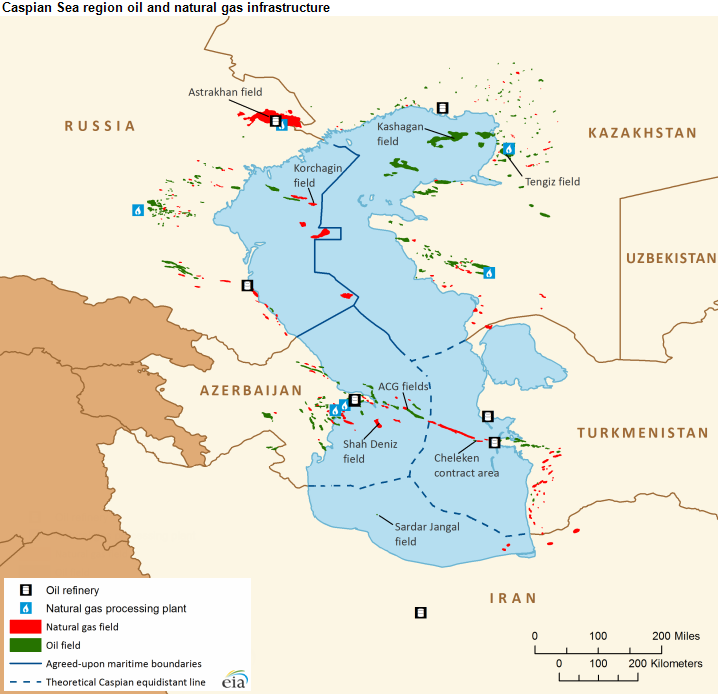
The member states of the informal group “Caspian-five”, composed ofAzerbaijan, Iran, Kazakhstan, Russia and Turkmenistan, have signed (12 August 2018) the Convention on the Legal Status of the Caspian Sea. This international treaty replaces previous Soviet-Iranian instruments, namely the Treaty of Friendship between Persia and the Russian Socialist Federal Soviet Republic of February 26, 1921 and the Treaty on trade and navigation of 25 March 1940. With this new treaty, the parties agree that the Caspian Sea is not a lake. Among other issues addressed by the treaty, the Caspian Sea bordering states will now be able to lay pipelines on the seabed without obtaining the approval of all the other coastal states, but rather only the approval from those coastal states whose sector the pipeline should pass through (Article 14). The treaty also features the principle of absence of armed forces not belonging to the parties in the Caspian Sea (Article 3). Six other international legal instruments were also signed by the parties, namely on the fight against terrorism, the fight against organised crime, economic cooperation, transportation, accident prevention, and interaction of border authorities. The text of the agreement may be found here (in Farsi). A statement from the United Nations Secretary-General may be found here.
The Comprehensive and Progressive Agreement for Trans-Pacific Partnership (CPTPP, also known as the TPP11) was signed by 11 states, 8 March 2018, in Santiago, Chile. The agreement retains the contents of the original Trans-Pacific Partnership (TPP), but includes 20 agreed suspensions, mainly in the area of intellectual property. The annexed Joint Ministerial Statement by CPTPP signatories, “expressed their determination to complete their domestic processes to bring the Agreement into force expeditiously”. Without claiming to be exhaustive, Chapter 20, Environment, is of interest to the law of the sea given its inclusion of ship-source pollution and marine capture fisheries.

 De Maribus