Category Archives: International Organizations

CLCS: Recommendations approved regarding Brazilian, Cuban and Icelandic submissions

The Sixty-Third Session of the Commission on the Limits of the Continental Shelf (CLCS) was held, 17 February–21 March 2025, at United Nations Headquarters (New York, USA). As noted in the progress statement of the chair (UN Doc. CLCS/63/2), the CLCS, pursuant to Article 76(8) of UNCLOS, approved three sets of recommendations concerning three submissions on the limits of the continental shelf beyond 200 nautical miles from the respective baselines of three Coastal States:

At the time of reporting, only the summary of the Recommendations of the Commission concerning the Brazilian Equatorial Margin is currently public.

Leave a comment

Filed under International Organizations, State Practice

USA: Executive Order on Offshore Minerals and Resources

On 24 April 2025, the President of the United States issued an Executive Order, entitled, Unleashing America’s Offshore Critical Minerals and Resources. The Order addresses policies directed at seabed mineral exploration and exploitation both within the U.S. continental shelf and in areas beyond national jurisdiction (the Area), as well as processing capacity in the United States or on United States-flagged vessels, and possible partnering with other States in exploiting the resources of their continental shelf/EEZ.

Of particular note for the law of the sea is the (a) possibility of a unilateral exploration and exploitation regime concerning the mineral resources of the Area (contra, Part XI of UNCLOS) and (b) the possibility of the unilateral definition and implementation of an international benefit-sharing mechanism (contra, the principle of the common heritage of humankind):

Sec. 3.  Strategic Seabed Critical Mineral Access.  Within 60 days of the date of this order:
(a)  The Secretary of Commerce shall:
(i) acting through the Administrator of the National Oceanic and Atmospheric Administration, and in consultation with the Secretary of State and the Secretary of the Interior, acting through the Director of the Bureau of Ocean Energy Management, expedite the process for reviewing and issuing seabed mineral exploration licenses and commercial recovery permits in areas beyond national jurisdiction under the Deep Seabed Hard Mineral Resources Act (30 U.S.C. 1401 et seq.), consistent with applicable law.  The expedited process, consistent with applicable law, should ensure efficiency, predictability, and competitiveness for American companies;
[…]
The Secretary of Commerce […] shall […] provide a joint report […] on the feasibility of an international benefit-sharing mechanism for seabed mineral resource extraction and development that occurs in areas beyond the national jurisdiction of any country.

Unleashing America’s Offshore Critical Minerals and Resources

On 25 April 2025 a Spokesperson for the Foreign Ministry of China stated China’s objections to both the proposed exploration and exploitation of mineral resources of the Area/beyond national jurisdiction, as well as the exploration and exploitation of mineral resources on the extended continental shelf of the U.S (the delimitation of which China does not recognise).

On 29 April 2025, The Metals Company (TMC) announced that its U.S. subsidiary, The Metals Company USA LLC (TMC USA), has submitted applications for a commercial recovery permit and two exploration licenses under the Deep Seabed Hard Mineral Resources Act (DSHMRA) and National Oceanic and Atmospheric Administration (NOAA) implementing regulations. This is an expedited timeline ahead of what was previously reported, which already raised preliminary discussions at the Council of the International Seabed Authority.

On 30 April 2025, the Secretary-General of the International Seabed Authority issued a Statement on the US Executive Order (for previous statements, see here), taking note of the order and raising specific concerns, including in respect of the ISA regime and the common heritage principle. The SG-ISA states her view that:

Its issuance is also surprising because for over 30 years the US has been a reliable observer and significant contributor to the negotiations of the International Seabed Authority, actively providing technical expertise to each stage of the development of the ISA regulatory framework.
[…]
[G]eneral principles of international law and customary international law proclaims the Area and its resources as the Common Heritage of Humankind. A direct corollary of this legal status is that no State may claim, acquire, or exercise sovereignty or sovereign rights over any part of the Area or its mineral resources. This includes a prohibition on appropriation and alienation by any State, or by any natural or juridical person.
The Convention and the 1994 Agreement further establishes the International Seabed Authority, clearly mandating that all activities related to mineral resources in the Area must be conducted under the Authority’s oversight to ensure sustainable use, equitable benefit-sharing, and environmental protection. Accordingly, exploration and exploitation activities in the Area must be carried out under the Authority’s control, that is, under a contract with the Authority and in accordance with the rules, regulations, and procedures it establishes; and no State has the right to unilaterally exploit the mineral resources of the Area outside the legal framework established by UNCLOS. It is common understanding that this prohibition is binding on all States, including those that have not ratified UNCLOS.

Statement on the US Executive Order

Leave a comment

Filed under International Organizations, State Practice

IMO: Marine Environment Protection Committee approves IMO Net-Zero Framework and North-East Atlantic Ocean Emissions Control Area

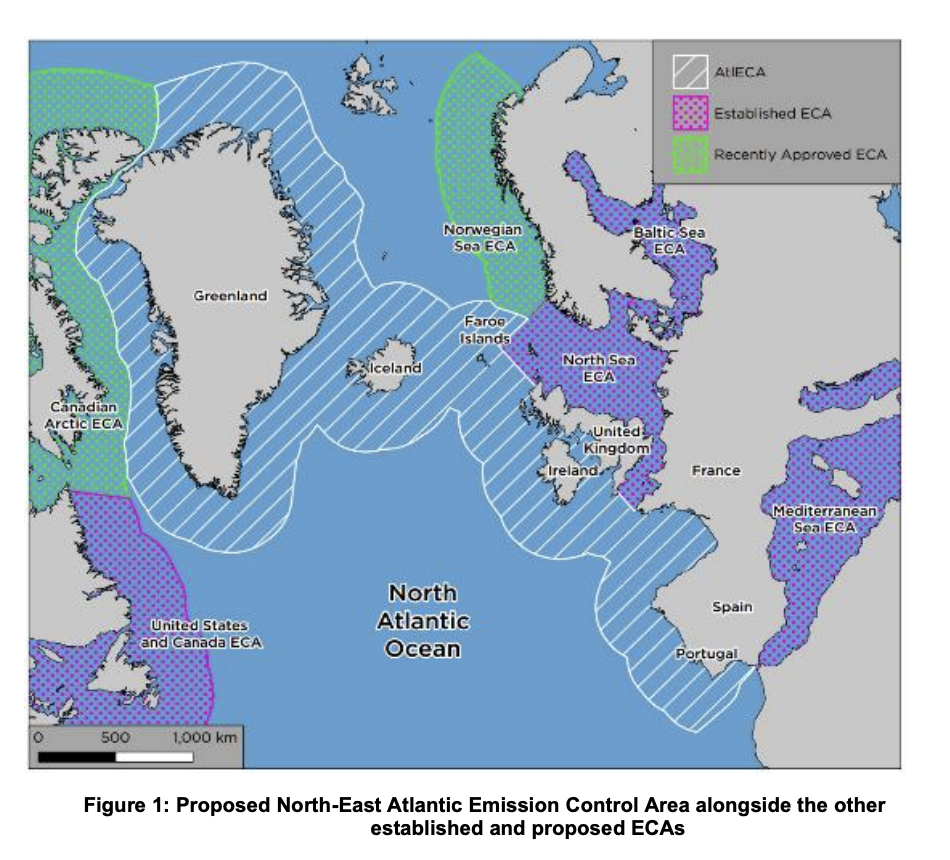
The 83rd Session of the IMO Marine Environment Protection Committee (MEPC) occurred 7–11 April 2025 at IMO Headquarters (London, UK). Among numerous agenda items and outcomes, significant and long awaited amendments to Annex VI of MARPOL, including the additions of a Chapter 5: Regulations on the IMO Net-Zero Framework, and the designation of the North-East Atlantic as an Emission Control Area (ECA) under MARPOL, Annex VI, Regs 13-14.

The Regulations of the IMO Net-Zero Framework would, subject to exceptions, apply to all ships of 5,000 gross tonnage and above (Reg 30), with the defined objective (Reg 31):

“1 The goal of this chapter is to reduce greenhouse gas (GHG) emissions from international shipping as soon as possible, delivering on the reduction targets set out in the 2023 IMO Strategy on Reduction of GHG Emissions from Ships, 67 effectively promoting the energy transition of shipping and providing the world fleet with a needed incentive while contributing to a level playing field and a just and equitable transition”.

IMO Secretariat, Circular Letter No.5005 (2025) p. 53.

As summarised by IMO Secretariat, the IMO Net- Zero Framework will principally provide:

Global fuel standard: Ships must reduce, over time, their annual greenhouse gas fuel intensity (GFI) – that is, how much GHG is emitted for each unit of energy used. This is calculated using a well-to-wake approach. 

Global economic measure: Ships emitting above GFI thresholds will have to acquire remedial units to balance its deficit emissions, while those using zero or near-zero GHG technologies will be eligible for financial rewards”. 

Ships operating within the North-East Atlantic Emission Control Area (ECA) will be subject to Regulation 13 addressing particular requirements concerning Nitrogen oxides (NOx) and Regulation 14 addressing particular requirements concerning sulphur oxides (SOx) and particulate matter. The North-East Atlantic Emission Control Area will be the area described by the coordinates provided in para 7 of Appendix VII to Annex VI of MARPOL, summarised as:

“6. The North-East Atlantic Emission Control Area (NE Atlantic ECA) encompasses the Exclusive Economic Zones (EEZ) and territorial seas, extending up to 200 nautical miles from the baselines of Greenland, Iceland, the Faroes, Ireland, the mainlands of the United Kingdom, France, Spain and Portugal. This designation excludes the seas bounded by the North Sea area, as defined in regulation 1.14.6 of Annex V of the present Convention”.

IMO Secretariat, Circular Letter No.5005 (2025) p. 98.
Proposal to designate the North-East Atlantic Ocean as an Emission Control Area for sulphur oxides, particulate matter and nitrogen oxides (MEPC 83/12)

The approved draft amendments to Annex VI of MARPOL anticipate being formally adopted at an extraordinary session of the Marine Environment Protection Committee (14-17 October 2025), which would foresee an entry into force 16 months later, under the tacit acceptance procedure, i.e. 17 February 2027. Two Particularly Sensitive Sea Areas (PSSAs) were, in principle, agreed for designation (“Reserva Nacional Dorsal de Nasca” (Nasca Ridge National Reserve) and “Reserva Nacional Mar Tropical de Grau” (Grau Tropical Sea National Reserve)), but Peru was invited to further develop the proposed associated protective measures for submission and approval consideration at the 84th MEPC Session.

1 Comment

Filed under International Organizations

HRC: The human right to a clean, healthy and sustainable environment – the ocean and human rights

On 3 April 2025, the UN Human Rights Council adopted with a vote a resolution, entitled, Human right to a clean, healthy and sustainable environment: ocean and human rights (A/HRC/58/L.26/Rev.1). Among other important statements and calls, the Resolution provides:

Affirming that respect for and the protection and fulfilment of the human right to a clean, healthy and sustainable environment contribute to addressing ocean degradation, and at the same time recognizing that maintaining a healthy and clean ocean contributes to the protection of a range of human rights,
[…]
Emphasizing the importance of States taking decisive action to address plastic pollution throughout the full life cycle of plastic, including in the marine environment, and highlighting the specific and severe impacts of plastic pollution, climate change and biodiversity loss on the ocean, which jeopardize the realization of human rights, including the human right to a clean, healthy and sustainable environment, while underscoring the transboundary nature of plastic pollution and the need for enhanced global cooperation to effectively address this crisis,
[…]
Recognizing the guidance provided by the International Tribunal for the Law of the Sea in its advisory opinion in reply to the Request for an advisory opinion submitted by the Commission of Small Island States on climate change and international law rendered on 21 May 2024, on the obligation of States to protect the ocean from climate change drivers and impacts,
[…]
Noting with satisfaction that States have recognized that the ocean, seas and coastal areas form an integrated and essential component of the Earth’s ecosystem and are critical to ensure its sustainability, and that international law, including the United Nations Convention on the Law of the Sea and its implementing agreements, provides the legal framework for the conservation and sustainable use of the ocean and its resources, […]
5. Calls upon States:
(a) To respect, protect and fulfil human rights, including in all actions undertaken to address environmental challenges, including climate change, marine biodiversity loss, pollution and land degradation;
(b) To adopt and implement strong laws ensuring, among other things, the rights to participation, to access to information and to justice, including to an effective remedy, in environmental matters;
[…]
(g) To establish, maintain and strengthen effective legal and institutional frameworks to regulate the activities of public and private actors in order to prevent, reduce and remedy harm to biodiversity and ecosystems, taking into account human rights obligations and commitments relating to the enjoyment of a clean, healthy and sustainable environment;
(h) To implement, in all their activities, the precautionary principle or precautionary approach, as appropriate, for the effective protection of marine and coastal ecosystems;
[…]
6. Encourages States:
(a) To adopt ecosystem-based integrated, intersecting and holistic national and local policies and an effective legal framework that acknowledges the need to protect and restore the ocean for the enjoyment of the human right to a clean, healthy and sustainable environment;
[…]
(e) To cooperate with other States to advance the protection, conservation and remediation of the ocean and coastal areas, including through the implementation of international law and the incorporation of international human rights law obligations, standards and guidelines for ocean management;
[…]
(o) To ratify the Agreement under the United Nations Convention on the Law of the Sea on the Conservation and Sustainable Use of Marine Biological Diversity of Areas beyond National Jurisdiction;
[…]
11. Calls upon all States to conserve, protect and restore healthy ecosystems and biodiversity and to ensure their sustainable management and use by applying a human rights based approach that emphasizes participation, inclusion, transparency and accountability in the management of natural resources;

HRC Resolution:Human right to a clean, healthy and sustainable environment: ocean and human rights

Leave a comment

Filed under International Organizations

ISA: Secretary-General and Delegates Respond to TMC Announcement Concerning Seabed Mining Permits under US Regulation

On 27 March 2025, The Metals Company (TMC) released a press release which included the announcement:

“that its subsidiary The Metals Company USA LLC (“TMC USA”) has formally initiated a process with NOAA under the U.S. Department of Commerce to apply for exploration licenses and commercial recovery permits under existing U.S. legislation, the Deep Seabed Hard Mineral Resources Act of 1980 (DSHMRA)”

On 28 March 2025, ISA Secretary-General Leticia Carvalho issued a statement that brought the matter and the ISA-SG’s concerns to the attention of the members of the Council as a matter which may be of interest to the Council. The Council decided to discuss the announcement under ‘other matters’. The USA is not a Party to UNCLOS. The opinion of the ISA-SG stressed:

Any unilateral action would constitute a violation of international law and directly undermine the fundamental principles of multilateralism, the peaceful use of the oceans and the collective governance framework established under UNCLOS.
For over three decades, the absence of claims under any regime outside Part XI has demonstrated the international community’s strong confidence—including that of States not party to the Convention—in the system developed through the Authority.

Statement by Madam Secretary-General of the International Seabed Authority, Leticia Carvalho (28 March 2025)

As reported in Earth Negotiations Bulletin, numerous States expressed serious concerns about the reported intent of TMC USA. Numerous States emphasised that “the seabed, subsoil, and resources thereof in the Area are the common heritage of humankind and under the exclusive mandate of ISA” (Sierra Leone for the African Group, Argentina, The Bahamas, Belgium, Brazil, Cameroon, Chile, China, The Cook Islands, Costa Rica, Denmark, Fiji, Germany, Ghana, Greece, India, Indonesia, Italy, Jamaica, Japan, Lesotho, Mauritius, Mexico, The Netherlands, New Zealand, Norway, Poland, The Philippines, Portugal, The Russian Federation, Singapore, Spain, Switzerland, Trinidad And Tobago, The UK, and Zimbabwe). The common heritage principle, as applicable to the Area and its resources, is codified in Article 136 of UNCLOS, as well as relevant UN General Assembly Resolutions (Brazil, Greece and Mexico).

Numerous States also emphasised Article 137(1) of UNCLOS, which provides “No State shall claim or exercise sovereignty or sovereign rights over any part of the Area or its resources, nor shall any State or natural or juridical person appropriate any part thereof. No such claim or exercise of sovereignty or sovereign rights nor such appropriation shall be recognized” (Brazil, Greece, Mexico and others). “Germany and others noted Article 137 as customary international law”, while “France called for preserving the integrity and universality of the UNCLOS legal framework”.

Ireland, Jamaica, Singapore, and others rejected the TMC assertion that because the ISA has not yet adopted the Exploitation Regulations the ISA is somehow “in breach of its treaty obligations under UNCLOS and the 1994 Agreement”. Observers were critical of the timing of the TMC announcement and intentions perceived thereof.

Leave a comment

Filed under International Organizations, Non-State Actors, State Practice

EU: public consultation on the common fisheries policy regulation open

The European Commission (EC) opened a public consultation to gather evidence, insights, concerns, ideas, and feedback on the effectiveness of the common fisheries policy (CFP) regulation from a range of stakeholders, including individuals, the fisheries and maritime sectors, scientists, non-governmental and other organisations, and national administrations from EU Member States. The evaluation will build on previous consultations, such as the Commission communication on the common fisheries policy today and tomorrow (COM/2023/103). Input to this public consultation is open until until 21 April 2025 (see here). Further information available in the webpage of the EC.

Leave a comment

Filed under International Organizations, Surveys

ILO/ISA: Cooperation Framework Agreement on Protection of Human Life and Workers’ Rights

On 19 December 2024 the International Labour Organization (ILO) and the International Seabed Authority (ISA) signed the Agreement between the International Labour Organization and the International Seabed Authority, a cooperation framework agreement (Art 1) to address the protection of human life and workers’ rights in seabed-related activities:

Article 2: Scope of Cooperation
2.1. In pursuing their cooperation within the framework of this Agreement, the Parties shall:
2.1.1. Consult, where appropriate and practical, on matters of mutual interest with a view to promoting or enhancing a better understanding and coordination of their respective activities, responsibilities and mandates. The date and form of such joint consultations will be agreed between the Parties.
2.1.2. Collaborate to the extent possible on areas of common concern and interest, which include, but are not limited to, decent and sustainable work, the safety of life at sea, and the protection of human life and the rights of workers, including seafarers and other persons involved in activities in the Area.
2.1.3. Cooperate, where appropriate and practical, in undertaking joint research, technical meetings, trainings and other collaborative initiatives, within the scope of each Party’s respective mandate.

The Agreement has been endorsed by the ISA Council and the ILO’s Governing Body and entered into force 19 December 2024 (Art 7(1)). For more information see here.

Leave a comment

Filed under International Organizations, Treaties

INC on Plastic Pollution: Fifth Session Adjourned

Consistent with the mandate established under para 1 of UNEP Resolution 5/14, the fifth session of the Intergovernmental Negotiating Committee to develop an international legally binding instrument on plastic pollution, including in the marine environment (INC-5) was held 25 November – 1 December 2024, with the ambition of conclude negotiations and finalize the text of an international legally binding instrument on plastic pollution, including in the marine environment, by the end of 2024.

While progress was made, a finalised text was not achieved and so the session has been suspended and negotiations scheduled to continue in 2025. Some representatives expression concern and disappointment at the limited progress made and some identified reasons for the lack of progress in their opinion (INC-5 Draft Report, paras. 55-59). The session adjourned “with agreement on a ‘Chair’s Text’ that will serve as the starting point for negotiations at a resumed session in 2025″.

Leave a comment

Filed under International Organizations, State Practice

UNGA: Adoption of UN Convention Against Cybercrime

On 24 December 2024 the United Nations General Assembly (UNGA) adopted (by Resolution without a vote) the United Nations Convention against Cybercrime; Strengthening International Cooperation for Combating Certain Crimes Committed by Means of Information and Communications Technology Systems and for the Sharing of Evidence in Electronic Form of Serious Crimes (UN Convention Against Cybercrime) (UN Doc. A/79/460 para 2 and Annex). The UN Convention Against Cybercrime shall be open to all States for signature in Hanoi in 2025 and thereafter at United Nations Headquarters in New York until 31 December 2026 (Art 64(1)).

Jurisdictional responsibilities under the UN Convention Against Cybercrime will extend to ocean governance, include responsibilities to adopt any measures necessary to establish jurisdiction over offences “committed on board a vessel that is flying the flag of that State Party or an aircraft that is registered under the laws of that State Party at the time when the offence is committed” (Art 22(1)(b)). Additional discretionary prescriptive jurisdiction under Art 22(2) may also have application to offences committed at sea. Likewise, “Each State Party shall make the commission of an offence established in accordance with this Convention liable to effective, proportionate and dissuasive sanctions that take into account the gravity of the offence” (Art 21).

A wide range of offences are found in Arts 7-19. Furthermore, one should note Art 4(1) may be of interest concerning other UN treaties that create offenses for identified acts at sea as shared offenses (‘maritime terrorism’) or transnational organized crimes:

“In giving effect to other applicable United Nations conventions and protocols to which they are Parties, States Parties shall ensure that criminal offences established in accordance with such conventions and protocols are also considered criminal offences under domestic law when committed through the use of information and communications technology systems“.

One may also note the preamble references the Parties being “concerned that the use of information and communications technology systems can have a considerable impact on the scale, speed and scope of criminal offences, including offences related to terrorism and transnational organized crime, such as trafficking in persons, the smuggling of migrants, the illicit manufacturing of and trafficking in firearms, their parts, components and ammunition, drug trafficking and trafficking in cultural property”.

The Ad Hoc Committee shall continue its work with a view to negotiating a draft protocol supplementary to the Convention, addressing, inter alia, additional criminal offences as appropriate (UN Doc. A/79/460 para 5).

Leave a comment

Filed under International Organizations, Treaties

UNGA: 2024 Resolutions Adopted on Law of the Sea & Sustainable Fisheries

On 12 December 2024, the United Nations General Assembly (UNGA) adopted its annual Resolution on Oceans and the law of the sea (currently A/79/L.37) with a vote (152-1-2) and Resolution on Sustainable fisheries, including through the 1995 Agreement for the Implementation of the Provisions of the United Nations Convention on the Law of the Sea of 10 December 1982 relating to the Conservation and Management of Straddling Fish Stocks and Highly Migratory Fish Stocks, and related instruments (currently A/79/L.38) without a vote. For further information see reporting of the debate.

Note, paragraph 59 and Annex of the 2024 Resolution: Oceans and the Law of the Sea includes an amendment to the Terms of Reference for the International Tribunal for the Law of the Sea Trust Fund, a mechanism which seeks to assist States in the settlement of disputes through the International Tribunal for the Law of the Sea. The former ‘panel of experts’ tasked with reviewing and making recommendations concerning any application for assistance from the Fund has been replaced with an ‘independent panel’. Key differences include: (1) the composition of the panel (from ‘three persons of the highest professional standing’ selected by the Secretary-General, to ‘the Chairs of the United Nations regional groups for the month on which the panel is convened’) and (2) a now discretionary process (from ‘will establish’ to ‘may engage’ a panel).

Leave a comment

Filed under International Organizations

EU: ‘maritime safety’ package adopted by the Council

The Council of the European Union adopted on 18 November 2024 four new pieces of legislation of the so-called ‘maritime safety’ legislative package, namely those amending the relevant directives on:

– the investigation of accidents in the maritime transport sector

– ship-source pollution

– compliance with flag state requirements, and

–  port state control.

The revised ‘package’ achieves a balance between, on the one hand, the need to ensure a high quality of shipping and, on the other, the need to safeguard the competitiveness of the European shipping sector, while also maintaining reasonable costs for operators and member states’ administrations. Overall, it will equip the EU with modern tools to support clean shipping by aligning EU rules with international standards while improving implementation and enforcement through an enhanced cooperation framework between European and national authorities.

The four legislative proposals form part of the maritime safety ‘package’ together with the one on the European Maritime Safety Agency (EMSA). They were submitted by the Commission on 1 June 2023 aiming to modernise EU rules on maritime safety and reduce water pollution from ships.  With 75% of the EU’s external trade being seaborne, maritime transport is not only the artery of a globalised economy, but also a lifeline for the EU’s islands and peripheral and remote maritime regions. Although maritime safety in EU waters is currently very high, with few fatalities and no recent major oil spills, more than 2,000 marine accidents and incidents are still reported every year. Provisional agreements between the co-legislators on the four legislative proposals were reached in February this year.

Further information in the EU press release.

Leave a comment

Filed under International Organizations, State Practice

ISA: June 2025 Submission of Application for Plan of Work for Exploitation Announced

On 12 November 2024, Nauru Ocean Resources Inc (NORI), falling under the responsibilities the Republic of Nauru as the applicable Sponsoring State, has signalled that it expects to submit an application for a plan of work for the commercial exploitation of mineral resources in the Area to the International Seabed Authority (ISA) on 27 June 2025. The submission date appears to have been selected to directly follow Part I of the Council’s scheduled meeting (17 – 28 March 2025) and directly before Part II of the Council’s scheduled meeting (7 – 18 July 2025) during the 30th Session of the International Seabed Authority. Consultation and support of Nauru as the Sponsoring State is evident in the reported actions, whereby “the Republic of Nauru has requested in a formal letter that the ISA clarify the submission and review process during the March session [Part I], with the goal of providing certainty for all stakeholders and allowing for review to begin immediately after NORI’s submission under an agreed-upon process [Part II]”. An accompanying statement suggests the NORI submission strategy is to seek review of its application for a plan of work for exploitation in 2025, regardless of whether the Mining Code has been finalised and adopted i.e. including ISA’s possible review of the application based on the draft regulations.

Leave a comment

Filed under International Organizations, Non-State Actors, State Practice

UNGA: Pact for the Future

On 22 September 2024 the UN General Assembly (UNGA) adopted Resolution 79/1: The Pact for the Future without a vote. The UNGA voted 143-7 (15 abstentions) to take no action on an amendment tabled by Russia (see reporting). The Pact for the Future reaffirms the role of multilateralism and international institutions, including actions to implement the 2030 Agenda for Sustainable Development and the Sustainable Development Goals therein. Covering a wide range of thematic topics, of interest to law of the sea, among others are:

Action 9. We will strengthen our actions to address climate change.
28. […] (e) Further emphasize the importance of conserving, protecting and restoring nature and ecosystems towards achieving the Paris Agreement temperature goal, including through enhanced efforts towards halting and reversing deforestation and forest degradation by 2030, and other terrestrial and marine ecosystems acting as sinks and reservoirs of greenhouse gases and by conserving biodiversity, while ensuring social and environmental safeguards, in line with the Kunming-Montreal Global Biodiversity Framework;

Action 10. We will accelerate our efforts to restore, protect, conserve and sustainably use the environment.
29. We are deeply concerned about rapid environmental degradation, and we recognize the urgent need for a fundamental shift in our approach in order to achieve a world in which humanity lives in harmony with nature. We must conserve, restore and sustainably use our planet’s ecosystems and natural resources to support the health and well-being of present and future generations. We will address the adverse impacts of climate change, sea level rise, biodiversity loss, pollution, water scarcity, floods, desertification, land degradation, drought, deforestation and sand and dust storms. We decide to:
[…] (b) Take ambitious action to improve the health, productivity, sustainable use and resilience of the ocean and its ecosystems, and conserve and sustainably use and restore seas and freshwater resources, as well as forests, mountains, glaciers and drylands, and protect, conserve and restore biodiversity, ecosystems and wildlife; […]
(d) Accelerate efforts to address the pollution of air, land and soil, fresh water and the ocean, including the sound management of chemicals, and work towards the conclusion of an international legally binding instrument on plastic pollution, including in the marine environment, with the ambition of completing negotiations by the end of 2024;

Action 22. We will address the serious impact of threats to maritime security and safety.
44. We recognize the need to address the serious impact of threats to maritime security and safety. All efforts to address threats to maritime security and safety must be carried out in accordance with international law, including particularly as reflected in the principles embodied in the Charter of the United Nations and the 1982 United Nations Convention on the Law of the Sea, taking into account other relevant instruments that are consistent with the Convention. We decide to:
(a) Enhance international cooperation and engagement at the global, regional, subregional and bilateral levels to combat all threats to maritime security and safety, in accordance with international law;
(b) Promote information-sharing among States and capacity-building to detect, prevent and suppress such threats in accordance with international law.

UNGA Resolution 79/1: The Pact for the Future

    Leave a comment

    Filed under International Organizations

    UNGA: High-Level Meeting on Sea Level Rise

    On 25 September 2024, the UN General Assembly hosted a High-Level Meeting on Sea Level Rise, the first time there has been a high-level meeting of the UNGA to address the issue of sea level rise caused by climate change. Other equally important elements were covered, but here we note numerous statements addressed law of the sea aspects, including reaffirmation of support towards the preservation of maritime zones and statehood, notwithstanding impacts arising from climate change-related sea-level rise (e.g., USA, New Zealand and Singapore), as well as the long held awareness, significance and call for action on the issue by small island States (e.g., Maldives referencing the 1989 Male’ Declaration on Global Warming and Sea Level Rise).

    Leave a comment

    Filed under International Organizations

    CLCS: Partial Submission by Viet Nam (Central Area)

    On 17 July 2024, in accordance with Article 76(8) of UNCLOS, Viet Nam submitted to the Commission on the Limits of the Continental Shelf (CLCS) information on the limits of the continental shelf beyond 200 nautical miles from the baselines from which the breadth of the territorial sea is measured in respect of the Central Area (VNM-C).

    This follows the separate May 2009 Joint Partial Submission by Malaysia and Viet Nam in the southern part of the South China Sea and May 2009 Partial Submission by Viet Nam in respect of the North Area (VNM-N), both of which have proceeded as far as the presentation of the submission by coastal State representatives at a session of the Commission (CLCS/64, paras 87-92; 102-106).

    Note, on the same date as the VNM-C Partial Submission, Viet Nam submitted a Communication (17 July 2024) on the previously reported June 2024 Partial Submission by the Philippines (West Palawan Region). At the time of writing, communications received and published with regard to the VNM-C Partial Submission include China (29 July 2024). 

    Leave a comment

    Filed under International Organizations, State Practice

    HRC: Resolution on Human Rights of Seafarers

    On 11 July 2024, the UN Human Rights Council adopted without a vote: Resolution 56/18: Promoting and protecting the enjoyment of human rights by seafarers (currently available as UN. Doc A/HRC/56/L.4 with oral revision). The Philippines was the main sponsor. As highlighted by the Department of Foreign Affairs of the Republic of the Philippines, the Philippine initiative “co-sponsored by 28 countries, as of this date, is the first-ever resolution on seafarers to be introduced and adopted in the UN HRC”. Among the contents of the Resolution –to be read in full–, Resolution 56/18 provides:

    The Human Rights Council,
    […]
    Recognizing the human rights, as well as labour rights, of seafarers, including the right to freedom of association and the effective recognition of collective bargaining, the elimination of all forms of forced or compulsory labour, the effective abolition of child labour and the elimination of discrimination in respect of employment and occupation, as well as a safe and secure workplace, fair terms of employment, decent working and living conditions on-board ships, health protection, medical care, welfare measures and other forms of social protection,
    […]
    2. Calls upon States parties, shipowners’ representatives and seafarers’ representatives to enhance the enforcement of the Maritime Labour Convention, 2006, as amended, to ensure safe and decent living and working conditions for all seafarers;
    3. Calls upon States and other relevant shipping industry stakeholders to promote and protect effectively the enjoyment of human rights and fundamental freedoms by seafarers, including their right to life, right to the enjoyment of just and favourable conditions of work, including safe and healthy working conditions, and right to the enjoyment of the highest attainable standard of physical and mental health;
    4. Urges shipping industry stakeholders to respect the right of seafarers to the opportunity to gain their living by work that they freely choose or accept, including decisions on whether to sail or continue sailing in high-risk areas, and that the realization of this right should not negatively affect a seafarer’s employment competitiveness or future deployment;
    5. Urges States to continue efforts to eliminate all forms of forced or compulsory labour in the shipping industry;

    HRC Resolution 56/18

    Leave a comment

    Filed under International Organizations, State Practice

    BBNJA PrepCom: Organizational Meeting

    From 24-26 June 2024, the Preparatory Commission for the Entry into Force of the Agreement under the United Nations Convention on the Law of the Sea on the Conservation and Sustainable Use of Marine Biological Diversity of Areas beyond National Jurisdiction and the Convening of the First Meeting of the Conference of the Parties to the Agreement (PrepCom) convened its first organizational session at UNHQ (New York, USA) to, among others, elect Co-Chairs and Bureau Members, adopt a programme of work, and schedule PrepCom’s future meetings. Information on the establishment and participation in the PrepCom was previously reported.

    Janine Coye-Felson (Belize) and Adam McCarthy (Australia) were elected Co-Chairs of the PrepCom. 15 Vice-Chairs to the Bureau of the PrepCom were elected, including: Mauritius, Sierra Leone and South Africa (African); Japan, Philippines, and Singapore (Asia-Pacific); Latvia, Poland, and Romania (Eastern Europe); Antigua and Barbuda, Brazil, and Chile (Latin America and the Caribbean); Canada, Belgium, and Germany (Western European and Others). Note, the three members of the Bureau of the Asia-Pacific Group will rotate among nine States: Singapore, Japan and the Philippines (PrepCom organizational meeting); Tonga, China and Indonesia (PrepCom first substantive meeting); and Fiji, the Republic of Korea and Viet Nam (PrepCom second substantive meeting).

    Discussion on the programme of work were based on a Note produced by the Secretariat (UN Doc A/AC.296/2024/3), which highlighted matters to be addressed by the first meeting of the Conference of the Parties to BBNJA, as according to the BBNJA (Section II), as well as matters requiring ‘early’ addressing to enable “the timely and effective implementation of the Agreement” (Section III). A final list of three clusters reportedly address: Governance Issues; Issues pertaining to the operation of the CHM; and Financial rules, and financial resources and mechanism (see IISD Earth Negotiations Bulletin (2024) p. 5, for an overview of cluster items).

    Scheduling future PrepCom meetings, 14-25 April 2025 and 18-29 August 2025 were agreed, pending the approval of the UN General Assembly and reserving additional meetings to be determined at a later stage. Intersessional work is foreseen, with discussions ongoing.

    A Statement by the Secretary-General of the International Seabed Authority (24 June 2024) highlighted the benefits a PrepCom could bring to the functioning of the treaty regime, as well as the previous experiences of the Preparatory Commission for UNCLOS.

    Leave a comment

    Filed under International Organizations, Treaties

    CLCS: Partial Submission by the Philippines (West Palawan Region)

    On 14 June 2024, in accordance with Article 76(8) of UNCLOS, the Philippines submitted to the Commission on the Limits of the Continental Shelf (CLCS) information on the limits of the continental shelf beyond 200 nautical miles from the baselines from which the breadth of the territorial sea is measured in the West Palawan Region. Consistent with UNCLOS, “[t]his Submission is made without prejudice to the right of the Philippines to make other Submissions on other areas at a future time” (Executive Summary (2024) p. 1).

    This follows the seperate April 2009 submission of the Philippines in the Benham Rise region, for which recommendations (April 2012) and subsequent final and binding outer limits of the continental shelf were established based on said recommendations (UNCLOS, Article 76(8); ‘Benham Rise’ since renamed ‘Philippine Rise’ in May 2017).

    At the time of writing, communications received and published with regard to this partial submission in the West Palawan Region include China (18 June 2024). Further communications may be foreseen given that the Executive Summary (2024) provides:

    The Philippines notes that the 2009 joint submission of Malaysia and Viet Nam, the 2009 submission of Viet Nam in the northern area and the 2019 submission of Malaysia that were submitted to the CLCS cover areas that may overlap with the area of this Submission.
    These earlier submissions were based on Article 76 of UNCLOS and are generally consistent with the principles affirmed in the 2016 Award on the Merits in the South China Sea Arbitration. The Philippines manifests its willingness to discuss with the relevant States the delimitation of the maritime boundaries.
    The delineation of the continental shelf beyond 200 M is without prejudice to future delimitation with the limits of the territorial sea areas of individual high tide features in the South China Sea.

    Executive Summary (2024) p. 4

    For more information see the statement of the Philippines Department of Foreign Affairs.

    Leave a comment

    Filed under International Organizations, State Practice

    UNGA: Resolution Establishing a Preparatory Commission for the BBNJ Agreement

    On 24 April 2024 the UN General Assembly (UNGA) adopted Resolution 78/272 ‘Agreement under the United Nations Convention on the Law of the Sea on the Conservation and Sustainable Use of Marine Biological Diversity of Areas beyond National Jurisdiction’ (currently available as UN Doc A/78/L.41) with a vote (164-2-2; Russia and Syria voting against, Togo and Angola abstaining). Singapore led consultations on the text, which establishes a Preparatory Commission to prepare for the entry into force of the BBNJ Agreement and the convening of the first meeting of the Conference of the Parties to the BBNJ Agreement.

    3. Decides to establish a preparatory commission, which shall meet at United Nations Headquarters unless otherwise decided, on dates to be determined, to prepare for the entry into force of the Agreement and to prepare for the convening of the first meeting of the Conference of the Parties to the Agreement, at the conclusion of which the commission will cease to exist;
    […]
    11. Further decides that the commission shall hold a three-day organizational meeting in the first half of 2024 with full conference services, including documentation, to discuss organizational matters, including the election of the Co-Chairs and a Bureau of the commission consisting of up to 15 members with up to 3 members from each regional group and taking into account gender balance, the dates of the meetings of the commission and the programme of work of the commission;

    UNGA Resolution 78/272

    In a Letter dated 30 June 2023, the President of the Intergovernmental Conference that developed the text of the BBNJ Agreement had previously highlighted “the desire expressed by several delegations that efforts be undertaken with a view to supporting the early entry into force of the Agreement as well as its early implementation, including through a preparatory process such as a preparatory commission” (UN Doc A/77/945, p. 2). The Statement of Singapore on the introduction of the draft resolution provides further useful information on the inspiration and objectives of key elements in the resolution.

    The Preparatory Commission is open to all UN Member States, members of the specialized agencies and Parties to UNCLOS (para. 4), with a broad invitation to other qualified entities, organizations and bodies to attend as observers (paras 5-6). The voluntary trust fund for the BBNJ Intergovernmental Conference is extended to the Preparatory Commission to assist developing countries attend meetings.

    On decision-making of the Preparatory Commission:

    8. Further decides that, after 20 September 2025 or the date of entry into force of the Agreement, whichever comes earlier, the taking of decisions by the commission shall only be by States and regional economic integration organizations that have signed the Agreement or have ratified, approved, accepted or acceded to the Agreement;

    9. Decides that the commission will take decisions on any recommendations to the Conference of Parties to the Agreement at the final meeting of the commission;

    UNGA Resolution 78/272

    A proposed amendment by Russia to remove references to past and future milestones in the BBNJ Agreement, as well as the BBNJ Agreement’s addition as a sub-item to the provisional agenda of the seventy-ninth session of UNGA, was not adopted (UN Doc. A/78/L.43). A proposed amendment by Russia to include a strict sunset clause on the existence of the preparatory commission, as at the latest 20 September 2025, was also not adopted (UN Doc. A/78/L.43; contrast UN Doc. A/78/L.41 para 3 (as adopted)).

    Leave a comment

    Filed under International Organizations, State Practice, Treaties

    ICJ: Written Statements in Obligations of States in Respect of Climate Change AO

    On 12 April 2024, the information department of the ICJ provided an update (PR No. 2024/31) on the previously reported written statements round in respect of Obligations of States in respect of climate change (Request for an Advisory Opinion). It reported a record-breaking 91 written statements being filed with the ICJ Registry, namely 88 statements within the time-limit set and 3 authorised late filings (in order of receipt):

    Portugal; the Democratic Republic of the Congo; Colombia; Palau; Tonga; the Organization of the Petroleum Exporting Countries; the International Union for Conservation of Nature; Singapore; Peru; Solomon Islands; Canada; the Cook Islands; Seychelles; Kenya; Denmark, Finland, Iceland, Norway and Sweden (jointly); the Melanesian Spearhead Group; the Philippines; Albania; Vanuatu; the Federated States of Micronesia; Saudi Arabia; Sierra Leone; Switzerland; Liechtenstein; Grenada; Saint Lucia; Saint Vincent and the Grenadines; Belize; the United Kingdom of Great Britain and Northern Ireland; the Kingdom of the Netherlands; the Bahamas; the United Arab Emirates; the Marshall Islands; the Parties to the Nauru Agreement Office; the Pacific Islands Forum; France; New Zealand; Slovenia; Kiribati; the Pacific Islands Forum Fisheries Agency; China; Timor-Leste; the Republic of Korea; India; Japan; Samoa; the Alliance of Small Island States; the Islamic Republic of Iran; Latvia; Mexico; South Africa; Ecuador; Cameroon; Spain; Barbados; the African Union; Sri Lanka; the Organisation of African, Caribbean and Pacific States; Madagascar; Uruguay; Egypt; Chile; Namibia; Tuvalu; Romania; the United States of America; Bangladesh; the European Union; Kuwait; Argentina; Mauritius; Nauru; the World Health Organization; Costa Rica; Indonesia; Pakistan; the Russian Federation; Antigua and Barbuda; the Commission of Small Island States on Climate Change and International Law; El Salvador; the Plurinational State of Bolivia; Australia; Brazil; Viet Nam; the Dominican Republic; Ghana; Thailand; Germany […] Nepal; Burkina Faso; and The Gambia.

    PR No. 2024/31, p. 1

    This completes the first round of written submissions. Pursuant to Article 66(4) of the ICJ Statute and the Order of 15 December 2023, a second round of written submissions will now occur until 24 June 2024 (unless extended). States and organizations having presented written statements may submit written comments on the other written statements. Pursuant to Article 106 of the Rules of Court, the Court may decide to make the written statements accessible to the public on or after the opening of the oral proceedings in the case.

    Pursuant to Article 105(b) of the Rules of Court, the ICJ may decide whether oral proceedings shall take place at which statements and comments may be submitted. To-date, the orders of the ICJ have reserved the subsequent procedure for further decision. Nonetheless, press releases by States (Tonga) and the ICJ (PR No. 2023/20) anticipate oral proceedings. All States and organizations invited to submit written statements are then invited to make an oral statement at public sittings held on dates fixed by the Court, whether or not they have participated in the written phase.

    Leave a comment

    Filed under International Organizations, Jurisprudence, State Practice

    ISA: Report of the Secretary-General on the Nauru Ocean Resources Inc Incident of 2023

    On 19 March 2024 an advanced unedited report of the Secretary-General of the ISA was released, entitled, Incidents in the NORI-D contract area of the Clarion-Clipperton Zone, 23 November to 4 December 2023 (ISBA/29/C/4/Rev.1). The 2024 Secretary-General Report seeks to provide additional information so as to facilitate the invitation to the ISA Council to address the incidents in the NORI-D Contract Area during Part I of the 29th Session (18-29 March 2024), including if further actions under Article 162 of UNCLOS are warranted (see, Statement by the President and Vice-Presidents of the Council on recent incidents in the NORI-D Contract Area (15 December 2023), para. 5). The report refers to the responsibilities of the Council to supervise ‘activities’ in the Area (UNCLOS, Article 162) as well as the responsibilities of the Secretary-General to assist the Council and to “act promptly and efficiently in the interests of the Authority and to protect the Authority’s rights” (referencing implied competencies) (2024 Secretary-General Report, para. 2).

    Furthermore, the 2024 Secretary-General Report states:

    The Secretary-General recalls that the immediate measures were intended to call for and facilitate the swift and efficient resolution of the situation unfolding in the NORI-D contract area, and their purpose was not to impose “orders” on any party. The Secretary-General, as the chief administrative officer of the Authority, is fully entitled to call upon any party causing interference with contractual rights granted by the Authority to cease such interference.

    2024 Secretary-General Report, para. 9.

    Concerning the adjudicative jurisdiction of the Netherlands, the Secretary-General argues:

    The [previously reported preliminary relief judgment] finding rests on the implied premise that the Amsterdam District Court has jurisdiction over alleged protests interfering with activities in the Area. While the application by NORI to the Amsterdam District Court, subject to the relevant rules of Dutch law, may be regarded as consent to such jurisdiction, it is concerning that the Amsterdam District Court did not address the issue of the Authority’s competence over the matter at length. To the extent that the Court’s decision touches upon the role of the Authority, its position appears to be thinly reasoned and vague. The Secretary-General invites the Council to consider the implications of the decision, in the light of the relevant provisions of the United Nations Convention on the Law of the Sea conferring upon the Authority the competence to control activities in the Area;
    […]
    The Court’s decision disposed of the matter as between NORI and Greenpeace, upon the application and submission by NORI to the jurisdiction of the Court, but the Authority was not party to the proceedings culminating in the Court’s decision. Consequently, the measures of the Authority could not have formed, and did not form, the subject matter of the proceedings before the Amsterdam District Court. In any event, the courts of Member States do not have jurisdiction to adjudicate on the measures of the Authority or its organs (let alone in circumstances where the Authority or its organs do not even participate in any capacity in the court proceedings), or to sanction conduct that interferes with the rights and interests of the Authority. Consequently, the Amsterdam District Court had no jurisdiction to make any pronouncement as to whether the immediate measures had legal basis or carried legal effects.

    2024 Secretary-General Report, paras. 11(c) and 18.

    Concerning the scope of actors subject to immediate measures, the position of the Secretary-General is:

    The Secretary-General notes that the regulations on prospecting and exploration for polymetallic nodules in the Area do not impose any a priori constraint on the categories of immediate measures which the Secretary-General may promulgate, or on the legal effect of such immediate measures. Contrary, therefore, to the suggestions of Greenpeace, the Secretary-General had the authority to promulgate the immediate measures and to address certain provisions of the immediate measures specifically to Greenpeace considering the interference caused to the rights and obligations pertaining to the contract signed between the Authority and NORI.

    2024 Secretary-General Report, para. 19.

    The position of the Secretary-General concerning the rationale and basis for the promulgation of immediate measures of a temporary nature are addressed in the Interim Report on the Immediate Measures of the Secretary-General of the Authority dated 27 November 2023 (4 December 2023) and Second Report on the Immediate Measures of the Secretary-General of the Authority dated 27 November 2023 (12 January 2024). The 2023 Interim Report suggests the Greenpeace activities prevented NORI and TOML activities as well as “preventing the Authority from accessing critical environmental data as to the post-disturbance impacts of the collection system one year after the test of the system” (paras. 3, 17). In particular, on promulgating immediate measures:

    [G]iven the reported refusal of the Arctic Sunrise to maintain a safe distance from the MV Coco, I noted that the contingency measures in place to prevent a threat of serious harm to the environment and avoid the collision of an exploration vessel with other vessels (in accordance with Section 6 of Appendix II of the Contract) were constrained by a series of factors pertaining to the refusal of Greenpeace to follow the call of NORI addressed to them.
    […]
    I was compelled to conclude, on a prima facie basis, that the circumstances unfolding in the NORI-D Contract Area presented a serious threat to the safety of life at sea and potential threat to the marine environment. Since Greenpeace did not deny that it had disregarded the warnings of the MV Coco concerning a minimum safe distance between vessels, and considering the fact that the MV Coco deploys equipment on the seabed, I further concluded that the issuance of immediate measures was necessary to prevent a threat of serious harm to the marine environment from materializing. The standard clauses in Annex IV of the Regulations (Section 6) provide that warnings issued to avoid a situation where another vessel is about to enter the immediate vicinity of the contractor’s vessel are measures aimed precisely at the prevention of environmental harm. Consequently, the fact that such warnings, provided for in the Regulations, were not complied with, means that a key measure devised to avoid environmental harm was ignored by the crew of the Artic Sunrise.

    2023 Interim Report, paras 4,7; see further Second Report, para. 17.

    The report proceeds to state immediate measures of a temporary nature are taken on an “assessment of the facts alleged proceeded on a prima facie basis” and with due regard to the precautionary approach (2023 Interim Report, paras 8-9). The Secretary-General invites the Council to consider Articles 87, 138-139, 146, and 157 of UNCLOS in addressing the events and the rights and responsibilities of various actors (2023 Interim Report, para. 37).

    Annex IV of the Second Report includes a previously unpublished Note Verbale from the Netherlands of 15 December 2023 (Ref: Min-BuZa.2023.20081-42), suggesting a difference of opinion between the Netherlands and the Secretary-General of the ISA concerning the interpretation and application of the UNCLOS framework.

    First, on the promulgation of immediate measures of a temporary nature under Regulation 33(3) of the Regulations on Prospecting and Exploration for Polymetallic Nodules, the Netherlands “expresses its concern to the approach of the Secretary-General that is not in conformity with Regulation 33” (Ref: Min-BuZa.2023.20081-42, p. 6). This is on the basis that (a) the facts and circumstances do not qualify as a situation envisaged under that provision and (b) immediate measures of a temporary nature are limited to prevent, contain and minimize serious harm or threat of serious harm to the marine environment. In response, the observations of the Secretary-General of the ISA notes the “intrinsic link between the safety of navigation and the prevention of threats of serious harm to the marine environment” and the possibility that a breach of certain obligations of the Authority towards contractors may expose the Authority to liability (Second Report, para. 17).

    Second, on the right of protest at sea, the Netherlands refers to the affirmation in The Arctic Sunrise Arbitration (Netherlands v. Russia) and the balance between having due regard to activities in the Area with the tolerance of some level of nuisance through civilian protest (Ref: Min-BuZa.2023.20081-42, p. 5). The lawfulness of protest actions at sea must be considered on a case-by-case basis, with any restrictions taking account of international human rights law and the law of the sea. The flag state jurisdiction of the Netherlands includes adjudicatory jurisdiction to determine the limits of the right to protest at sea, including in the vicinity of and aboard foreign vessels. The view of the Secretary-General of the ISA, however, differs:

    “While the Kingdom of the Netherlands has jurisdiction over the Arctic Sunrise, it is not within the jurisdiction of the Kingdom of the Netherlands to authorize any interference with exploration activities of Contractors, let alone to define the circumstances in which any interference with contractors’ rights is permissible (whether on the basis of a “right to protest” or otherwise). These matters are squarely within the competence of the Authority, consistent with Article 153(4) of UNCLOS. As such, I consider that a unilateral endorsement of interferences with activities under the control of the Authority, such as the scientific campaign of NORI, encroaches upon the competences conferred on the Authority”.

    Second Report, para. 17

    Third, the Secretary-General supports the application of a 500m safety zone to the M/V Coco, a vessel, on the basis “the deployment of scientific equipment in support of scientific activities, conducted pursuant to an exploration contract granted by the Authority, is fully consistent with the objectives of Article 260 and UNCLOS” (2023 Interim Report, para. 22). The Second Report further points to IMO practice concerning safety zones around offshore installations and structures, some state practice on vessels, and an apparently unlimited discretion of the Secretary-General in determining the scope of ‘appropriate measures’ under Regulation 33 (Second Report, para. 17). By contrast, the Netherlands considers the M/V Coco a vessel operating as a ship, not an installation covered by the aformentioned Article 260 of UNCLOS. As the Netherlands is not aware of any generally accepted international standards authorising 500m safety or operating zones for ships, the requirement is a request not a mandatory requirement. In any event, as a possible limitation on the right to peaceful protest at sea, such a requirement must fulfil the tests of reasonableness, necessity, and proportionality (Ref: Min-BuZa.2023.20081-42, p. 7).
    Leave a comment

    Filed under International Organizations, Non-State Actors, State Practice

    UN Environment Assembly: Resolution on strengthening ocean efforts to tackle climate change, marine biodiversity loss and pollution

    The Sixth Session of the UN Environment Assembly (UNEA-6) was held 26 February – 1 March 2024 at the UN Environment Programme (UNEP) Headquarters in Nairobi, Kenya. The Ministerial Declaration (UN Doc UNEP/EA.6/HLS/L.1) welcomed the multilateral achievement in the adoption of the Internationally legally binding agreement under the United Nations Convention on the Law of the Sea on the conservation and sustainable use of marine biological diversity of areas beyond national jurisdiction (BBNJ Agreement) (para. 6). UNEA-6 also adopted a Resolution, entitled, Strengthening ocean efforts to tackle climate change, marine biodiversity loss and pollution (UN Doc UNEP/EA.6/L.18) which provides, among others:

    The United Nations Environment Assembly,
    […]
    2. Also encourages Member States, as appropriate, to:
    (a) Consider to sign and ratify the BBNJ Agreement at the earliest possible date;
    (b) Fully and effectively implement the Kunming-Montreal Global Biodiversity Framework adopted by the Conference of the Parties to the Convention on Biological Diversity as appropriate, including its goals and targets relevant to the ocean, and increase efforts at all levels to achieve those goals and targets;
    (c) Engage in the ongoing process to develop an international legally binding instrument on plastic pollution, including in the marine environment, with the ambition of completing that work by the end of 2024, as mandated by UNEA resolution 5/14;
    (d) Ratify, accept, approve or accede to the 1996 Protocol to the Convention on the Prevention of Marine Pollution by Dumping of Wastes and other Matter, 1972;
    (e) Make significant efforts to tackle ocean acidification and its causes and to further study and minimize its impacts;

    Strengthening ocean efforts to tackle climate change, marine biodiversity loss and pollution, para. 2

    Leave a comment

    Filed under International Organizations

    EU: binding limits for underwater noise pollution set

    The European Commission (EC) Directorate-General for Environment has set binding limits for underwater noise pollution (11 March 2024). The measures were developed in the context of the EU Marine Strategy Framework Directive (MSFD) and should be used by Member States when they update their marine strategies under the MSFD, by October 2024. This follows previous recommendations from 2022 (see here). The Commission notice is available here; the annex to the notice sets the additional thresholds as follows:

    D11C1 Impulsive noiseFor short-term exposure (1 day, i.e., daily exposure), the maximum proportion of an assessment/habitat area utilised by a species of interest that is accepted to be exposed to impulsive noise levels higher than the Level of Onset of Biologically adverse Effects (LOBE), over 1 day, is 20% or lower (≤ 20%). For long-term exposure (1 year), the average exposure is calculated. The maximum proportion of an assessment/habitat area utilised by a species of interest that is accepted to be exposed to impulsive noise levels higher than LOBE, over 1 year on average, is 10% or lower (≤ 10%).
    D11C2 Continuous noise20% of the target species habitat having noise levels above LOBE not to be exceeded in any month of the assessment year, in agreement with the conservation objective of the 80% of the carrying capacity/habitat size.
    Source: ANNEX – COMMUNICATION FROM THE COMMISSION – Commission Notice on the threshold values set under the Marine Strategy Framework Directive 2008/56/EC and Commission Decision (EU) 2017/848 (document 2024_1268)

    Leave a comment

    Filed under International Organizations

    CMS: COP14 Resolutions & Decisions including Deep-Sea Mining; Marine Pollution; FADs

    The Fourteenth Meeting of the Conference of the Parties to the Convention on the Conservation of Migratory Species of Wild Animals (COP14) was held 12-17 February 2024 in Samarkand (Uzbekistan). A number of resolutions and decisions relevant to ocean governance were considered (including amendments) and adopted, such as on Bycatch; Fish Aggregating Devices; Maltreatment and Mutilation of Seabirds in Fisheries; Marine Pollution; Plastic Pollution and Deep-Sea Mining. Concerning the latter, on 1 February 2024 the Secretary General of the International Seabed Authority submitted a letter in response to the draft decision. As reported in Earth Negotiations Bulletin ‘significant discussions’ took place following a proposed amendment by Germany to add “or support” to paragraph 3:

    The Conference of the Parties to the Convention on the Conservation of Migratory Species of Wild Animals
    […]
    3. Urges Parties not to engage in, or support, deep-seabed mineral exploitation activities until sufficient and robust scientific information has been obtained to ensure that deep-seabed mineral exploitation activities do not cause harmful effects to migratory species, their prey and their ecosystems;

    4. Encourages Parties to ensure that the impacts of deep-seabed mineral exploitation activities on migratory species, their prey and their ecosystems are fully considered in the development and implementation of any regulatory framework under national legislation and under the ISA for deep seabed mineral exploitation activities, in accordance with the precautionary approach, to ensure the conservation of migratory species;

    Deep-Seabed Mineral Exploitation Activities And Migratory Species (UNEP/CMS/COP14/CRP27.2.4/Rev.1)

    Leave a comment

    Filed under International Organizations, State Practice

    India: Submission of two exploration work plans to ISA

    On 18 January 2024, the Government of India submitted two applications to the International Seabed Authority (ISA) for approval of two plans of work for exploration in the Area. Both applications concern the Central Indian Ocean, (1) exploration for polymetallic sulphides in the Carlsberg Ridge and (2) exploration for cobalt-rich ferromanganese crusts of the Afanasy-Nikitin Seamount, respectively. The applications will be considered by the ISA Legal and Technical Commission (March 2024), with recommendations submitted to the ISA Council which has competence to approve plans of work for exploration in the Area.

    The Government of India holds two existing exploration contracts, one for polymetallic nodules (twice extended) and one for polymetallic sulphides respectively. To-date, the ISA has entered into 31 exploration contracts, with 30 in effect (Companhia de Pesquisa de Recursos Minerais S.A. renounced its contractual rights on 28 December 2021).

    Leave a comment

    Filed under International Organizations, State Practice

    WTO: Draft text concerning overcapacity & overfishing subsidies

    Following previously circulated drafts (WTO Doc. RD/TN/RL/174 (4 September 2023); WTO Doc RD/TN/RL/184 1 December 2023), on 21 December 2023 the chair of the fisheries subsidies negotiations, Ambassador Einar Gunnarsson (Iceland), circulated a draft consolidated chair text, entitled, Draft Disciplines on Subsidies Contributing to Overcapacity And Overfishing, and Related Elements (WTO Doc TN/RL/W/277) and explanatory note (WTO Doc TN/RL/W/277/Add.1). On 15 January 2024, WTO members agreed to use this text as the basis for negotiations, with a target to transmit a clean text to the 13th Ministerial Conference (MC13) for consideration, 26-29 February 2024.

    Leave a comment

    Filed under International Organizations, Treaties

    UNSC: Resolution 2722 concerning attacks on merchant vessels in the Red Sea

    On 10 January 2024 the UN Security Council Resolution (UNSC) adopted Resolution 2722 (2024) concerning Houthi attacks on merchant and commercial vessels in the Red Sea (voting: 11-0-4 (Algeria, China, Mozambique & Russian Federation abstaining)). Amongst others, Resolution 2722 (2024):

    1. Condemns in the strongest terms the at least two dozen Houthi attacks on merchant and commercial vessels since November 19, 2023, when the Houthis attacked and seized the Galaxy Leader and its crew;
    2. Demands that the Houthis immediately cease all such attacks, which impede global commerce and undermine navigational rights and freedoms as well as regional peace and security, and further demands that the Houthis immediately release the Galaxy Leader and its crew;
    3. Affirms the exercise of navigational rights and freedoms by merchant and commercial vessels, in accordance with international law, must be respected, and takes note of the right of Member States, in accordance with international law, to defend their vessels from attacks, including those that undermine navigational rights and freedoms;
    Resolution 2722 (2024) concerning Houthi attacks on merchant and commercial vessels

    This follows the UNSC previously condemning Houthi attacks on merchant shipping in a Press Statement of 1 December 2023 (SC/15513), followed by further multilateral condemnation e.g. Joint Statement (19 December 2023). See further the Statement of IMO Secretary-General on the adoption of Resolution 2722 (2024) and previous Statement of 19 December 2023.

    On related but distinct developments, see the establishment of Operation Prosperity Guardian (2) under the Combined Maritime Forces umbrella (18 December 2023); Djibouti Code of Conduct: Call for action on attacks against International Shipping in the Red Sea (7 January 2024); and the conduct of joint strikes by 10 States “against a number of targets in Houthi-controlled areas of Yemen” “in accordance with the inherent right of individual and collective self-defense” (Joint Statement, 11 January 2024 (2); including Statement of Spokesperson for the Secretary-General).

    Leave a comment

    Filed under International Organizations, State Practice

    UNGA: 2023 Resolutions Adopted on Law of the Sea & Sustainable Fisheries

    On 5 December 2023, the United Nations General Assembly (UNGA) adopted Resolution 78/69: Oceans and the law of the sea with a vote (140-1-3) and Resolution 78/68: Sustainable fisheries, including through the 1995 Agreement for the Implementation of the Provisions of the United Nations Convention on the Law of the Sea of 10 December 1982 relating to the Conservation and Management of Straddling Fish Stocks and Highly Migratory Fish Stocks, and related instruments, without a vote. On 18 December 2023 UNGA adopted Resolution 78/128: 2025 United Nations Conference to Support the Implementation of Sustainable Development Goal 14: Conserve and sustainably use the oceans, seas, and marine resources for sustainable development. For further information see reporting of the debate.

    Leave a comment

    Filed under International Organizations

    INC on Plastic Pollution: Revised Draft Text Published

    On 28 December 2023, following the mandate provided by the third session of the Intergovernmental Negotiating Committee to develop an international legally binding instrument on plastic pollution, including in the marine environment (INC-3), the INC Secretariat published a Revised draft text of the international legally binding instrument on plastic pollution, including in the marine environment (UNEP/PP/INC.4/3). The revised draft has been published ahead of the fourth session (INC-4) (23-29 April 2024). For more information see the UNEP website.

    Leave a comment

    Filed under International Organizations, State Practice

    ASEAN: Foreign Ministers’ Statement on Maritime Sphere in Southeast Asia

    On 30 December 2023 the ASEAN Foreign Ministers’ released a Statement on Maintaining and Promoting Stability in the Maritime Sphere in Southeast Asia. The statement reaffirms commitments and regional efforts to maritime cooperation and dialogue, also noting:

    We closely follow with concern the recent developments in the South China Sea that may undermine peace, security, and stability in the region. We reaffirm the importance of maintaining and promoting peace, safety, security, stability, and freedom of navigation in and overflight above the maritime sphere of Southeast Asia, particularly the South China Sea. We also reaffirm the need to restore and enhance mutual trust and confidence as well as exercise self-restraint in the conduct of activities that would complicate or escalate disputes and affect peace and stability, avoid actions that may further complicate the situation and pursue peaceful resolution of disputes in accordance with the universally recognised principles of international law, including the 1982 UNCLOS.

    ASEAN Foreign Ministers’ Statement on Maintaining and Promoting Stability in the Maritime Sphere in Southeast Asia, para. 3

    Leave a comment

    Filed under International Organizations

    ISA: President and Vice-Presidents of the ISA Council Statement on Nauru Ocean Resources Inc Incident

    Following the previously reported incident and issuing of immediate measures by the ISA Secretary-General, on 15 December 2023 the President and Vice-Presidents of the Council for the 28th Session of the International Seabed Authority (ISA) issued a Join Statement offering further considerations and updates on the incident.

    The factual background notes:

    On 1 December 2023 the ISA Secretary-General invited the Netherlands, as flag state of the Arctic Sunrise, to consider “any necessary regulatory steps” under Articles 87(2) and 147(3) of UNCLOS and Paragraph 8(g) of the Notification of immediate measures. The Netherlands formally responded on 15 December 2023.

    On 2 December 2023, Tonga Offshore Mining Limited (TOML) notified the Secretary-General that the conduct of Greenpeace International also amounts to an interference with its programme of work as the scientific campaign carried out by NORI was done in partnership with TOML under the activities agreed by the Contractor signed with ISA.

    On 4 December 2023, the Secretary-General provided the Council with a report on the immediate measures taken on 27 November 2023 stressing that the “supervision over activities in the Area ultimately rests with the Council” pursuant to art.162(2)(a) and (l) of UNCLOS and that the Immediate Measures have been insufficient to remedy the situation and allow the Contractor to pursue its activities without undue interference.

    On 4 December 2023, Greenpeace reportedly ceased its interference with the exploration activities of NORI.

    ISA Council President and Vice-Presidents Join Statement

    Note, according to the statements of Greenpeace and The Metals Co, the Greenpeace protestors complied with a dutch court order and descended from climbing the MV Coco on 30 November 2023. On 28 December 2023 NORI reported it had completed the exploration activities, and reiterated its expectation to submit an application to the ISA for a commercial exploitation contract following the July 2024 meeting of the ISA.

    The 4 December 2023 Report of the Secretary-General is not currently accessible. However, the ISA Council President and Vice-Presidents Join Statement of 15 December 2023 may be interesting in several respects. First:

    • Notes with concern that the reported protest activities of Greenpeace International on board and in the vicinity of “MV Coco”, the exploration vessel operated by NORI, prevented the Contractor from carrying out its lawful exploration activities in the Area, involving a scientific task to collect environmental data in the NORI-D Contract Area on recommendation of the Legal and Technical Commission;
    • Expresses its concern about the serious threat posed to the safety of the crew and other personnel on board the vessel;
    ISA Council President and Vice-Presidents Join Statement

    The Joint Statement thus makes no explicit mention of “serious harm or the threat of serious harm to the marine environment” (Regulation 33(3) of the Regulations on Prospecting and Exploration for Polymetallic Nodules). Second:

    • Takes note that the Greenpeace vessel, Artic Sunrise, left the NORI-D contract area on 4 December 2023, and invites the Council to address the incidents in the NORI-D contract area during Part I of the 29th session of ISA;
    • Informs that the President and Vice-Presidents of the Council remain attentive to different legal instruments and institutional mechanisms that may contribute, beside UNCLOS and ISA, to a solution in this matter;
    • Calls upon Greenpeace International to refrain from future actions that could disrupt the contractual activities of NORI on board its vessels or in its contract area and further calls upon Greenpeace International to act with due and reasonable regard in conformity with Articles 87 (2) and 147 (3) of UNCLOS.
    ISA Council President and Vice-Presidents Join Statement

    In referencing Articles 87(2) and 147(3) of UNCLOS, the Joint Statement implicitly recognise peaceful protests at sea as an internationally lawful use of the sea related to the freedom of navigation under Article 87(1) of UNCLOS (The Arctic Sunrise Arbitration (Netherlands v. Russia), para 227).

    Leave a comment

    Filed under International Organizations, Non-State Actors

    Russia: revised submission to the CLCS in the area of the Gakkel Ridge (Arctic Ocean)

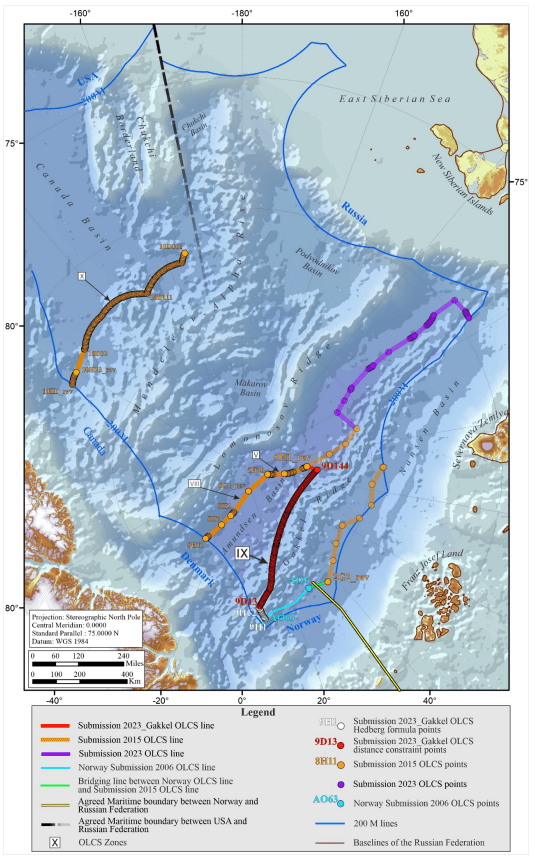
    On 30 October 2023, the Russian Federation submitted to the Commission on the Limits of the Continental Shelf (CLCS), in accordance with UNCLOS Article 76, paragraph 8, and with reference to its Submission of 20 December 2001, and of it Partial Revised submission of 3 August 2015 (with addenda submitted on 31 March 2021) in respect of the Arctic Ocean, information on the limits of the continental shelf beyond 200 nautical miles from the baselines from which the breadth of its territorial sea is measured in the area of the Gakkel Ridge in the Arctic Ocean. On 6 February 2023, CLCS had approved the Recommendations of the Commission on the Limits of the Continental Shelf in Regard to the Partial Revised Submission Made by The Russian Federation in respect of the Arctic Ocean on 3 August 2015 with Addenda Submitted on 31 March 2021. The purpose of this new submission is to establish the outer limits of the continental shelf (OLCS) of the Russian Federation in the Eurasian Basin of the Arctic Ocean in the area of the Gakkel Ridge, the Nansen and Amundsen basins.

    OLCS line of the Russian Federation in the area of the Gakkel Ridge, the Nansen and Amundsen basins (source).

    Leave a comment

    Filed under International Organizations, State Practice

    ISA: Secretary-General takes Immediate Measures concerning Nauru Ocean Resources Inc Incident

    Beginning 23 November 2023, a reported incident involving an ISA contractor, Nauru Ocean Resources Inc (NORI) (Contract for Exploration for Polymetallic Nodules between the International Seabed Authority and Nauru Ocean Resources Inc (22 July 2011)), and Greenpeace International, has occurred in the NORI-D contract area (Clarion-Clipperton Zone), resulting in NORI reporting to the ISA the disruption of its exploration activities conducted by the MV Coco 25-26 November 2023.

    “In its letters to the Authority, Nauru Ocean Resources Inc alleged that the conduct of Greenpeace International representatives had caused significant safety risk since 23 November 2023 in the NORI-D contract area […] According to Greenpeace International, it is engaged in a ‘safe and peaceful protest at sea’, in the exercise of its ‘right to peaceful protest at sea’ [see previously, The Arctic Sunrise Arbitration (Netherlands v. Russia)]. According to Greenpeace International, ‘there are [no] threats to the safety of individuals caused by the actions of Greenpeace International’.”

    Notification of immediate measures of a temporary nature (27 November 2023), paras 5-6.

    The Secretary-General of the ISA concluded “[t]he circumstances described by NORI prima facie pose a serious threat to the safety of individuals present in the Exploration Area and to the marine environment” (Notification of immediate measures of a temporary nature (27 November 2023), para 6). Therefore, on 27 November 2023 the Secretary-General of the ISA exercised his powers under Regulation 33(3) of the Regulations on Prospecting and Exploration for Polymetallic Nodules, to promulgate immediate measures of a temporary nature. Regulation 33 applies when “the Secretary-General has been notified by a contractor or otherwise becomes aware of an incident resulting from or caused by a contractor’s activities in the Area that has caused, is causing or poses a threat of serious harm to the marine environment” and provides:

    “Pending any action by the Council, the Secretary-General shall take such immediate measures of a temporary nature as are practical and reasonable in the circumstances to prevent, contain and minimize serious harm or the threat of serious harm to the marine environment. Such temporary measures shall remain in effect for no longer than 90 days, or until the Council decides at its next regular session or a special session, what measures, if any, to take pursuant to paragraph 6 of this regulation.”

    Regulations on Prospecting and Exploration for Polymetallic Nodules, Reg 33(3)

    The Secretary-General took the following immediate measures of a temporary nature:

    a. Calls upon all parties present in the vicinity of MV Coco as of 27 November 2023 (other than the crew of MV Coco) to maintain a safety distance from MV Coco of at least 500m (unless otherwise authorized by the captain of MV Coco);
    b. Calls upon parties who have boarded MV Coco on or since 25 November 2023 without authorization from the captain of MV Coco to refrain from interfering with the operation of MV Coco;
    c. Calls upon Nauru Ocean Resources Inc and Greenpeace International to cooperate with a view to ensuring that the parties who have boarded MV Coco on or since 25 November 2023 without authorization from the captain of MV Coco are safely disembarked from the MV Coco as soon as practicable;
    d. Calls upon Nauru Ocean Resources Inc and Greenpeace International to report to the Authority on a daily basis as to the steps taken to ensure compliance with this immediate measure of temporary nature (unless no further updates are required by the Secretary-General);
    e. Calls upon Nauru Ocean Resources Inc and Greenpeace International to relay the contents of these immediate measures of a temporary nature to their personnel on board or in the vicinity of MV Coco;
    f. Calls upon Nauru Ocean Resources Inc to provide a detailed report on the assessment of the consequences of the disruption of the exploration activities Nauru Ocean Resources Inc alleges to have taken place since 23 November 2023;
    g. Calls upon the Kingdom of the Netherlands to consider what measures, if any, are warranted pursuant to international law and the laws of the Netherlands concerning the conduct of Greenpeace International and the Arctic Sunrise in the present circumstances.

    Notification of immediate measures of a temporary nature (27 November 2023), para 8.

    Leave a comment

    Filed under International Organizations, Non-State Actors, State Practice

    PIF: 52nd Pacific Islands Forum Communique

    The 52nd Pacific Islands Leaders Forum (6-10 November 2023, Cook Islands) adopted the 52nd Pacific Islands Forum Communique (9 November 2023) and a number of annexed instruments which touch upon numerous law of the sea issues:

    Leaders welcomed and endorsed the 2050 Strategy Implementation Plan (9 November 2023) for the 2050 Strategy for the Blue Pacific Continent (2022) [para 9].

    Leaders endorsed the Pacific Regional Framework on Climate Mobility (9 November 2023) which “firmly acknowledges Forum Members’ fundamental priority to ‘stay in place’ in our ancestral homes, including through land reclamation, and is a global first that aims to provide practical guidance to governments planning for and managing climate mobility, while also respecting Members’ national laws and policies” [para 21]:

    • We will preserve our formal ties to home and, recalling our Declaration on Preserving Maritime Zones in the Face of Climate Change-Related Sea-Level Rise, continue to exercise sovereignty and sovereign rights over maritime zones and resources. The Framework acknowledges and will preserve our right to stay at home and deepen collective responsibility and accountability for the stewardship of the Blue Pacific Continent. We will ensure protection against statelessness and respect associated rights [Pacific Regional Framework on Climate Mobility (9 November 2023) para 16].

    Leaders considered and endorsed the 2023 Pacific Islands Forum Declaration on the Continuity of Statehood and the Protection of Persons in the Face of Climate Change-Related Sea Level Rise (9 November 2023) and its Aide-Memoire [para 24]:

    • Affirm that international law supports a presumption of continuity of statehood and does not contemplate its demise in the context of climate change-related sea-level rise,
    • Declare that the statehood and sovereignty of Members of the Pacific Islands Forum will continue, and the rights and duties inherent thereto will be maintained, notwithstanding the impact of climate change-related sea-level rise,
    • Further declare that Members of the Pacific Islands Forum, individually and collectively, bear an important responsibility for ensuring protection of our people, and are committed to protecting such persons affected by climate change-related sea-level rise, including with respect to human rights duties, political status, culture, cultural heritage, identity and dignity, and meeting essential needs [2023 Pacific Islands Forum Declaration on the Continuity of Statehood and the Protection of Persons in the Face of Climate Change-Related Sea Level Rise (9 November 2023) paras 12-14].

    Leaders strongly encouraged the participation of all Forum Members in the International Court of Justice Advisory Opinion on Climate Change proceedings and noted the Secretariat has made an official request for permission to make a submission [para 27].

    Leaders reaffirmed fisheries as a standing agenda item, and their commitment to sustainably management and development [para 30].

    Leaders encouraged the Forum WTO members to ratify the Fisheries Subsidies Agreement and conclude the second wave of negotiations by the thirteenth WTO Ministerial Conference (MC13), including issuance of the Forum Statement on WTO Fisheries Subsidies (9 November 2023) in preparation thereof [para 37]:

    • Leaders noted that 84% harmful fishing subsidies go to capacity enhancing programs that fuel overcapacity and overfishing, which lead to the continuing decline in global fish stocks.
    • Leaders therefore reiterated their call in 2022 for all Forum WTO Members to work together to advance the negotiations and to aim to conclude the second wave of the negotiations towards comprehensive disciplines that include subsidies to overcapacity and overfishing with appropriate and effective special and differential treatment by MC13 in February 2024 [Forum Statement on WTO Fisheries Subsidies (9 November 2023) p 1].

    Leaders recognised the sovereignty of Members to determine their own national positions on the discharge by Japan of over a million tonnes of Advanced Liquid Processing System (ALPS) treated nuclear wastewater into the Pacific Ocean [para 44].

    Leaders noted the release of the ALPS treated nuclear wastewater into the Pacific Ocean on 24 August 2023 and continuing over the next 30 years, and recommended and encouraged Japan to:
    (a) embed the Fukushima issue as a standing item of the [Pacific Leaders Meeting] PALM agenda; and
    (b) establish political dialogue annually to ascertain safety issues based on international safety standards and ongoing independent monitoring by the IAEA [para 50].

    The 52nd PIF Leaders Statement on the Fukushima ALPS-Treated Nuclear Wastewater Issue (9 November 2023) reaffirms PIF Leaders “are committed to embedding nuclear related discharge as a standing item on the PIF agenda and relevant Pacific partner summits, including PALM, and to a political dialogue annually to consider safety issues based on international safety standards and ongoing independent monitoring by the IAEA”.

    Leaders promoted full compliance by the Parties to the provisions of the Rarotonga Treaty, and reiterated the invitation to remaining non-Party Forum Members to accede to the Treaty, and urged the United States to ratify the Treaty Protocols [paras 53-54].

    Leaders noted the update provided by Australia in relation to the Trilateral Security Pact between Australia, the United Kingdom and the United States (AUKUS), and welcomed the transparency of Australia’s efforts, and commitment to compliance with international law [para 56].

    Leaders encouraged Members to sign onto the BBNJ Agreement, noting that some Members are undertaking necessary national approval processes. Leaders endorsed the proposed way forward to provide coordinated regional support on Members’ implementation of the BBNJ Agreement, through the [Office of the Pacific Ocean Commissioner] OPOC [para 58].

    Leaders encouraged Members to join the High Level Ambition Coalition to End Plastic Pollution, and continued support and involvement in the ongoing plastics treaty negotiations [para 59].

    Leaders acknowledged the significant interest in deep sea minerals among specific Members and recognised and respected the diversity of positions amongst Members on deep sea minerals development and sovereign decision-making [para 68].

    Leaders acknowledged commitments by development partners to support all countries in the region to achieve primary submarine cable connectivity and secure options for redundancy [para 74].

    Leave a comment

    Filed under International Organizations, Jurisprudence, State Practice, Treaties

    ICJ: Election of Five Members of the Court

    In accordance with the election procedure detailed in Articles 8-10 of the ICJ Statute, on 9 November 2023 the General Assembly and the Security Council of the United Nations elected five Members of the International Court of Justice for a term of office of nine years, beginning on 6 February 2024. The Security Council held 5 rounds of voting, the General assembly 1 round of voting. Judge Hilary Charlesworth (Australia) was re-elected as Member of the Court. Mr Bogdan-Lucian Aurescu (Romania), Ms Sarah Hull Cleveland (United States of America), Mr Juan Manuel Gómez Robledo Verduzco (Mexico) and Mr Dire Tladi (South Africa) were elected as new Members of the Court (ICJ Press Release No. 2023/63).

    The Court’s composition on 6 February 2024 will be as follows:  Ronny Abraham (France) (2027); Dalveer Bhandari (India) (2027); Antônio Augusto Cançado Trindade (Brazil) (2027); Xue Hanqin (China) (2030); Yuji Iwasawa (Japan) (2030); Georg Nolte (Germany) (2030); Nawaf Salam (Lebanon) (2027); Julia Sebutinde (Uganda) (2030); Peter Tomka (Slovakia) (2030); and Abdulqawi Ahmed Yusuf (Somalia) (2027); Hilary Charlesworth (Australia) (2033); Bogdan-Lucian Aurescu (Romania) (2033); Sarah Hull Cleveland (United States) (2033); Juan Manuel Gomez Robledo Verduzco (Mexico) (2033); and Dire Tladi (South Africa) (2033).

    Leave a comment

    Filed under International Organizations, State Practice

    INC on Plastic Pollution: Zero Draft Text Published

    On 4 September 2023, following the mandate provided by the second session of the Intergovernmental Negotiating Committee to develop an international legally binding instrument on plastic pollution, including in the marine environment (INC-2) (29 May – 2 June 2023), the INC Chair published a Zero draft text of the international legally binding instrument on plastic pollution, including in the marine environment (UNEP/PP/INC.3/4). The zero draft has been published ahead of the third session (INC-3) (13-19 November 2023). For more information see the UNEP website.

    Leave a comment

    Filed under International Organizations, State Practice

    Japan: Initiation of ALPS treated water discharge into the sea at Fukushima Daiichi Nuclear Power Station

    As previously reported, Japan was considering the discharge of Advanced Liquid Processing System (ALPS) treated water into the sea at the Fukushima Daiichi Nuclear Power Station. After an IAEA Review of Safety Related Aspects (4 July 2023) found the proposed approach and activities as consistent with relevant international safety standards, on 22 August 2023 the sixth meeting of the Inter-Ministerial Council concerning the Continuous Implementation of the Basic Policy on Handling of ALPS Treated Water (Japan) decided:

    (9)Based on the above, the Government of Japan has decided to initiate the discharge into the sea as indicated in the basic policy, and to request TEPCO to promptly proceed with the preparation work for the start of the discharge into the sea in accordance with Implementation Plan for Fukushima Daiichi Nuclear Power Station Specified Nuclear Facility (implementation plan) approved by the NRA.
    (10)If there is no interference due to weather or sea conditions, the discharge into the sea is expected to start on 24 August [2023].

    Actions and future measures regarding “Basic Policy on handling of ALPS treated water at the Tokyo Electric Power Company Holdings’ Fukushima Daiichi Nuclear Power Station” (22 August 2023)

    On 24 August 2023 IAEA experts confirmed that Tokyo Electric Power Company Holdings (TEPCO) started discharging ALPS treated water stored at the Fukushima Daiichi Nuclear Power Station into the sea (IAEA Press Release; TEPCO Press Release (2)). The  IAEA will remain present on site throughout the release of treated water and shall provide access to live data from Japan on the release. Furthermore, on 22 August 2023 Japan held its 123rd briefing session, with the significant interest of the international community evident in the number and diversity of (32) participating diplomatic missions, while the IAEA and Republic of Korea (ROK) agreed to establish the IAEA-ROK Fukushima Information Mechanism (IKFIM), which “will provide up-to-date information to ROK and facilitate visits by the country’s experts to the Agency’s office at the site. It also includes an arrangement for notifications in case of abnormal events”.

    As recognised in the remarks of the Pacific Islands Forum Secretary General on 24 August 2023, “there continues to be divergent views and responses in the international community and within the Forum Membership on this issue, and I recognise the sovereignty and prerogative of Forum Members to determine their own national positions”. For example, on 13 July 2023, the EU announced it would lift Fukushima restrictions on food imports, adopted in 2011, but highlighting the importance of monitoring of domestic production for radioactivity, including due publicity, “in particular fish, fishery products and seaweed close to the release site of the ALPS treated water” (lifted 3 August 2023, alongside Norway and Iceland). On 15 August 2023 Switzerland and Liechtenstein lifted restrictions. Meanwhile, on 24 August 2023 South Korea noted it will continue to impose import restrictions on seafood and farm products from Japanese prefectures near the power plant and called for transparency throughout the expected 30 years of ALPS treated water discharges. On 24 August 2023, a statement by China continued to voice its strong opposition to the discharge into the sea as violating international law and suspended the import of all aquatic products originating from Japan (General Administration of Customs Announcement No. 103 of 2023).

    Leave a comment

    Filed under International Organizations, State Practice

    UN: Transfer of Oil From FSO Safer Completed

    As previously reported, a deteriorating floating storage and offloading unit, FSO Safer, moored off the coast of Yemen, with an estimated 1.14 million barrels of light crude oil onboard represented a major environmental and humanitarian threat should an oil spill occur. Preparatory works aboard the FSO Safer for the transfer of the oil to another vessel began 30 May 2023 (via the FSO Ndeavor). The ship-to-ship oil transfer to the MOST Yemen (formerly Nautica) was conducted 25 July 2023 – 11 August 2023, resulting in the removal of 1.1 million barrels from the FSO Safer. Remaining efforts include the need to remove and scrap the FSO Safer, as well as “the delivery of a specialized buoy to which the replacement vessel will be safely and securely tethered” (UNSG Statement). For more information see there press releases by the UN, UNSG, Boskalis and video.

    Leave a comment

    Filed under International Organizations

    ITLOS: Closure of Written Proceedings in Request for an Advisory Opinion Submitted by COSIS

    As previously reported, 16 June 2023 was fixed as the time limit within which to present written statements in respect of the Request for an Advisory Opinion submitted by the Commission of Small Island States on Climate Change and International Law (Request for Advisory Opinion submitted to the Tribunal). On the 26 June 2023 ITLOS published the written submissions received to-date, including the submissions of 32 States Parties to UNCLOS (Democratic Republic of the Congo, Poland, New Zealand, Japan, Norway, Germany, Italy, China, European Union, Mozambique, Australia, Mauritius, Indonesia, Latvia, Singapore, Republic of Korea, Egypt, Brazil, France, Chile, Bangladesh, Nauru, Belize, Portugal, Canada, Guatemala, United Kingdom, The Netherlands, Sierra Leone, Micronesia, Djibouti and Rwanda) and 9 invited Intergovernmental Organisations (United Nations, International Union for the Conservation of Nature, International Maritime Organisation, Commission of Small Island States on Climate Change and International Law, Pacific Community, United Nations Environment Programme, African Union, International Seabed Authority and the Food and Agricultural Organization of the United Nations). The written statements of Rwanda and the FAO were received after 16 June 2023, but the President of the Tribunal decided they shall be admitted and included in the case file. A similar situation occurred in the Seabed Dispute Chamber Advisory Opinion proceedings, whereby the late written submission of UNEP was admitted into the case file (Responsibilities and obligations of States with respect to activities in the Area, Advisory Opinion, para 16). An additional 10 statements to assist the Tribunal –falling outside the Rules of the Tribunal and case file but published online– were received (United Nations Special Rapporteurs on Human Rights & Climate Change, Toxics & Human Rights and Human Rights & the Environment; High Seas Alliance; ClientEarth; Opportunity Green; Center for International Environmental Law and Greenpeace International; Advisory Committee on Protection of the Sea; World Wide Fund for Nature; Our Children’s Trust and Oxfam International; Observatory for Marine and Coastal Governance; One Ocean Hub).

    On the 30 June 2023, by Order of 30 June 2023, the President of the International Tribunal for the Law of the Sea made the following order:

    Fixes 11 September 2023 as the date for the opening of the hearing at which oral statements may be made to the Tribunal by the States Parties to the Convention, the Commission of Small Island States on Climate Change and International Law and the other intergovernmental organizations listed in the annex to the Order of the President of the Tribunal of 16 December 2022, as well as the African Union, the International Seabed Authority and the Pacific Community;

    Invites the States Parties to the Convention, the Commission of Small Island States on Climate Change and International Law and the other intergovernmental organizations listed in the annex to the Order of the President of the Tribunal of 16 December 2022, as well as the African Union, the International Seabed Authority and the Pacific Community, to indicate to the Registrar of the Tribunal, not later than 4 August 2023, their intention to make oral statements at the hearing; and

    Reserves the subsequent procedure for further decision.

    Order of 30 June 2023, p. 3

    By fixing the date of oral proceedings, the President has closed the written stage of the Advisory Opinion proceedings (similar to the Seabed Dispute Chamber Advisory Opinion proceedings, but contrast the SRFC Advisory Opinion proceedings, where 2 rounds of written statements were permitted). See further ITLOS/Press 340 and ITLOS/Press 341.

    Leave a comment

    Filed under International Organizations, Jurisprudence, Non-State Actors, State Practice

    IMO: Hong Kong Convention to enter into force

    The Hong Kong International Convention for the Safe and Environmentally Sound Recycling of Ships is set to enter into force after Bangladesh and Liberia became Contracting States to the Convention. The treaty was set to enter into force 24 months after the following required criteria have been met: not less than 15 States; not less than 40% of the world’s merchant shipping by gross tonnage; and ship recycling capacity of not less than 3% of the gross tonnage of the combined merchant shipping of those States. These conditions have now been met and the Hong Kong Convention will enter into force on 26 June 2025. See further in IMO press release.

    Leave a comment

    Filed under International Organizations, Treaties

    EU: 11th package of sanctions against Russia (transport measures)

    The European Union (EU) announced in 23 June 2023 the adoption of the 11th package of sanctions against Russia for its continued illegal war against Ukraine. Aside from measures on trade, the EU is also imposing measures applicable to vessels and reliant on its Member States’ port State jurisdiction:

    • Prohibition to access EU ports for vessels that engage in ship-to-ship transfers suspected to be in breach of the Russian oil import ban or G7 Coalition price cap.
    • Prohibition to access EU ports for vessels if a vessel does not notify the competent authority at least 48 hours in advance about a ship-to-ship transfer occurring within the Exclusive Economic Zone of a Member State or within 12 nautical miles from the baseline of that Member State’s coast.
    • Prohibition to access EU ports for vessels which manipulate or turn off their navigation tracking system when transporting Russian oil subject to the oil import ban or G7 price cap.

    A summary of the full list of sanctions of this package may be found in this press release from the European Commission.

    Leave a comment

    Filed under International Organizations, State Practice

    ICJ: Authorisation of IUCN & COSIS to participate in Climate Change (AO) proceedings

    As previously reported, by Order of 20 April 2023, the ICJ invited states entitled to appear before the ICJ and any international organisations likely to be able to furnish information to submit written statements in respect of Obligations of States in respect of climate change (Request for an Advisory Opinion). It was noted this Order was without prejudice to the possibility of the further addition of participants to the proceedings by authorisation of the ICJ. Pursuant to Article 66 of the ICJ Statute, on 14 June 2023 the ICJ decided that the International Union for Conservation of Nature (IUCN) is likely to be able to furnish information on the questions submitted to the Court by the General Assembly and therefore authorised the IUCN to participate in the proceedings (ICJ Press Release No. 2023/29). Pursuant to Article 66 of the ICJ Statute, on 22 June 2023 the ICJ decided that the Commission of Small Island States on Climate Change (COSIS) is likely to be able to furnish information on the questions submitted to the Court by the General Assembly and therefore authorised the COSIS to participate in the proceedings (ICJ Press Release No. 2023/32).

    Leave a comment

    Filed under International Organizations, Jurisprudence

    BBNJ Agreement Adopted

    On 19 June 2023 the further resumed fifth session of the intergovernmental conference adopted by consensus without a vote the Agreement under the United Nations Convention on the Law of the Sea on the conservation and sustainable use of marine biological diversity of areas beyond national jurisdiction (currently available as UN Doc A/CONF.232/2023/4). The Coordinator of the previously reported Open-Ended Informal Working Group on Technical Edits and Language Harmonization reported on their work. In general, statements made by representatives of States and regional economic integration organizations appear positive, with a number signalling their intent to sign the BBNJ Agreement on 20 September 2023, and ratify soon thereafter (e.g. Singapore and the Pacific Islands Forum Members). However, the Russian Federation representative “distanced himself from the consensus on the agreement’s text, adding:  ‘This instrument is unacceptable. The matter of our participation in it cannot be considered'”. The Representative of Venezuela stressed that its joining of consensus should not be interpreted as a modification of its position on UNCLOS, to which it is not a party.

    The next steps are found in Article 65 of the BBNJ Agreement, which now provides:

    This Agreement shall be open for signature by all States and regional economic integration organizations from 20 September 2023 and shall remain open for signature at United Nations Headquarters in New York until 20 September 2025.

    BBNJ Agreement, Article 65

    Ratification, approval or acceptance by States and regional economic integration organizations is addressed in Article 66 of the BBNJ Agreement. Accession by States and regional economic integration organizations after 20 September 2025 is addressed in Article 66 of the BBNJ Agreement. Entry into force and provisional application are addressed in in Articles 68-69 of the BBNJ Agreement.

    The further resumed fifth session of the IGC is being held 19-20 June 2023. On 20 June 2023 the general exchange of views will continue (UN Doc A/CONF.232/2023/L.4)

    Leave a comment

    Filed under International Organizations, State Practice, Treaties

    ITLOS: Election of Seven Members of the Tribunal 2023

    The Thirty-Third Meeting of States Parties to the United Nations Convention on the Law of the Sea (SPLOS) have elected seven Members of the International Tribunal for the Law of the Sea (ITLOS), following voting held 14 June 2023 (UNCLOS, Annex VI, Article 4; see nominations).

    The States Parties re-elected Vice-President Tomas Heidar (Iceland) and elected Ms Frida María Armas Pfirter (Argentina), Mr Hidehisa Horinouchi (Japan), Mr Thembile Elphus Joyini (South Africa), Mr Osman Keh Kamara (Sierra Leone), Mr Konrad Jan Marciniak (Poland) and Mr Zha Hyoung Rhee (Republic of Korea)(see curricula vitae of candidates nominated by States Parties). The nine year term of each Member will commence 1 October 2023 (Rules of the Tribunal, Article 2).

    The term of office for six Members of the Tribunal shall expire 30 September 2023, namely President Albertus Jacobus Hoffmann, Judge Stanislaw Michal Pawlak, Judge Shunji Yanai, Judge James Luta Kateka, Judge Jin-Hyun Paik and Judge Alonso Gómez-Robledo Verduzco. For more information see the ITLOS Press Release.

    Leave a comment

    Filed under International Organizations, State Practice

    Russia: Extension of Participation in Black Sea Grain Initiative

    As previously reported, the extension of the Black Sea Grain Initiative in March 2023 was subject to differing statements on the period of renewal. On 17 May 2023, it was confirmed (2) that the Russian Federation aligned its position with the other parties and will also continue its participation in the Black Sea Initiative for another 60 days. Ukraine welcomed ‘unblocking‘ of the agreement, following Ukraine’s previous objections (17 April 2023) to claimed interference in the inspection plan. On 15 May 2023, the UK likewise objected to delays and the blocking of vessel inspections, called for a sustained and stable deal, and “urge Russia to stop threatening to leave the initiative”. An update (8 May 2023) from the Office of the UN Coordinator for the Black Sea Grain Initiative confirmed “[s]ince 1 May, the JCC inspection rate has dropped significantly”, with no inspections on 7-8 May 2023. As of 8 May 2023, the total exports of grain and foodstuffs under the Initiative is 29,798,277 metric tonnes, while there have been no exports of fertilizers so far. Official reports (2) concerning a quadrilateral meeting between Ukraine, Türkiye, Russia and the UN on 10-11 May 2023 involved discussions of “the recent proposals by the United Nations, namely the resumption of the Togliatti-Odesa ammonia pipeline, the longer extension of the deal, improvements at the Joint Coordination Centre for stable operations and exports, as well as other issues raised by the parties”.

    Leave a comment

    Filed under International Organizations, State Practice

    ASEAN: Declaration on the Placement and Protection of Migrant Fishers

    As the current chair of ASEAN, Indonesia hosted the 42nd ASEAN Summit, 9–11 May 2023, in Labuan Bajo (Indonesia). Among the outcome documents, on 10 May 2023 the ASEAN Member States adopted the ASEAN Declaration on The Placement and Protection of Migrant Fishers. Among interesting non-binding provisions are:

    FURTHER RECOGNISING the shared responsibility of ASEAN Member States to protect and fulfill the rights of migrant fishers in the entire migration cycle and to prevent and combat forced labour, child labour and trafficking in persons in fishing vessels considering the proximity and connecting borders of ASEAN Member States;

    […]

    4. IMPROVE the entire migration process of migrant fishers through improvement in ethical and fair recruitment and placement; pre-employment, pre-departure and post-arrival orientations; and access to employment contract or proper documentation in the language they understand;

    […]

    6. ENCOURAGE ASEAN Member States to initiate or conclude bilateral agreements among each other and with countries outside the region to facilitate safe and regular migration of migrant fishers especially in recruitment and placement processes, safe repatriation and reintegration, and access to justice and remedies;

    7. EXPLORE cooperation among ASEAN Member States on data collection and sharing on, but not limited to, case management, recruitment and repatriation of migrant fishers in and outside of ASEAN, and sharing of best practices and lessons learned in the migration process of migrant fishers;

    ASEAN Declaration on The Placement and Protection of Migrant Fishers (2023)

    For further information see the other statements adopted at the 42nd ASEAN Summit here.

    Leave a comment

    Filed under International Organizations

    UNGA: Further resumed fifth session of IGC to adopt the finalised BBNJ Agreement

    On 18 April 2023 the United Nations General Assembly adopted (without a vote) UNGA Decision 77/556 (currently available as UN Doc. A/77/L.62), convening a further resumed fifth session of the intergovernmental conference on an international legally binding instrument under the United Nations Convention on the Law of the Sea on the conservation and sustainable use of marine biological diversity of areas beyond national jurisdiction (BBNJ Agreement). The further resumed fifth session of the IGC will convene with a view to adopting the finalised BBNJ Agreement (advanced unedited version (March 2023)), with tentative dates of 19–20 June 2023. In the meantime, an open-ended informal working group is established to ensure the uniformity of terminology throughout the text of the draft BBNJ Agreement and to harmonise the versions in the six official languages of the UN. See previous reporting here.

    Leave a comment

    Filed under International Organizations, Treaties

    EU: Extension of Emission Trading Scheme to Maritime Transport

    On 25 April 2023 the Council of the EU adopted a series of laws which will provide for the inclusion of maritime transport within the EU Emission Trading Scheme (EU ETS). The vote in the Council is the last step of the decision-making procedure, a procedure initiated in 2013 when the Commission adopted a strategy for progressively integrating maritime transport emissions into the European Union’s policy for reducing greenhouse gas emissions. The Directive of the European Parliament and of the Council amending Directive 2003/87/EC establishing a system for greenhouse gas emission allowance trading within the Union and Decision (EU) 2015/1814 concerning the establishment and operation of a market stability reserve for the Union greenhouse gas emission trading system (2023) provides the necessary amendments “to include maritime transport activities in the EU Emissions Trading System (EU ETS) in order to ensure that those activities contribute their fair share to the increased climate objectives of the Union as well as to the objectives of the Paris Agreement”, while the Regulation of the European Parliament and of the Council amending Regulation (EU) 2015/757 in order to provide for the inclusion of maritime transport activities in the EU Emissions Trading System and for the monitoring, reporting and verification of emissions of additional greenhouse gases and emissions from additional ship types (2023) provides the necessary amendments to the MRV Regulation to take account of said extension of the EU ETS to maritime transport and related updates, namely “to provide for monitoring, reporting and verification rules that are necessary for an extension of the EU ETS to maritime transport activities and to provide for the monitoring, reporting and verification of emissions of additional greenhouse gases and emissions from additional ship types” (Recitals 8 & 12, emphasis added). Once published in Official Journal of the EU the directive and regulation will be legally binding.

    Of note in respect of its relations to developments of a global market-based mechanism through the International Maritime Organization (IMO):

    Efforts to limit global maritime emissions through the IMO are under way and should be encouraged, including the rapid implementation of the Initial IMO Strategy on Reduction of Greenhouse Gas Emissions from Ships, adopted in 2018, which also refers to possible market-based measures to incentivise greenhouse gas emission reductions from international shipping. However, while recently there has been progress in the IMO, this has so far not been sufficient to achieve the objectives of the Paris Agreement. Given the international character of shipping, it is important that the Member States and the Union within their respective competences work with third countries to step up diplomatic efforts to strengthen global measures and make progress on the development of a global market-based measure at IMO level.

    Directive 2003/87/EC (as amended April 2023), Recital 19.

    Directive 2003/87/EC (as amended April 2023), Article 3gg(1) addresses the EU response “in the event of the adoption by the International Maritime Organization (IMO) of a global market-based measure to reduce greenhouse gas emissions from maritime transport”, while Article 3gg(2) addresses the EU response “in the event that the IMO does not adopt by 2028 a global market-based measure to reduce greenhouse gas emissions from maritime transport in line with the objectives of the Paris Agreement and at least to a level comparable to that resulting from the Union measures taken under this Directive”.

    Leave a comment

    Filed under International Organizations, State Practice

    IOTC: Resolution on DFADs & IOTC Members Objections

    A Special Session of the Indian Ocean Tuna Commission (SS6) was held 3-5 February 2023 (Kenya), with the stated objective “the aim of the Special Session is to adopt a conservation and management measure on Fish Aggregating Devices”. This followed inaction on the issue at the 26th Session in May 2022. The 6th Special Session (IOTC Circular 2023-09) adopted Resolution 23-01 On management of Anchored Fish Aggregating Devices (AFADs) and Resolution 23-02 On Management of Drifting Fish Aggregating Devices (DFADs) in the IOTC area of competence, the latter adopted by a two-thirds majority vote.

    Pursuant to Article IX of the IOTC Agreement, a number of Members have since formally objected to Resolution 23-02, namely Comoros (IOTC Circular 2023-11), Seychelles (IOTC Circular 2023-19), European Union (IOTC Circular 2023-26), Oman (IOTC Circular 2023-12), Philippines (IOTC Circular 2023-20), Kenya (IOTC Circular 2023-14), and Somalia (IOTC Circular 2023-18; IOTC Circular 2023-22 objection since withdrawn). In response to some of the statements made on Resolution 23-02, Indonesia circulated a statement “countering the misinterpretation of Resolution 23-02”, its statement representing a shared understanding by “a number” of the other Resolution 23-02 co-sponsoring states (IOTC Circular 2023-24).

    Leave a comment

    Filed under International Organizations, State Practice

    Ukraine/Türkiye/Russia: Extension of Black Sea Grain Initiative

    The previously reported Black Sea Grain Initiative foresees a renewal of 120 days, as previously occurred, in Paragraph 5(H):

    H. This initiative will remain in effect for 120 days from the date of signature by all Parties and can be extended automatically for the same period, unless one of the Parties notifies the other of the intent to terminate the initiative, or to modify it.

    Initiative on the Safe Transportation of Grain and Foodstuffs from Ukrainian Ports

    On 14 March 2023, the deadline of possible expiry, the Black Sea Grain Initiative was renewed by the parties, with the UN Secretariat continuing to reference the previously reported MoU on Russian Food Products and Fertilizers between Russia and UN Secretariat, which expires 22 July 2025 (Paragraph 6). The UN Secretary-General press release is silent on the length of extension, however the Ministry for the Restoration of Ukraine refers to a 120 days extension, while the Ministry of Foreign Affairs of Russia refers to 60 days extension, with the possibility that after 60 days there will be a further decision on extension or “[Russia’s] participation in the Black Sea Initiative will be suspended”.

    Leave a comment

    Filed under International Organizations, State Practice